We bring transparency to school decisions nationwide by tracking school board meetings, district documents, and public data. We use AI tools, rigorously evaluated for accuracy, to search for risks.
The policy desk
What’s moving in phones
The debate over phones, screens and the school day.
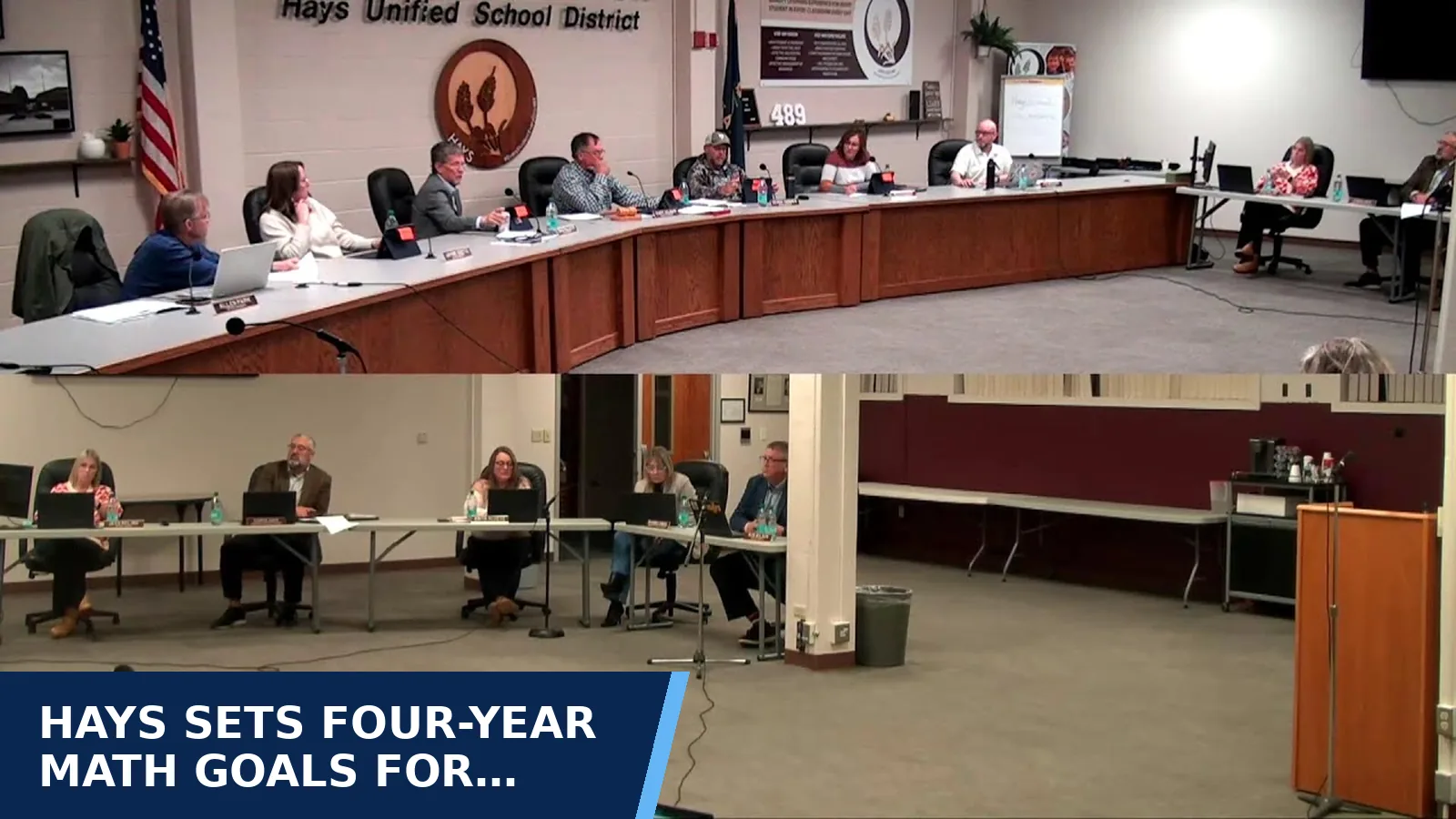
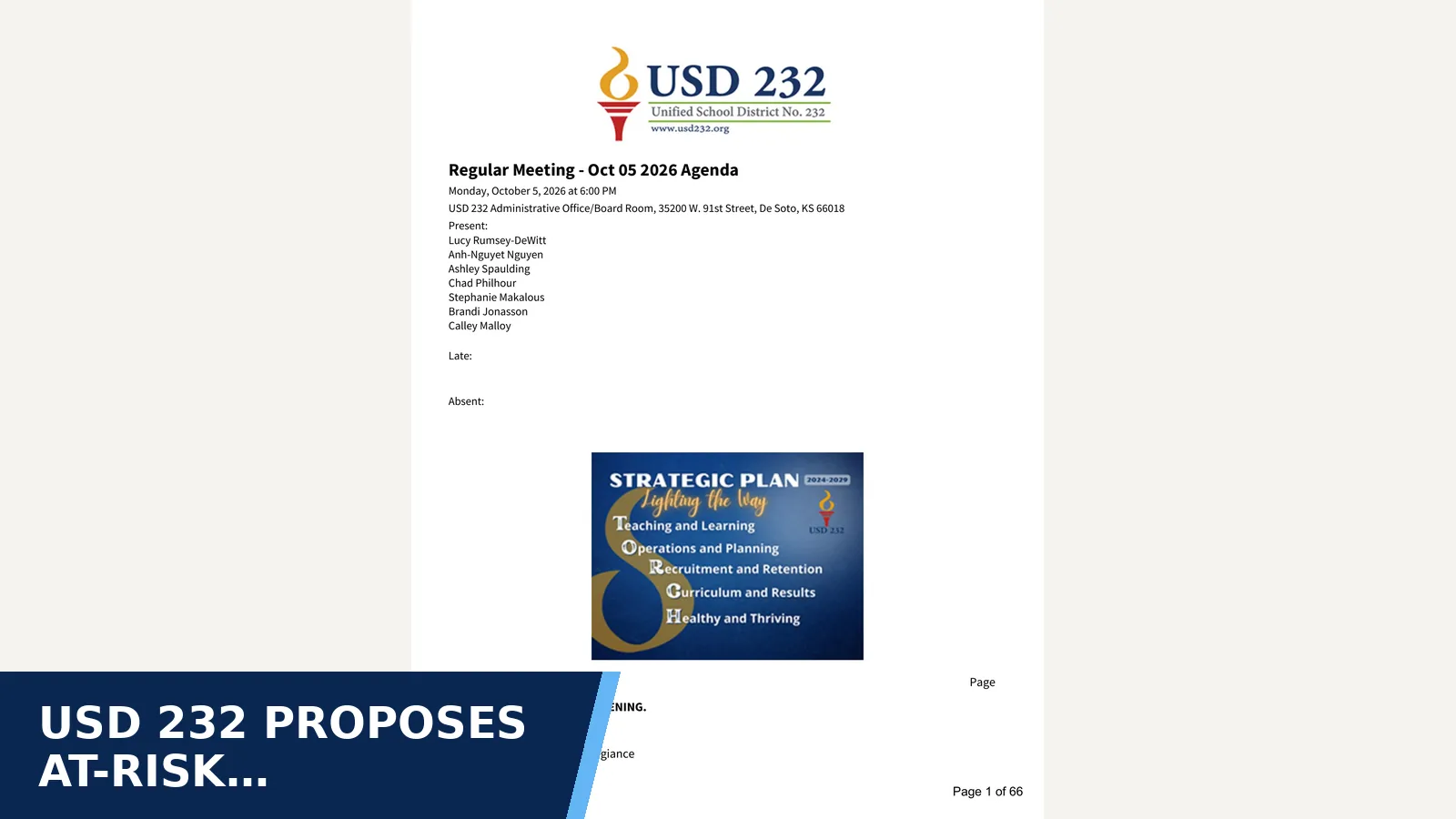
The district has submitted a state-required four-year accountability plan targeting at-risk, non-special-education third- and fourth-graders for math support. It tracks about 70 third-graders and 83 fourth-graders, aiming to reduce the share scoring at the lowest math level by the time they reach sixth and seventh grade.
USD 232 is asking the Board to approve a $2.54 million Mill Creek Middle School track-and-field renovation, replacing the grass field with synthetic turf and replacing the track. The plan also moves the long-jump runway and pits outside the track to address a safety concern; the project would be paid from 2026 bond proceeds.
USD 232 is proposing a district policy that would bar employees from using classroom displays to promote political, religious, or personal messages. Displays would need to be grade-level appropriate and tied to the subject being taught, while non-disruptive personal items on a teacher's desk could remain.
USD 232's latest resource-review update says below-projection fall enrollment is already driving roughly $150,000–$175,000 in FY2027 reductions and could require $2 million or more in 2027–28 adjustments unless enrollment rebounds. The district has collected 164 ideas, but has not selected cuts; Board action is planned for spring 2027.
The board approved final design and construction documents for the Kenneth Henderson Middle School expansion and authorized the project to go out for competitive bids. The district will choose a construction contract after bids are received; the board did not approve a contractor or final construction price at this meeting.
The October 26 agenda asks the board to approve an agreement allowing eligible students from other districts to enroll in designated USD 443 career and technical education courses, pathways, or programs. Placements would depend on available space and approval; home districts would pay base fees of $1,500–$2,500 per student and arrange transportation.
The district moved its student records from its old system to PowerSchool starting in June 2026. In October the superintendent told the board the move had not gone smoothly: student data had to be typed in by hand, and high school transcripts had errors. Staff hoped to send corrected transcripts to students that week. Seniors got copies of last year's transcript, which the district said is still accurate, and staff offered to confirm activities and honors for colleges.
In October 2026 the facilities director told the board the damaged west side of the school roof was now watertight. Gutters and metal flashing were still to come, with all construction expected to finish in early November. Renovated classrooms were nearly finished, and the district planned a community move-in day on October 30. The board also held special meetings about the roof on October 1 and October 14.
Hays plans to issue a request for proposals to sell the Rockwell Administration Center, advancing the previously announced closure toward a potential sale. Proposals are due Nov. 11, with the board expected to review them Nov. 16.
The board approved a three-year agreement for ParentSquare Engage and Smart Sites to replace the district’s current communication and website platforms. The contract is capped at $61,994 and will be paid from the general fund.
On October 12, 2026 the board accepted a 04,286 bid from Heartland Seating to replace the bleachers in Stull Gymnasium. Fundraising has started, and the old bleachers will be removed and replaced next summer so graduation is not affected.
Marysville board members reported that the City will improve the space and visibility for students crossing near Hwy 36 and 11th Street. The City has posted flags for students to carry and committed to removing parking on 10th–12th Streets and adding white posts; flashing lights are still being explored.
Blue Valley is launching a career-exploration and durable-skills effort at Aubry Bend Middle School and Wolf Springs Middle School this quarter. The plan connects coursework with career pathways and has eighth-graders use Xello career-interest lessons before beginning individual plans of study.
Blue Valley has selected CharacterStrong as its core social-emotional and behavior-learning resource for elementary schools, and implementation is underway. Staff training was completed over the summer, with elementary staff beginning lessons during a September professional-learning day.
Blue Valley has begun planning a March 2027 bond referendum, with a proposed emphasis on career and technical education and upkeep of existing facilities and technology. District staff said the plan is not centered on new school buildings or a large round of additions; voters would decide whether to fund the proposal.
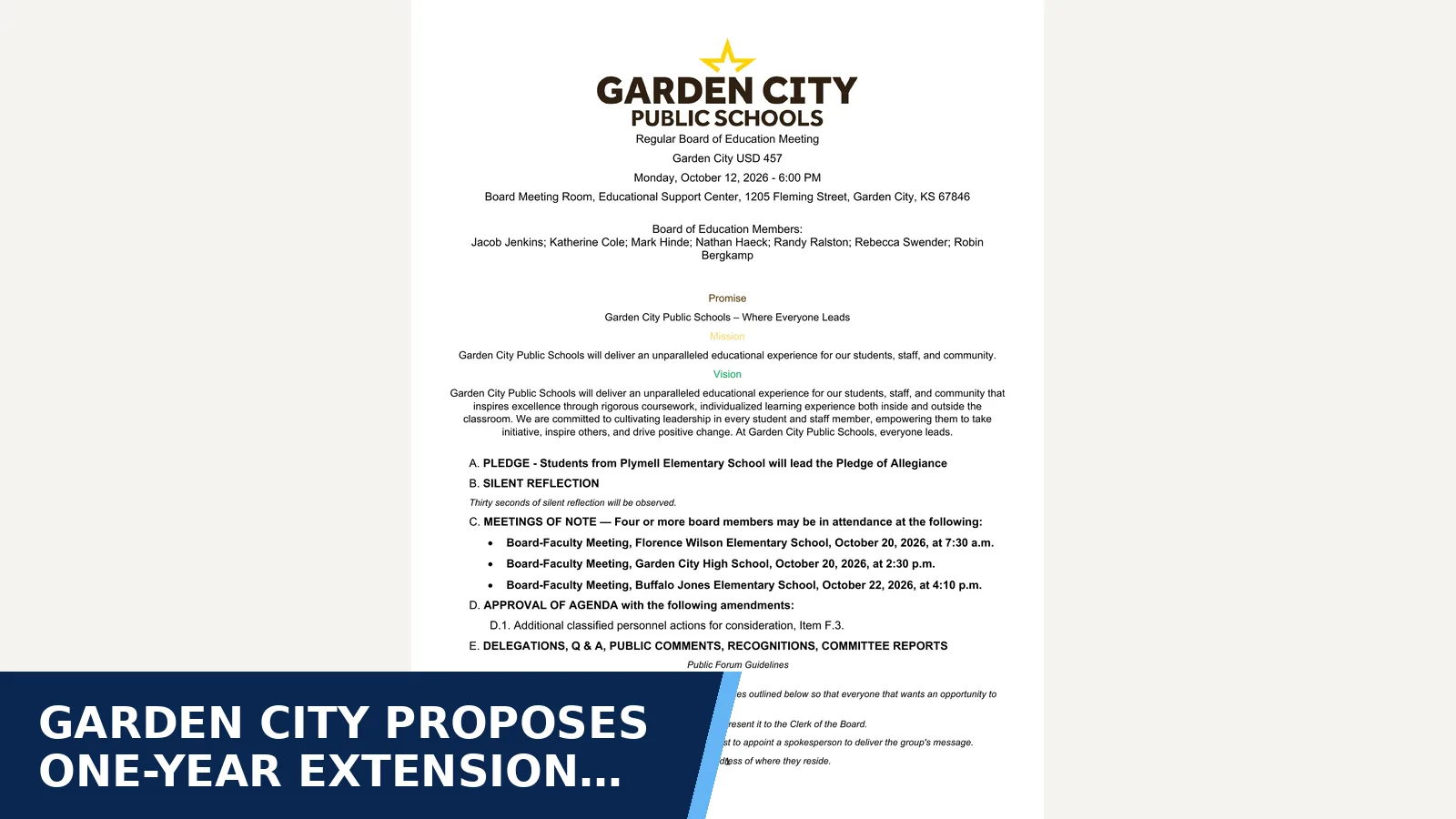
The district is proposing to let students with an approved in-district transfer for 2026–27 stay at that school for 2027–28 without reapplying. The one-year exception would require the student to remain in good standing, live in the district, and attend a school serving their grade; it would expire June 30, 2028.
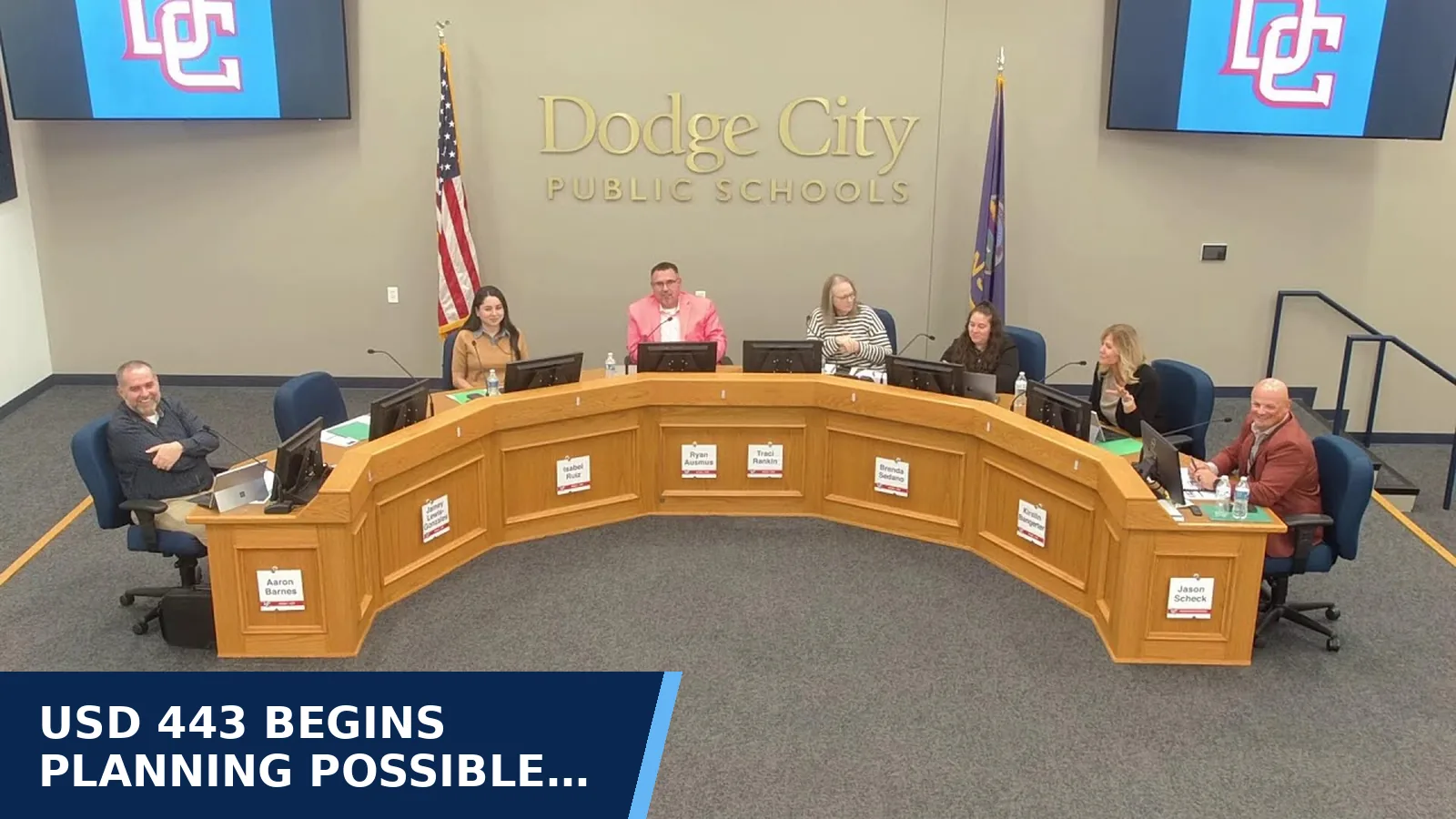
USD 443 has begun planning a possible expansion of pre-K classrooms for the broader community, potentially starting next school year; no rollout has been approved. Currently, fewer than half of incoming kindergarten students attended pre-K, and district access is limited to children who qualify for Head Start or at-risk programming.
The October 12 agenda proposes revising Policy IIA on awarding high-school credit for middle-school world-language coursework. The agenda says the clarification follows the adoption of updated KASB-aligned policies in July 2026; board approval is not established in this agenda.
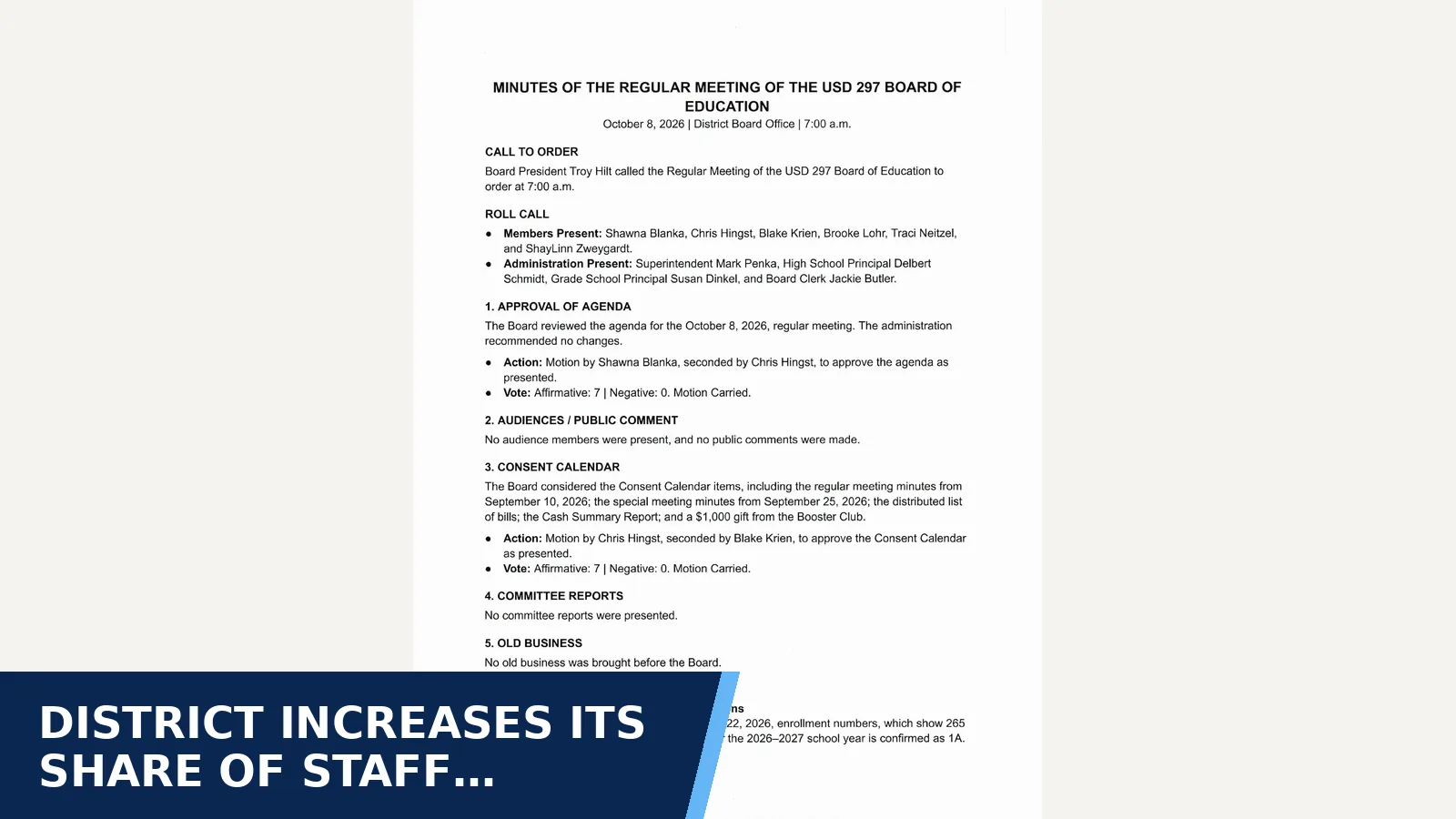
On October 8, 2026, the board raised district health insurance contributions to $500 a month for individual coverage and $1,000 for family coverage. It also added a $500 monthly payment for eligible employees who opt out, and it chose to stay with Delta Dental.
The Oct. 5 agenda schedules discussion of a proposed districtwide Strategic Resource Allocation Review. The plan cites declining enrollment and the likelihood that ongoing expenses will exceed ongoing revenue, with possible service or spending reductions; no reduction target or specific cuts are identified yet.
The district is asking the Board to approve a proposed 2027–28 calendar that would move fall parent-teacher conferences from late September to October. The draft sets the first day of school for Aug. 18, 2027, with no school for students Oct. 14 and district buildings closed Oct. 15 for conferences.
USD 232 is seeking Board approval of a framework for new state-required reporting on students served with at-risk funds. Starting in 2026–27, districts must identify student cohorts, set four-year improvement goals, use two to four evidence-based interventions, and monitor and report progress; at-risk funding could be reduced beginning in 2030–31 if goals are not met.