We bring transparency to school decisions nationwide by tracking school board meetings, district documents, and public data. We use AI tools, rigorously evaluated for accuracy, to search for risks.
The policy desk
What’s moving in phones
The debate over phones, screens and the school day.
District officials presented draft legislative priorities estimating nearly $50 million in annual state-funding gaps or foregone funding for 2026–27. They also projected a cumulative $19 million reduction in local-effort assistance from 2027 to 2030 unless state lawmakers act.
Policy 4300, Limiting Immigration Enforcement in Schools, had a first reading on September 28, 2026 and was listed for second reading and adoption on the October 12 consent agenda.
Corrine Cosgrove introduced herself as the new vice principal at a school in Snoqualmie Valley School District. She said she is focusing on English language arts and the transition into sixth grade; the transcript does not name her school.
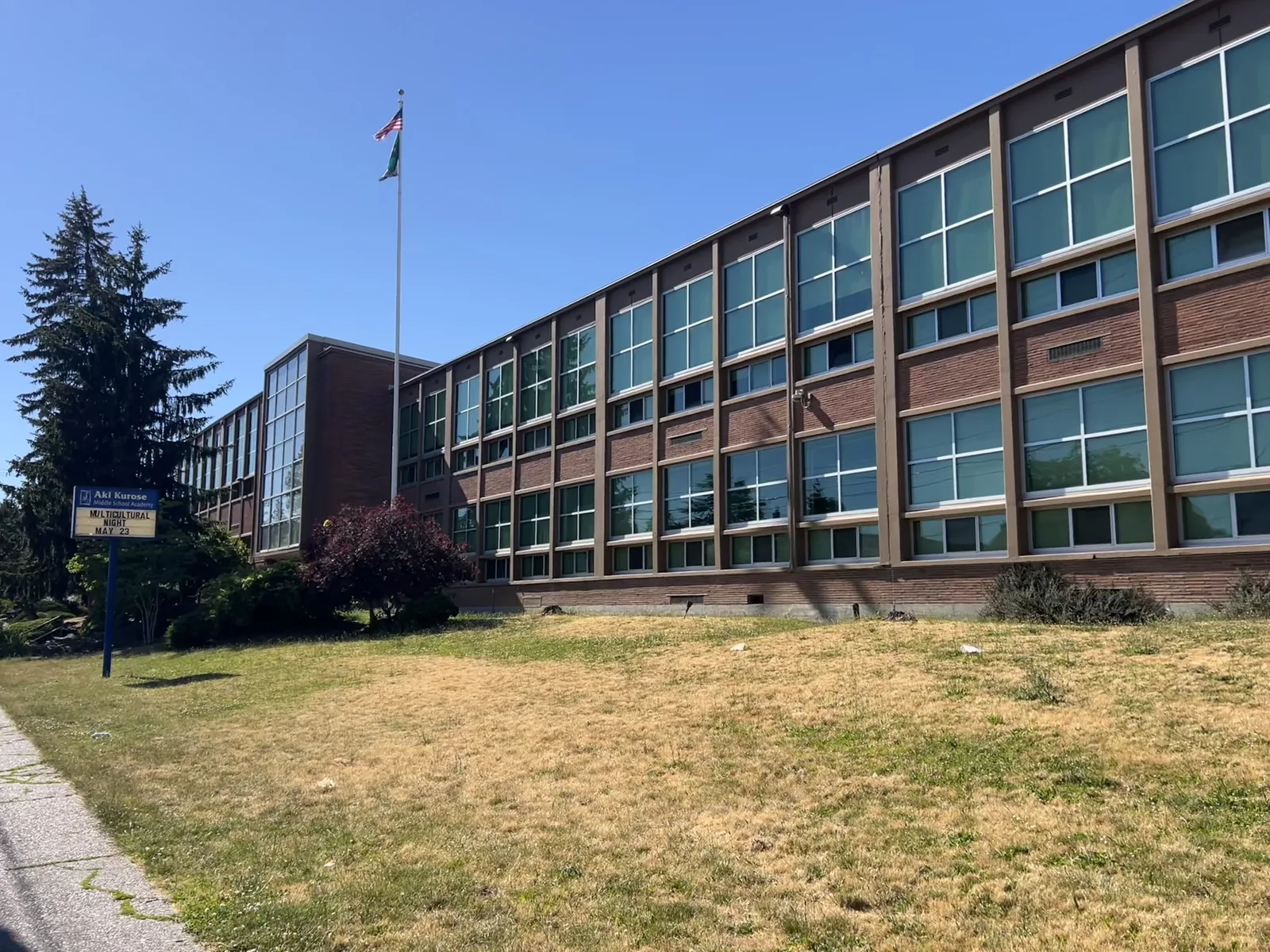
Seattle Public Schools is considering a $144,305,849 guaranteed-maximum-price contract for the Aki Kurose Middle School Modernization and Addition project, plus state sales tax. The amount would be paid to Lydig Construction under a proposed amendment, not a completed approval.
Highline is expanding multilingual benchmark assessments to students in grades 2–5, adding three progress checks during the school year to its existing annual state assessment. The Flashlight assessment tracks speaking and writing so teachers can plan more targeted support for individual students.
Seattle Public Schools is considering the Naglieri Nonverbal Ability Test and Naglieri Quantitative Assessment for every first grader as part of its universal Highly Capable screening process. The proposed screening would begin in December 2026.
The October 1 agenda proposes a $1,215,616 change order for Abbott Construction on the Consolidated Facilities Project. The agenda says the change order incorporates detention pipe, but does not explain the design rationale or identify the affected site.
The board is considering revisions to Policy 3124, which governs removing or releasing students during school hours. The agenda says the proposal would clarify staff roles and decision-making and strengthen safeguards, while keeping students in district care unless release is authorized or permitted by law.
Federal Way’s board declared an emergency and approved bypassing competitive bidding to replace Lakota Middle School’s fire-alarm system after lightning damaged part of it. District staff and South King Fire said the system needed immediate replacement.
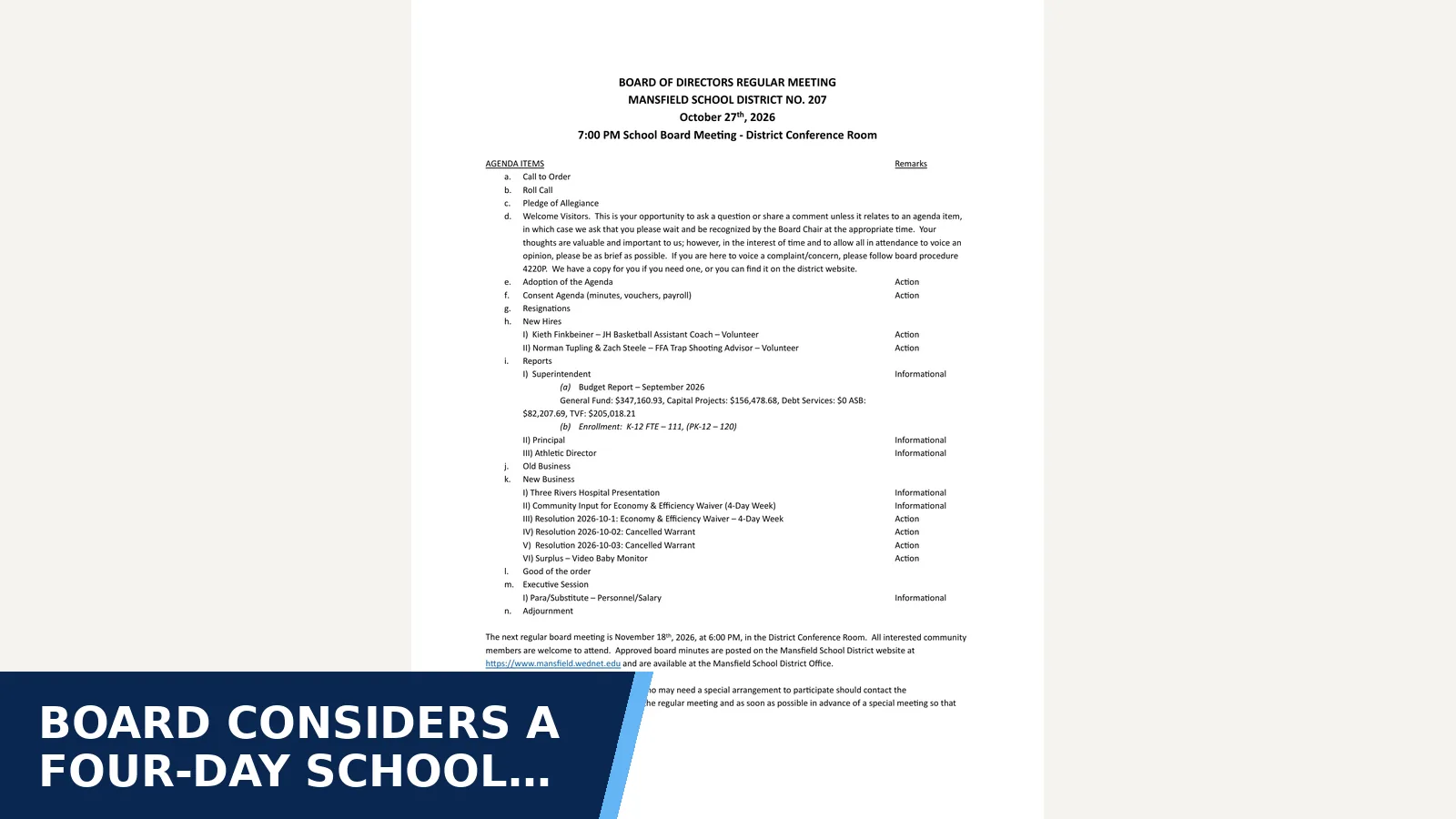
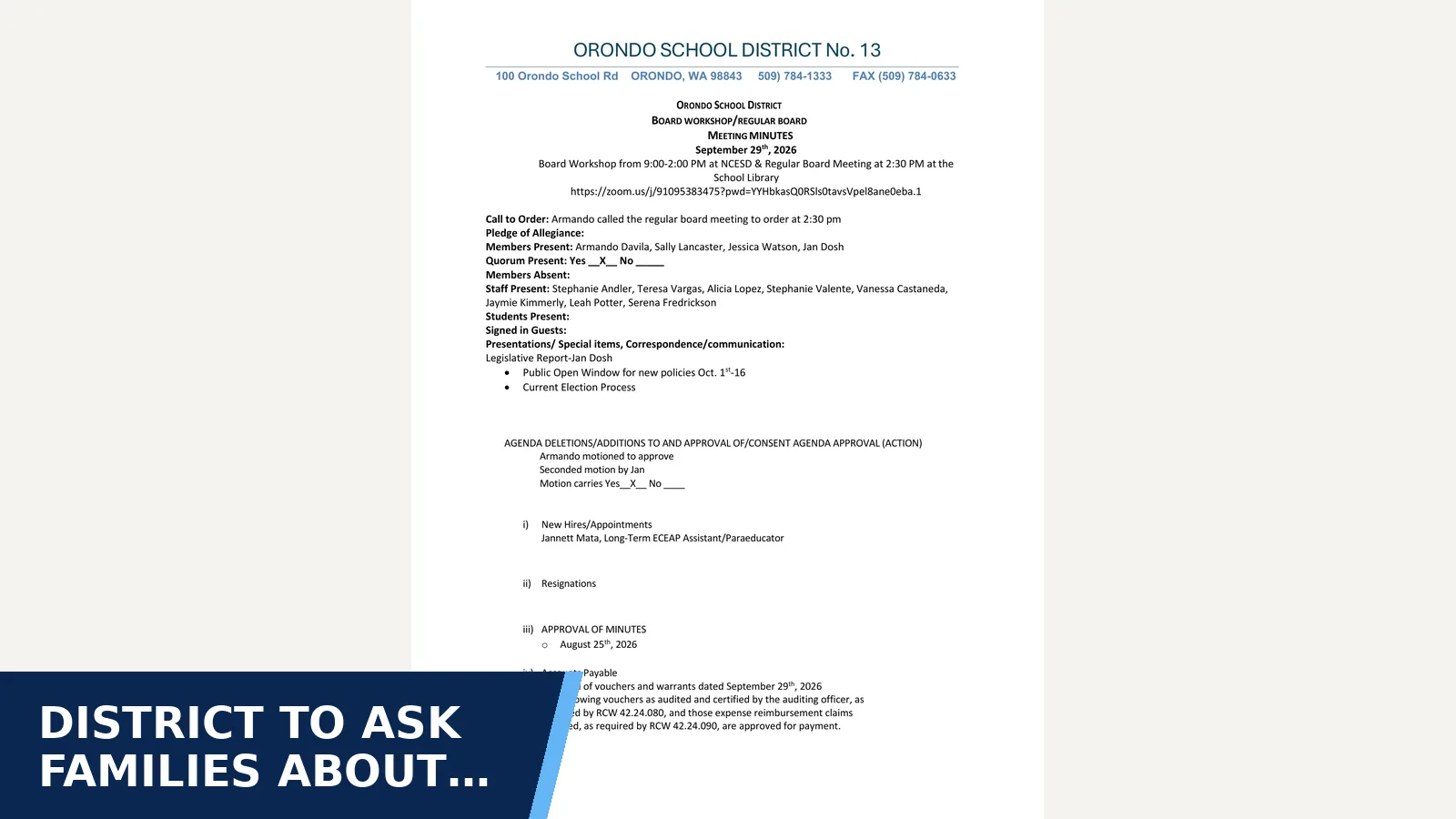
Orondo runs on a four-day school week under a state waiver. At its Sept. 29, 2026 meeting, the board scheduled a community listening session for Oct. 27 to talk about programs, including renewing the four-day week waiver, CTE, Heritage Language, migrant and bilingual services.
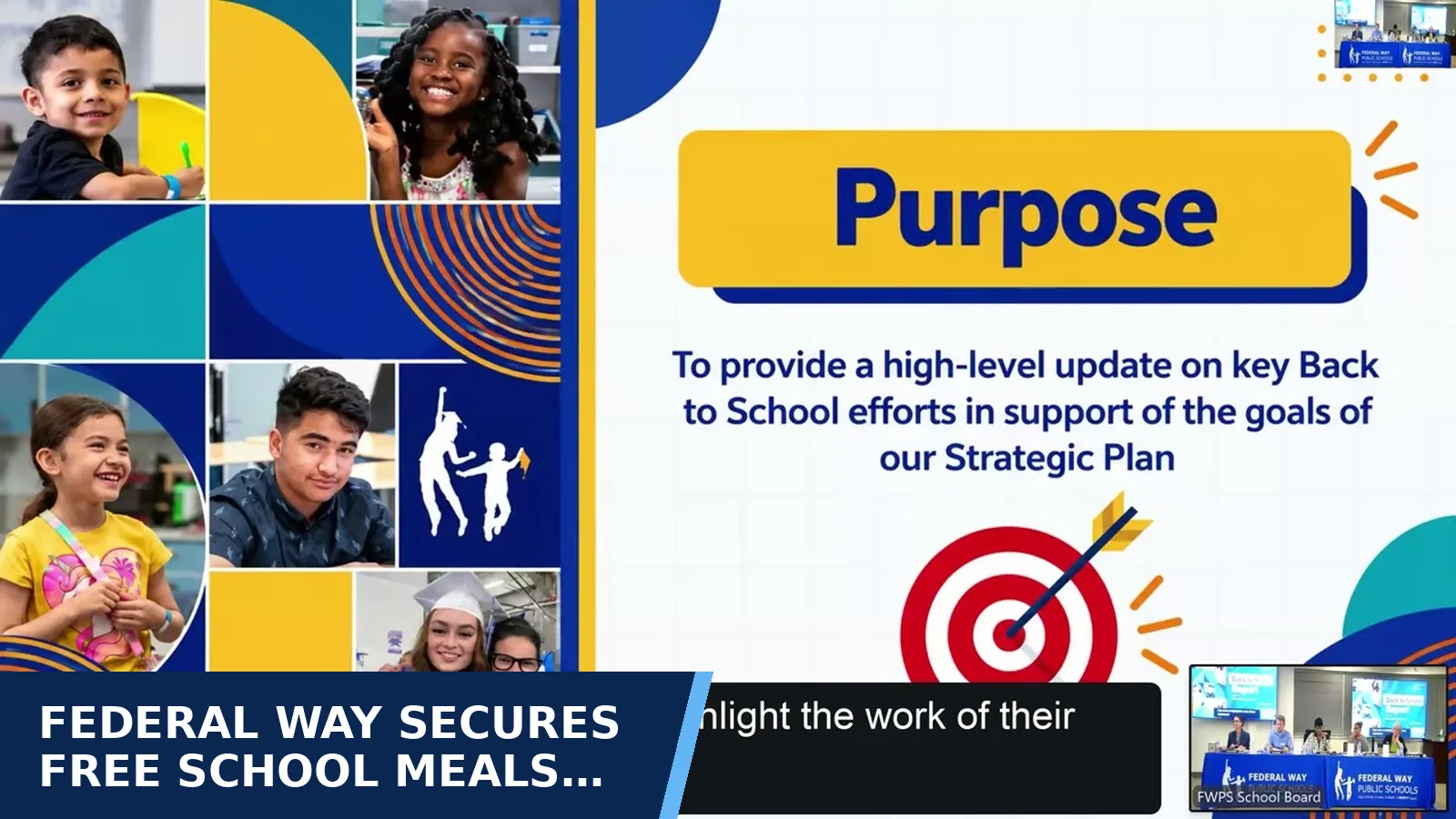
Federal Way will continue serving breakfast and lunch at no cost to all students districtwide through June 2030. This school year, the district is also bringing breakfast in classrooms and second-chance breakfast programs to its remaining schools.
The board approved Resolution 2026-25 authorizing emergency repairs because of a flood in the band room. The minutes do not specify the repair work, cost, or how long the room may be affected.
In March 2026 the superintendent projected a 2026-27 budget shortfall of about $600,000. On September 28 he reported the district ended the fiscal year in the positive, which he said was the first time in about five years.
Valley Pool Together presented a possible path to a new regional public pool: creating a dedicated park-and-recreation service area (PRSA) to fund and operate it. This remains a concept under study, not an approved district project; the example used a $68 million construction estimate and about $850,000 in annual operating costs, with funding dependent on voter approval.
The board approved declaring the Parkway Campus surplus, clearing a first step toward a possible lease. The campus is empty after its programs moved to Central Campus, and the board said the action does not commit the district to a lease.
At its Sept. 22 meeting, the board reviewed proposed revisions to its restraint-and-isolation policy to align it with updated state law; the transcript does not show a vote adopting the revisions. During public comment, a parent reported 348 restraint/isolation incidents in the previous school year, involving 41 restrained students and 35 isolated students, with injuries to students and staff.
The September 17, 2026 Board agenda lists two proposed Consolidated Facilities Project change orders: $45,800 for Meng Analysis commissioning services and $89,826.95 for United Moving & Storage.
At the September 16 meeting, a Hazel Valley teacher and several family members reported insufficient paraeducator support for students with disabilities, including one parent’s report that her nonverbal daughter was bitten again after a one-to-one aide was no longer assigned. Speakers also warned of supervision gaps, elopement risks and missed IEP services; these were public testimony, not findings by the board.
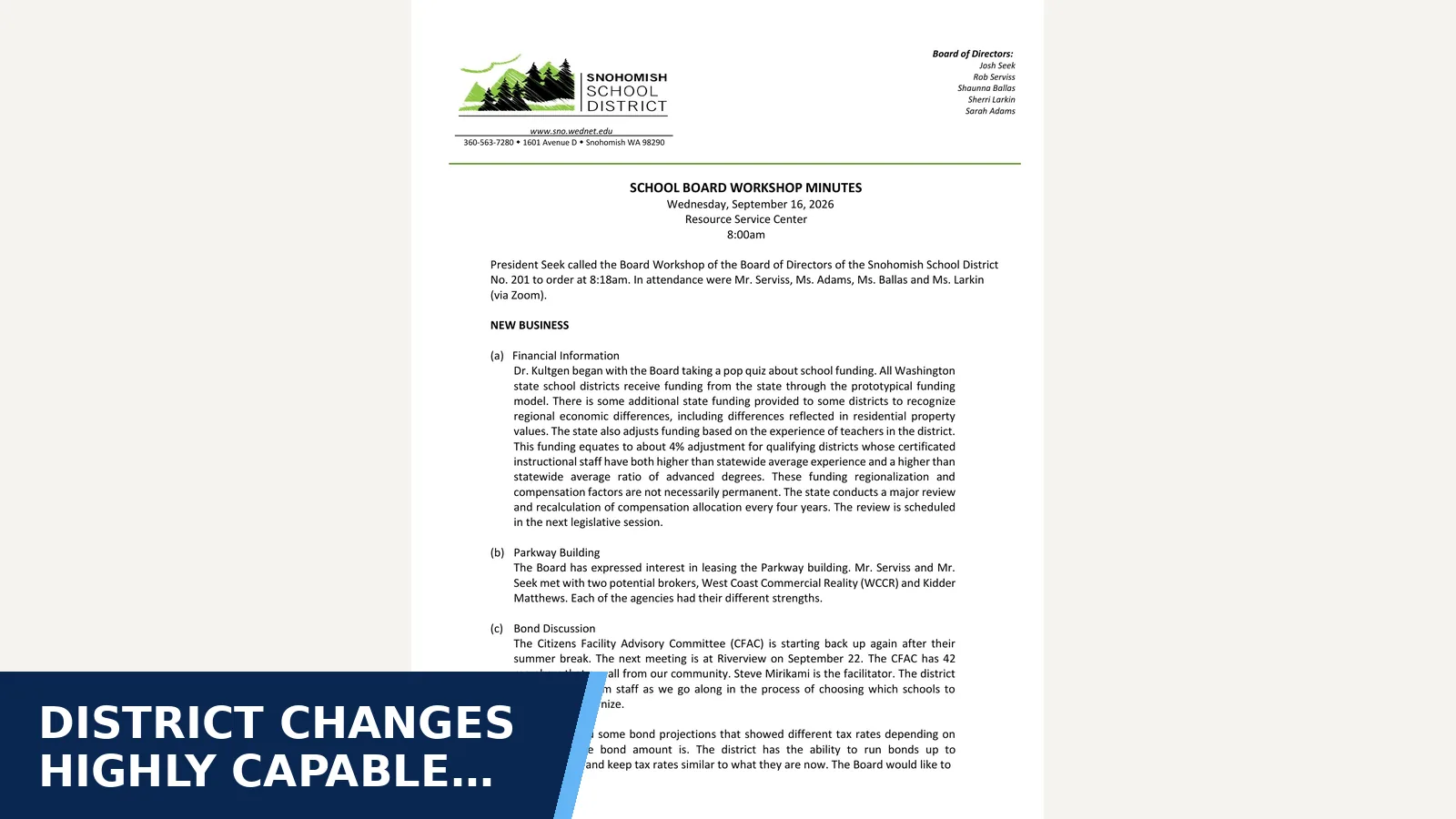
Snohomish changed eligibility for its self-contained Highly Capable 4/5/6 classes: students must qualify as highly capable in both English language arts and math. Students qualifying in only one subject will instead be served in general-education classrooms; the district said the changes will be implemented next school year.