We bring transparency to school decisions nationwide by tracking school board meetings, district documents, and public data. We use AI tools, rigorously evaluated for accuracy, to search for risks.
The policy desk
What’s moving in phones
The debate over phones, screens and the school day.
No recent stories in this edition. Explore the latest reporting below.
The policy desk
What’s moving in AI
How artificial intelligence is changing classrooms and school rules.
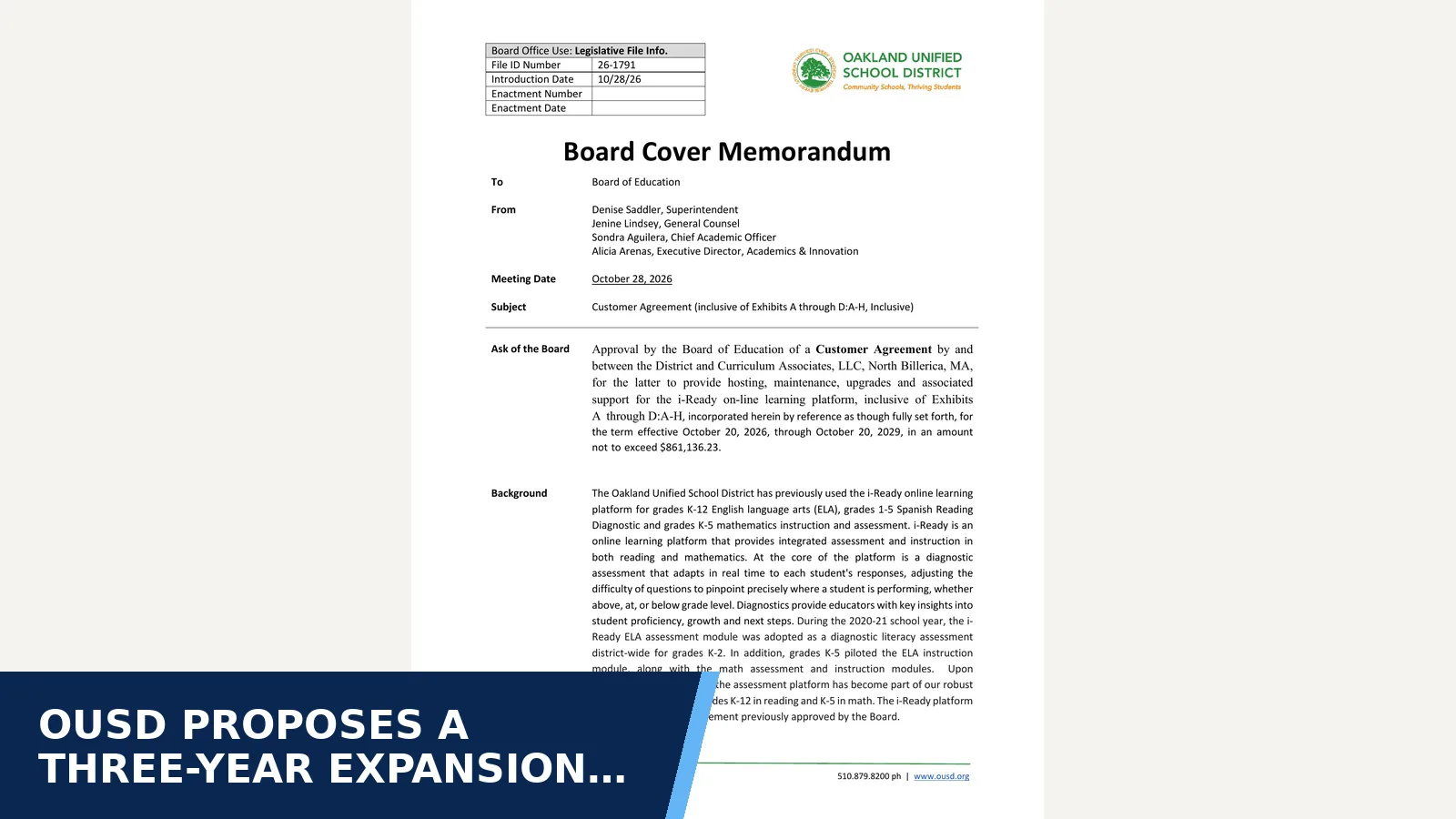
OUSD’s Oct. 14 agenda proposes accepting $41,174,339 in new state funding for its 2026–27 Expanded Learning Opportunities Plan. The plan would provide after-school, weekend, intersession and summer programming for TK–6 students who want it, totaling 205 days of supplemental out-of-school time.
The board adopted *Floriculture: Design & Merchandising*, Fourth Edition, for Lindhurst High School’s floral-design coursework in 2026–27. The adoption followed a public hearing, where the minutes report no public comments.
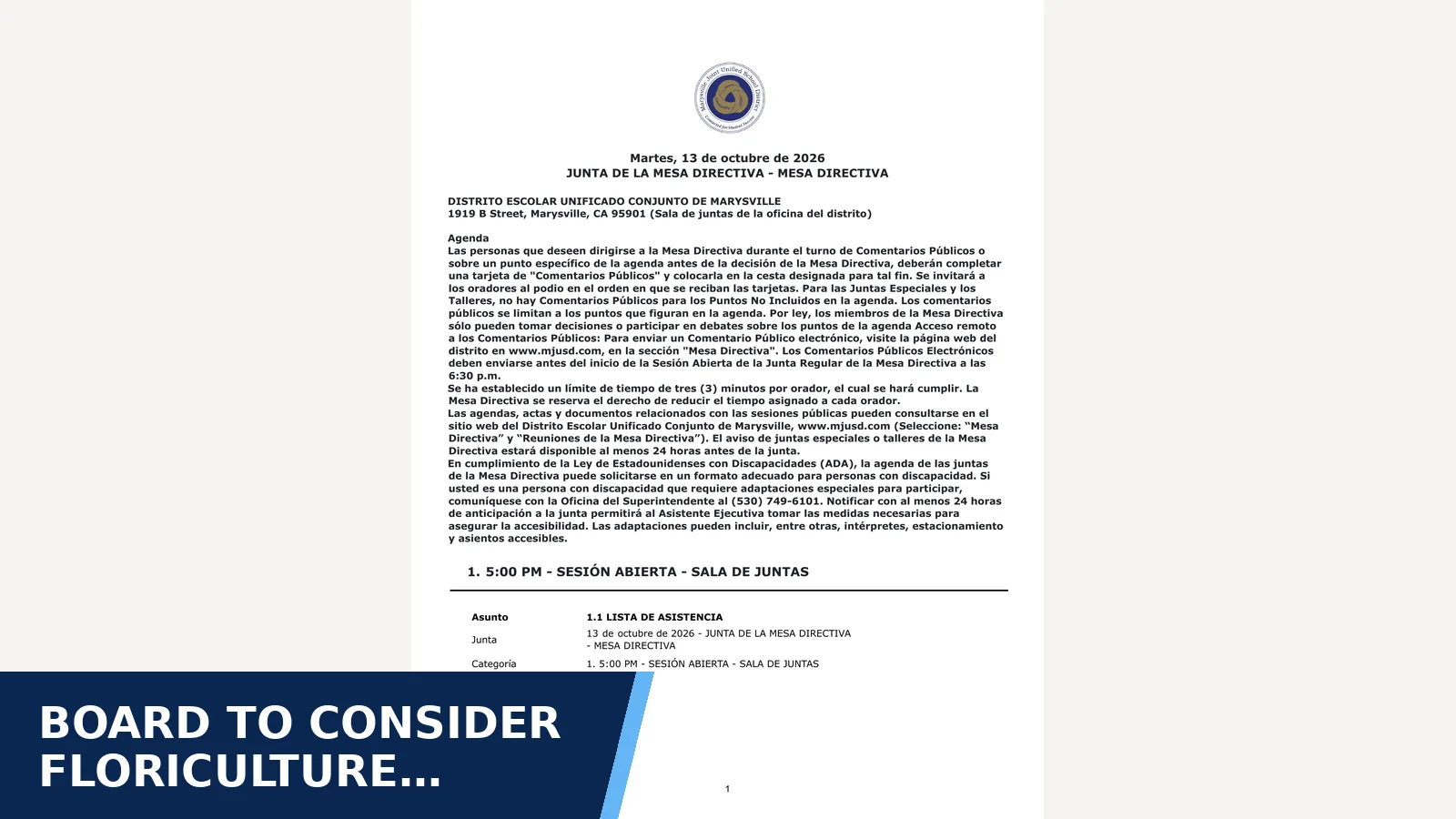
The October 13 agenda proposed adopting *Floriculture: Design & Merchandising*, Fourth Edition, for use at Lindhurst High School in 2026–27. The proposed text covers floral design principles, flower care, arranging techniques, career opportunities and floristry operations.
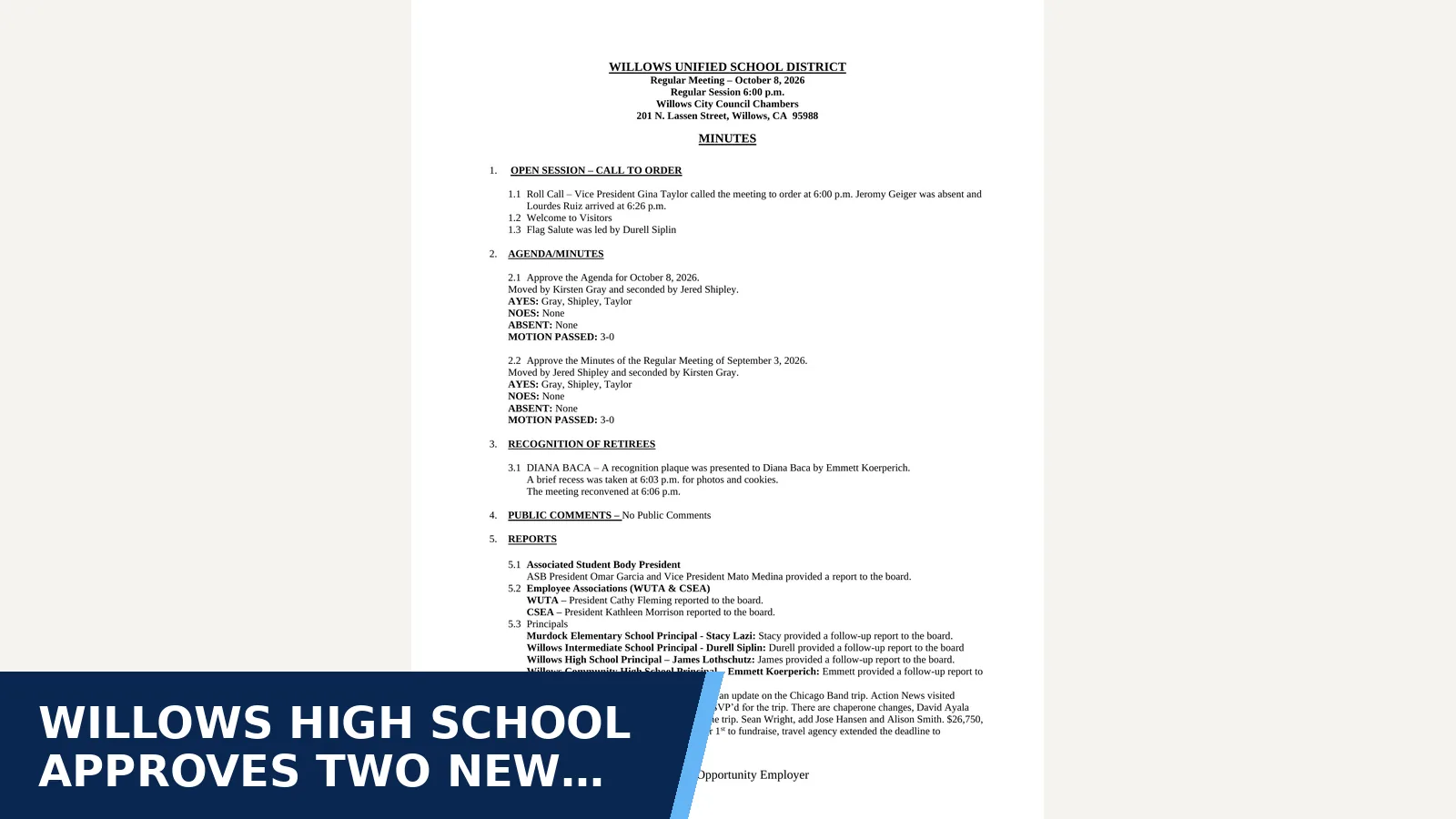
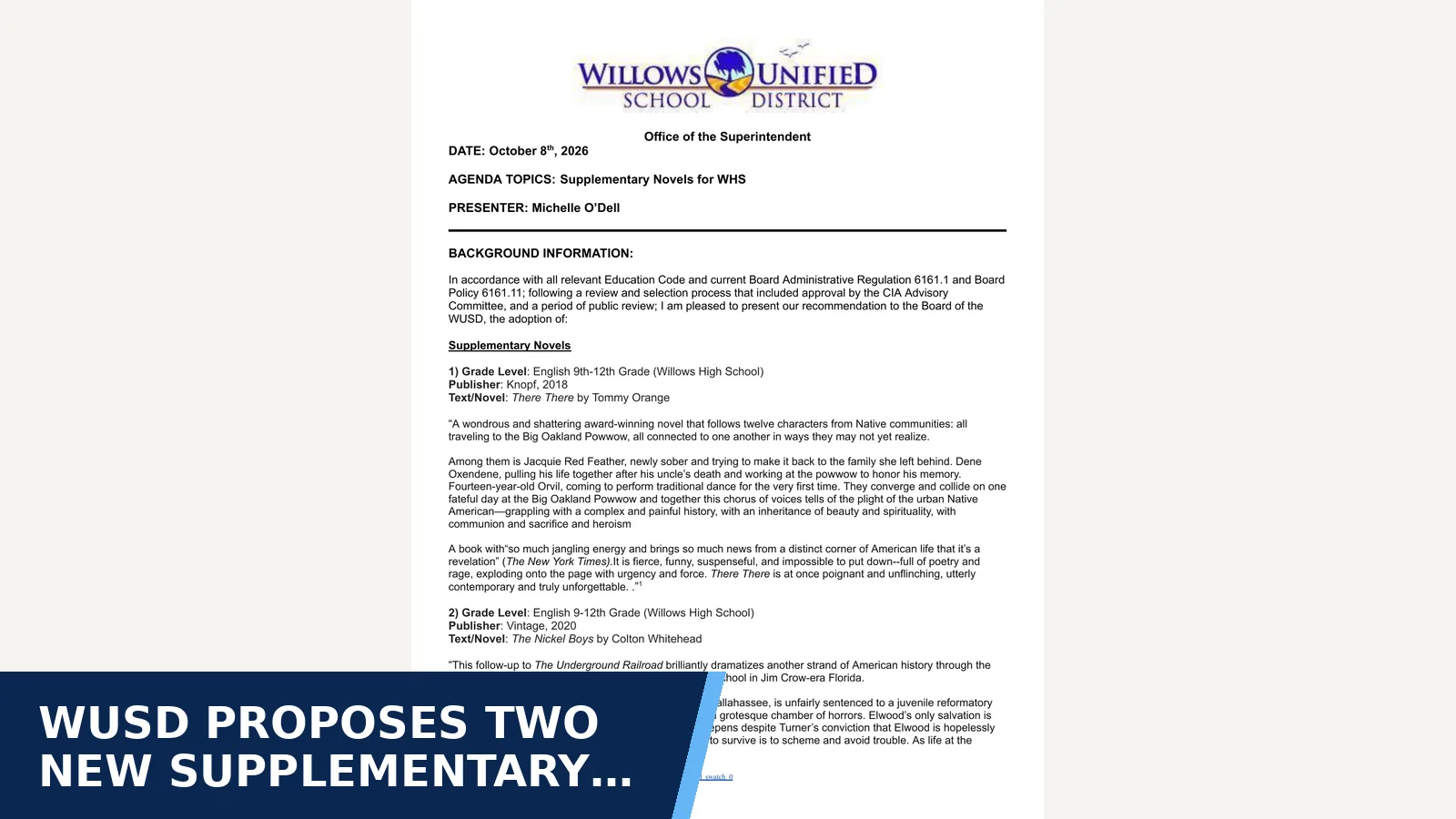
The board approved adding Tommy Orange’s *There There* and Colson Whitehead’s *The Nickel Boys* to Willows High School’s supplementary novels list. The October 8 minutes record a unanimous 4–0 vote, confirming the adoption previously reported as a proposal.
At the October 8 meeting, the motion to approve Designing Schools’ AI initiative died for lack of a second. A separate motion referred the matter through the policy committee.
The October 8 agenda proposes adding Tommy Orange’s *There There* and Colson Whitehead’s *The Nickel Boys* to Willows High School’s supplementary novels list. The recommendation is for English classes in grades 9–12 and followed an advisory review and a public-review period from August 28 to September 28, 2026.
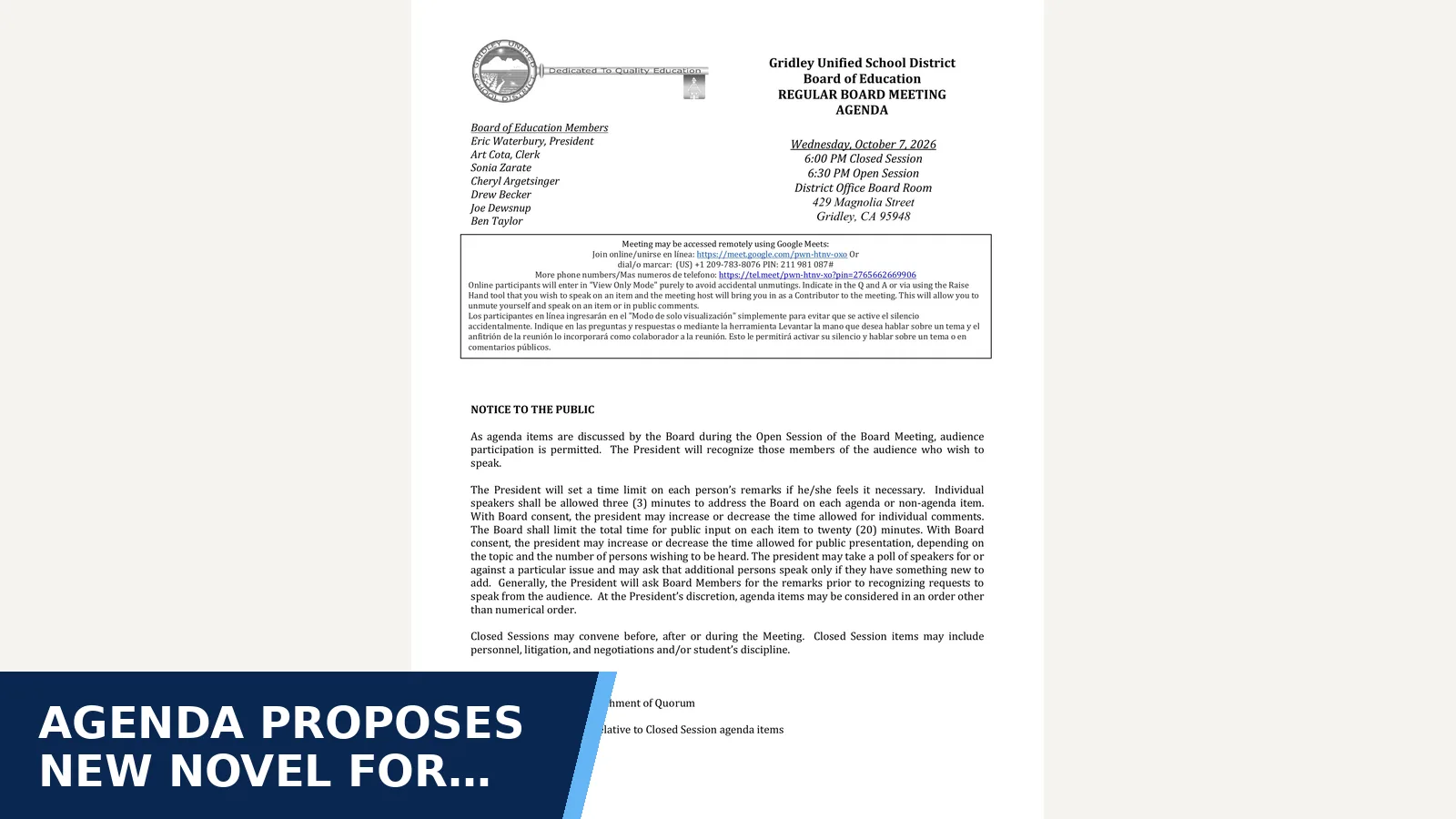
The Oct. 7 agenda proposes adding Suzanne Collins’s *Sunrise on the Reaping* to Sycamore’s approved novels list for Advanced ELA 8. Its proposed use is limited to that course and is intended to increase rigor while building on students’ prior exposure to *The Hunger Games*.
The Oct. 7 agenda proposes adopting *Mexican Gothic* as a new Sequoia High School literary text. It would replace poems by Sydney Sipho Sepamla focused on apartheid in South Africa, with teaching on Gothic fiction, postcolonial critique, and Latin American historical contexts.
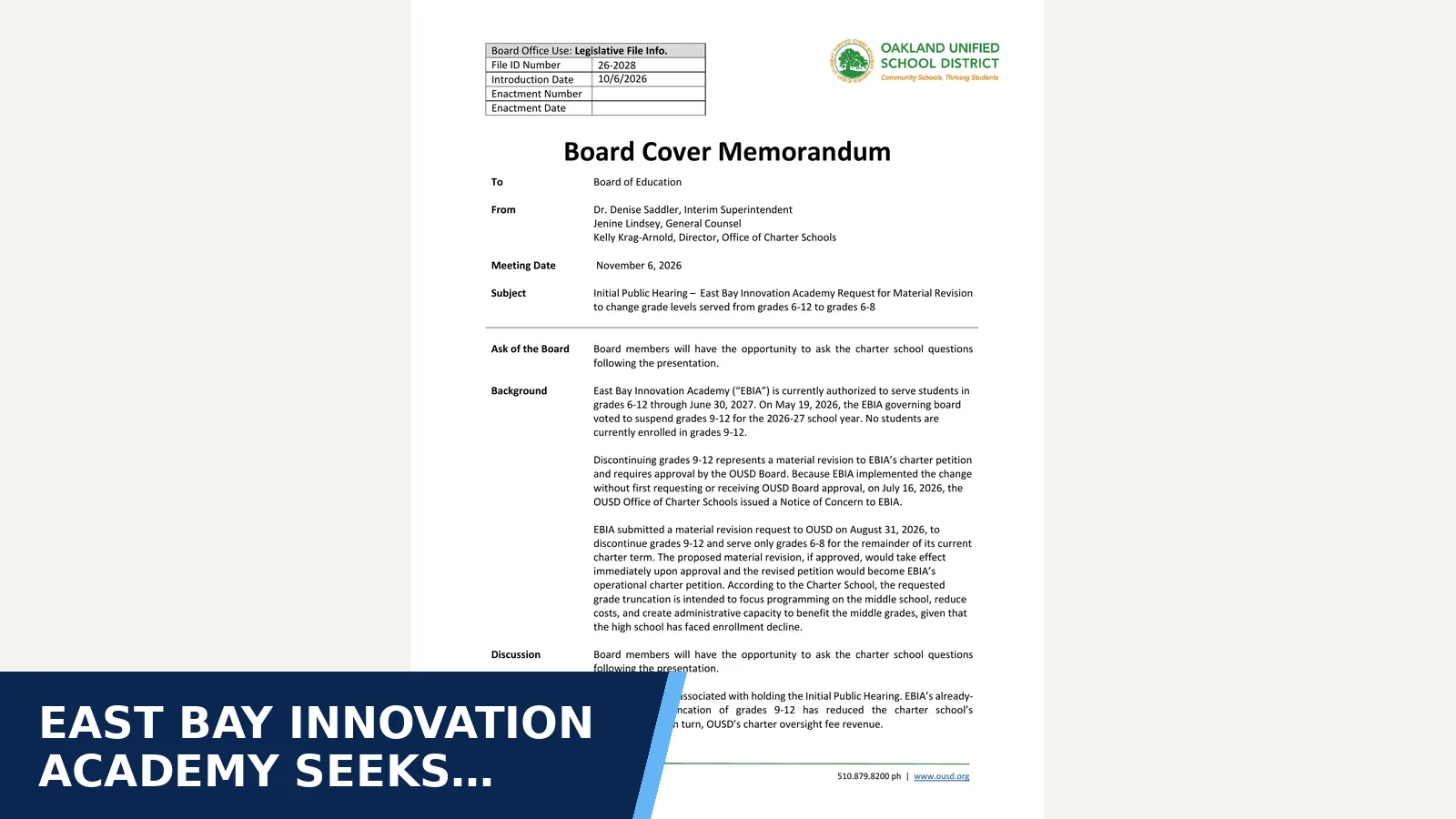
East Bay Innovation Academy is asking OUSD to amend its charter from grades 6–12 to grades 6–8; an initial public hearing is scheduled for November 6, 2026. The school had already suspended grades 9–12 for 2026–27 without board approval, and its presentation projects enrollment targets falling from 770 to 330 and 12 fewer teaching positions (document 97561).
By October 6, district leaders reported that the Request for Assistance process was available at all sites, expanding the spring pilot for faster classroom support.
The board agenda proposes a partnership that would let CSU use district student data to notify eligible high-school seniors about direct-admission opportunities and connect students not on track for CSU’s A–G requirements with its Transfer Success Pathway. Students would still need to complete required application and enrollment steps to attend.
The board renewed Empower Language Academy’s charter and approved adding grades 7 and 8. The expansion is scheduled to begin in the 2028–29 school year; the academy currently serves TK–6 and offers a two-way dual-language immersion program.
Kern High School District presented a proposed replacement textbook series for English Language Development courses ELD 1–5; the board heard it as a first reading and has not approved it. The district recommends Lift materials because its current provider is ending publication of materials for ELD 1, with a final approval recommendation expected at the next regular board meeting.
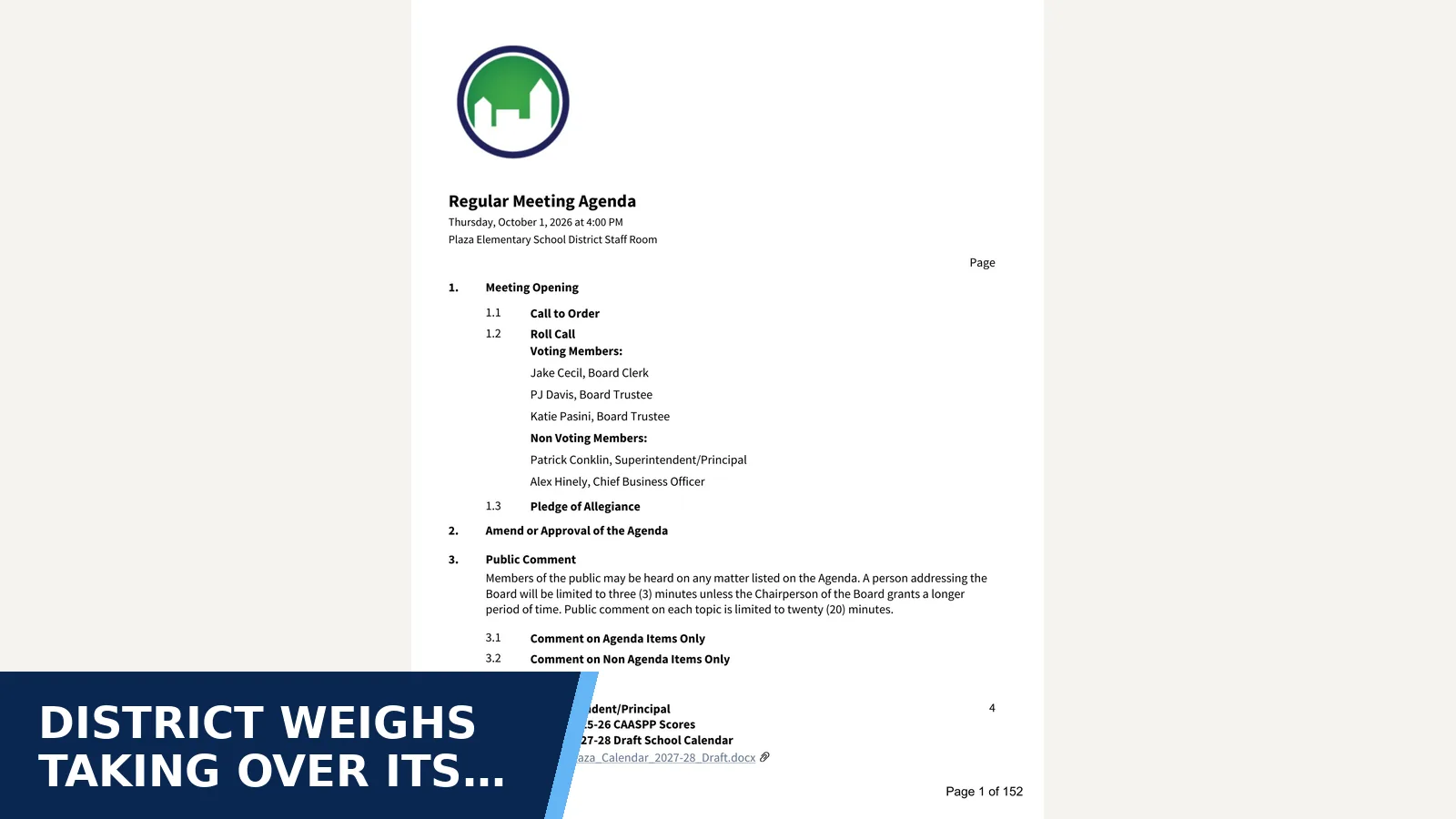
The October 1 board packet includes a preliminary proposal for Plaza Elementary School District to take over the TK–8 mild/moderate special-education program now operated by Glenn County Office of Education, potentially beginning July 1, 2027. The draft would shift service-delivery, staffing, and fiscal responsibilities to the district, but is explicitly marked “not for submission” and says key staffing, cost, and program information is still missing.
The board approved revisions to the district’s expanded-learning plan, adding teacher-led attendance recovery and after-school academic support, as well as elementary sports camps and educational field trips. The district said expanded learning now operates at all elementary schools and in-person middle schools, including Black Diamond Middle School, and is funded by restricted funds.
Staff proposed a Google AI study tool for high-school students, along with digital-citizenship teaching and future policy work. K–8 access would remain blocked.
The board adopted a plan to move Transitional Kindergarten and kindergarten to a full-day schedule beginning in the 2027-28 school year. The schedule will match the instructional day for grades 1–3 across the district’s elementary schools.
The September 17 board agenda proposed authorizing a 90-day feasibility study to potentially transform the A.J. Dorsa Elementary School site into a TK-8 Gifted, Talented, Advanced Learning & Innovation Academy. The agenda does not establish that the transformation was approved or will occur.
Durham Elementary is implementing CA Math & You in kindergarten through fifth grade and Frog Street in transitional kindergarten. The school also continues its second year of Amplify Science.
San Lorenzo Unified added or expanded arts and music offerings during the 2025–26 school year at elementary, middle, and high schools. Programs included band and visual arts in elementary schools, computer art/design, visual arts and advanced band in middle schools, and expanded digital arts and theater in high schools.
California High School’s 2026–27 site-budget report lists ending PLTW engineering among the program and service cuts. The report also lists eliminating color printing and shifting to digital copies as part of the reductions.