South Vermillion Community School Corporation
Before-school care coming to Van Duyn
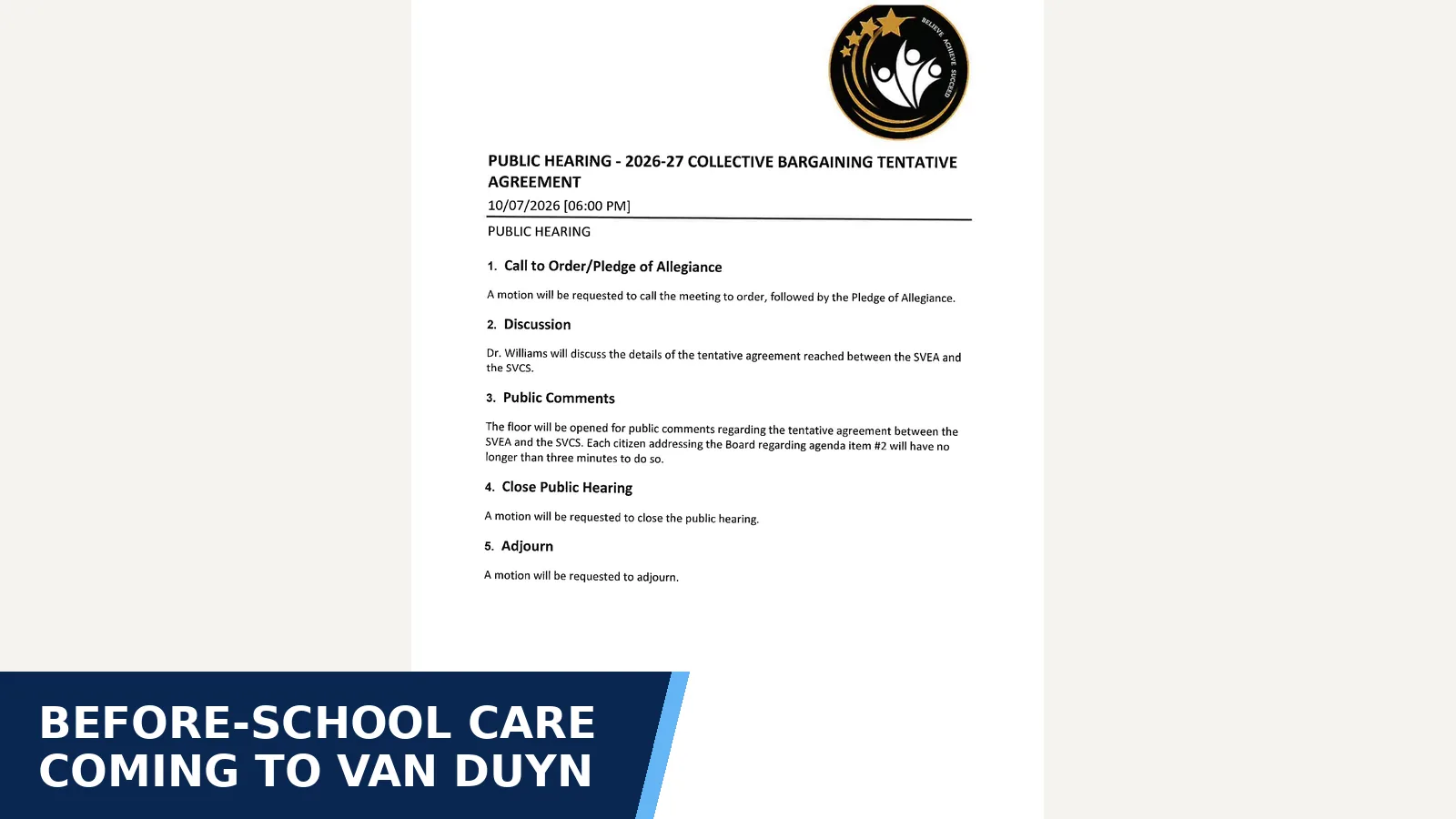
On October 22, 2026, the board approved a before-school childcare program at Van Duyn Elementary, like the one at Central.
Read the full storySouth Vermillion Community School Corporation
On October 22, 2026, the board approved a before-school childcare program at Van Duyn Elementary, like the one at Central.
Read the full storyWe bring transparency to school decisions nationwide by tracking school board meetings, district documents, and public data. We use AI tools, rigorously evaluated for accuracy, to search for risks.

The policy desk
The debate over phones, screens and the school day.

The policy desk
How artificial intelligence is changing classrooms and school rules.

The policy desk
Students speaking up, organizing and helping shape their schools.
The news desk
A severe storm on August 11, 2026 closed schools for eight school days at the start of the year. The state waived six of them because Duneland already has extra class minutes. On September 14 the board made February 12 and April 9, 2027 regular school days to make up the other two.
In August 2026, the board approved a Neola policy update on artificial intelligence. It had a first reading on August 10 and was approved on August 24. Leaders said teachers decide when students may use AI, and that training focuses on using it responsibly without copying or having it do the work. The district also pays for the MagicSchool AI platform ($35,175) and added an AI assistant to its website.
A derecho (a powerful windstorm) and tornadoes hit Portage on August 11, 2026. All schools stayed closed to students until August 25, so the school year started nine days later than the planned August 12 start. The board voted to keep paying employees during the closure. The district later said no makeup days are needed.
New Albany-Floyd County Consolidated School Corporation
On August 24 the board approved, as a consent item, a resolution allowing firearms and imitation firearms to be used for instruction. It also approved, 7-0 after debate, a mentoring partnership with the faith-rooted Hope Collaborative covering most schools; the agreement bans proselytizing and says mentoring may not interfere with class time.
Porter Township School Corporation
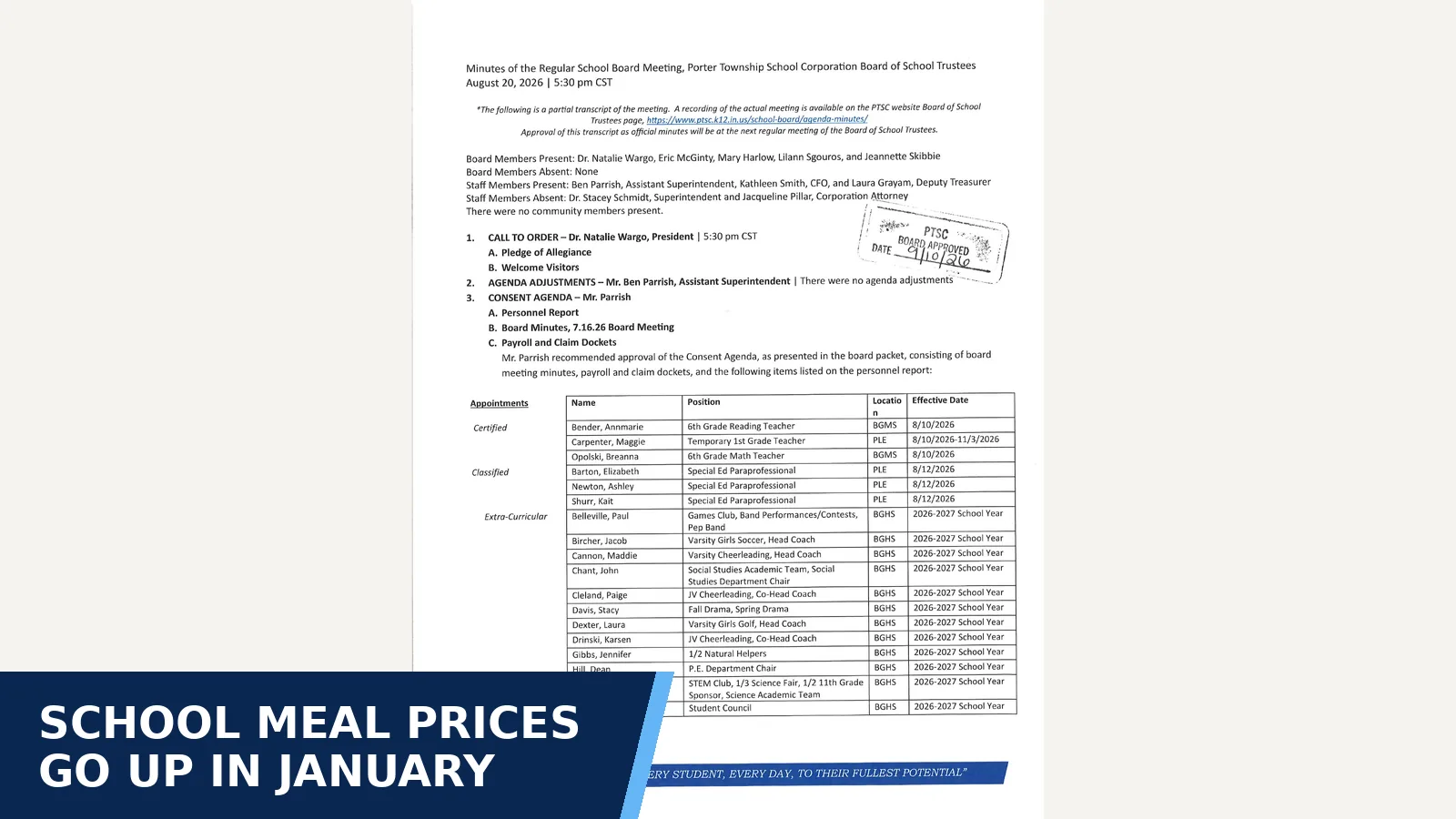
On August 20, 2026 the board voted 5-0 to raise student and adult meal prices starting in the second semester (January 2027). The new prices are not listed in the minutes.
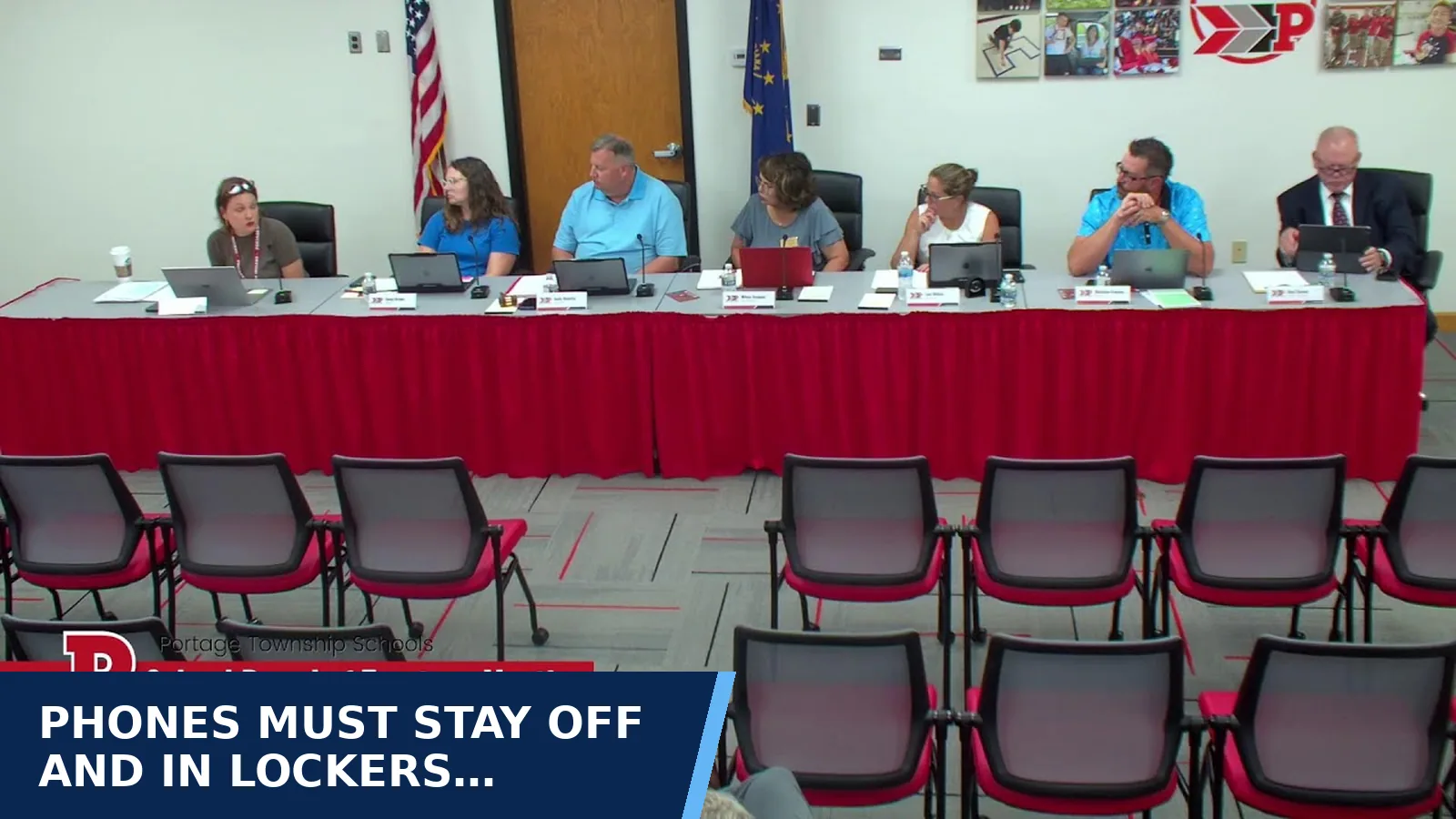
Starting in 2026-27, students may bring phones to school, but the phones must be turned off and kept in their lockers during the school day. If a phone is out, staff take it and the student faces progressive discipline. Parents can still message their children through ParentSquare.
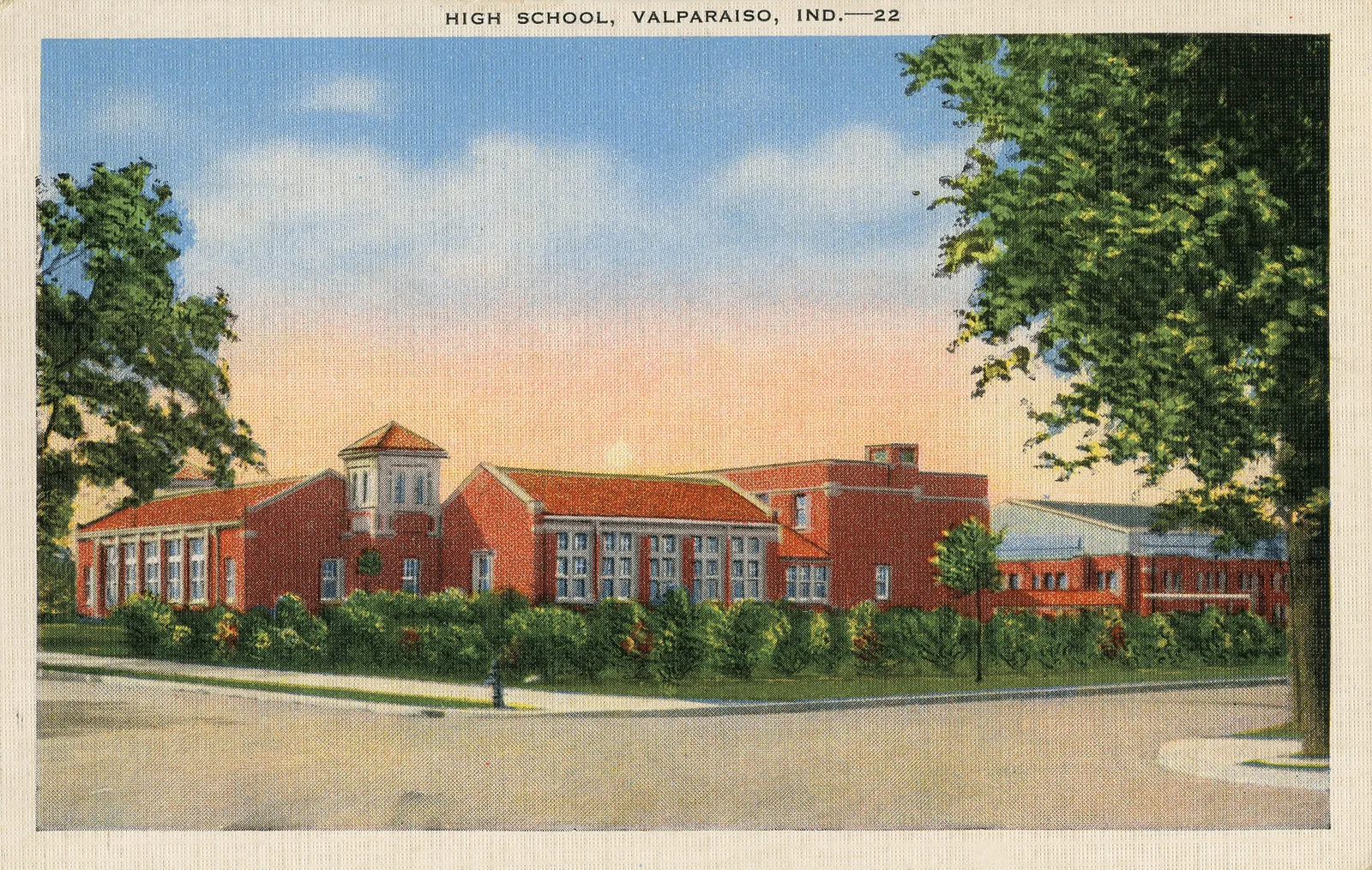
On July 23, 2026, the board changed December 15, 2026 and May 23, 2027 from full days to half days at Valparaiso High School. The change supports a new finals schedule: one full exam day with three exams, then two half days with two exams each.
Rising Sun-Ohio County Community School Corporation
On July 21, 2026 the board approved the 2026-27 student handbooks with one revision, recommended by the high school principal, to the Rising Sun High School cell phone policy so it aligns with new Indiana law.
Rising Sun-Ohio County Community School Corporation
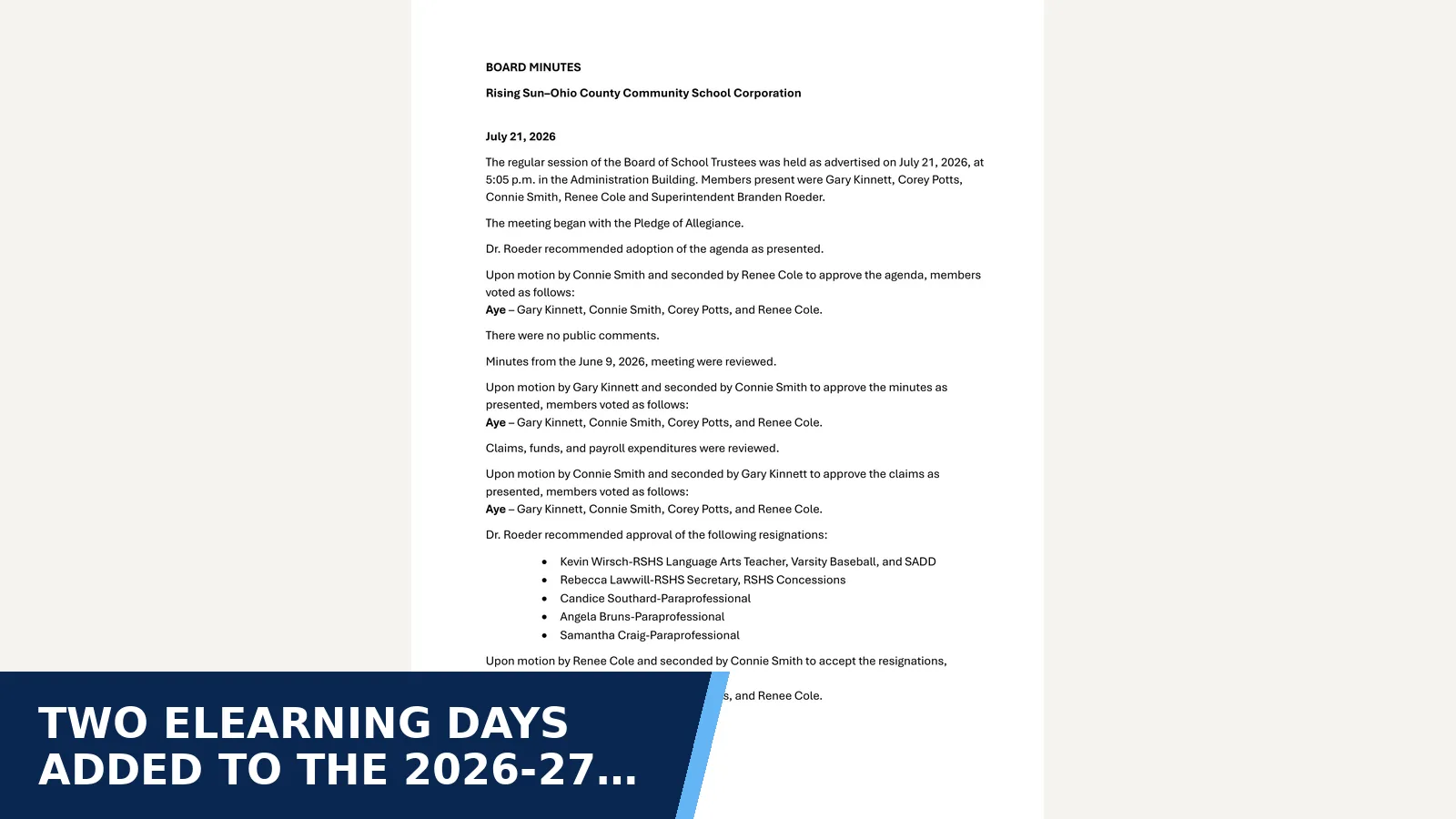
On July 21, 2026 the board added October 20, 2026 (PSAT day) and March 4, 2027 (SAT day) as asynchronous eLearning days used for staff professional development. In September it added a November 25 make-up day so eLearning days meet state rules.
Porter Township School Corporation
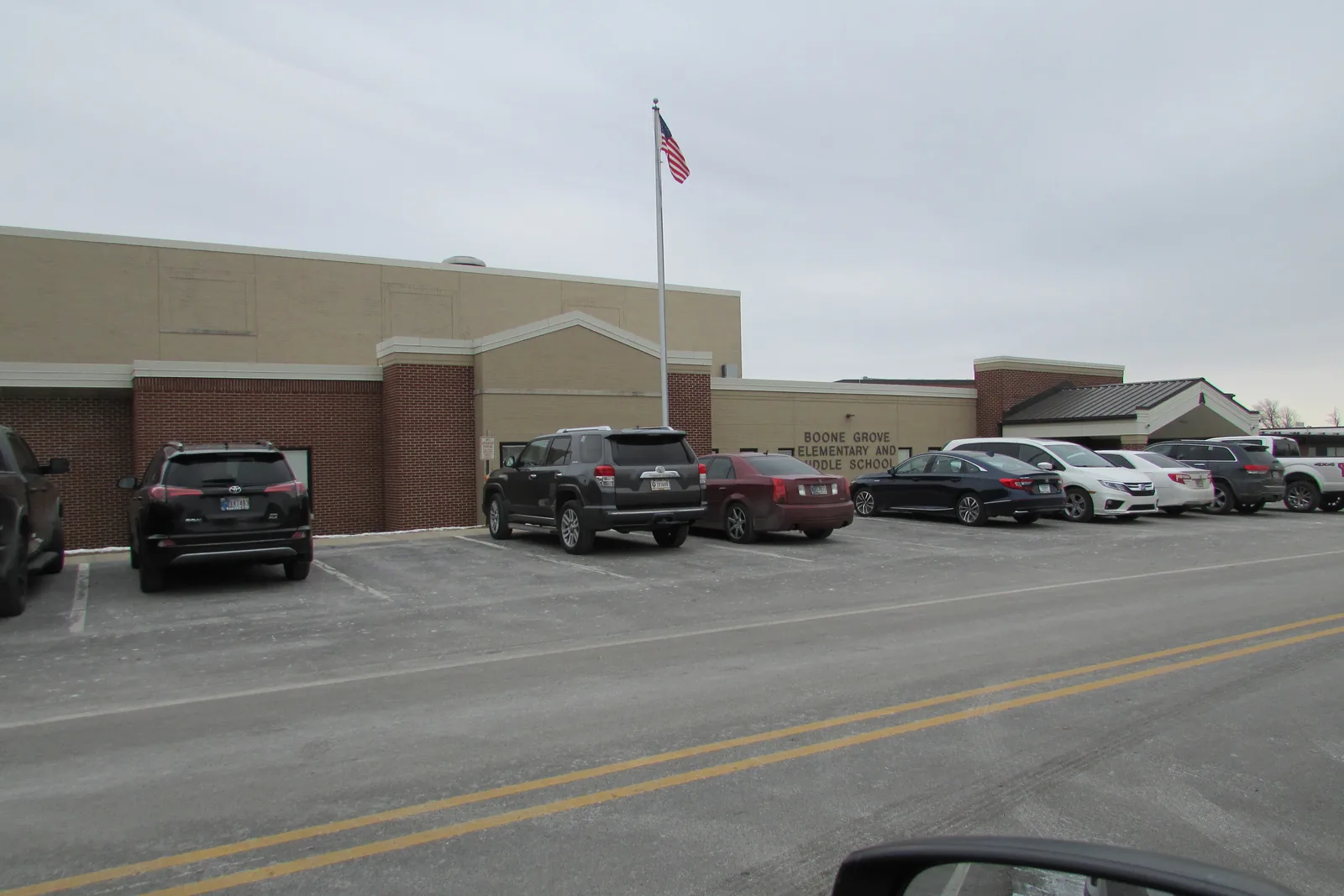
In June 2026 the board adopted a new phone policy (5136R) and in July a new rule for other personal electronics (5136.01). Under the 2026-27 handbook, Boone Grove Middle School students must keep phones, smartwatches and smart glasses powered off in their lockers all day, including lunch. A device seen or heard is taken to the office; after a third offense a parent must pick it up.
Union Township School Corporation
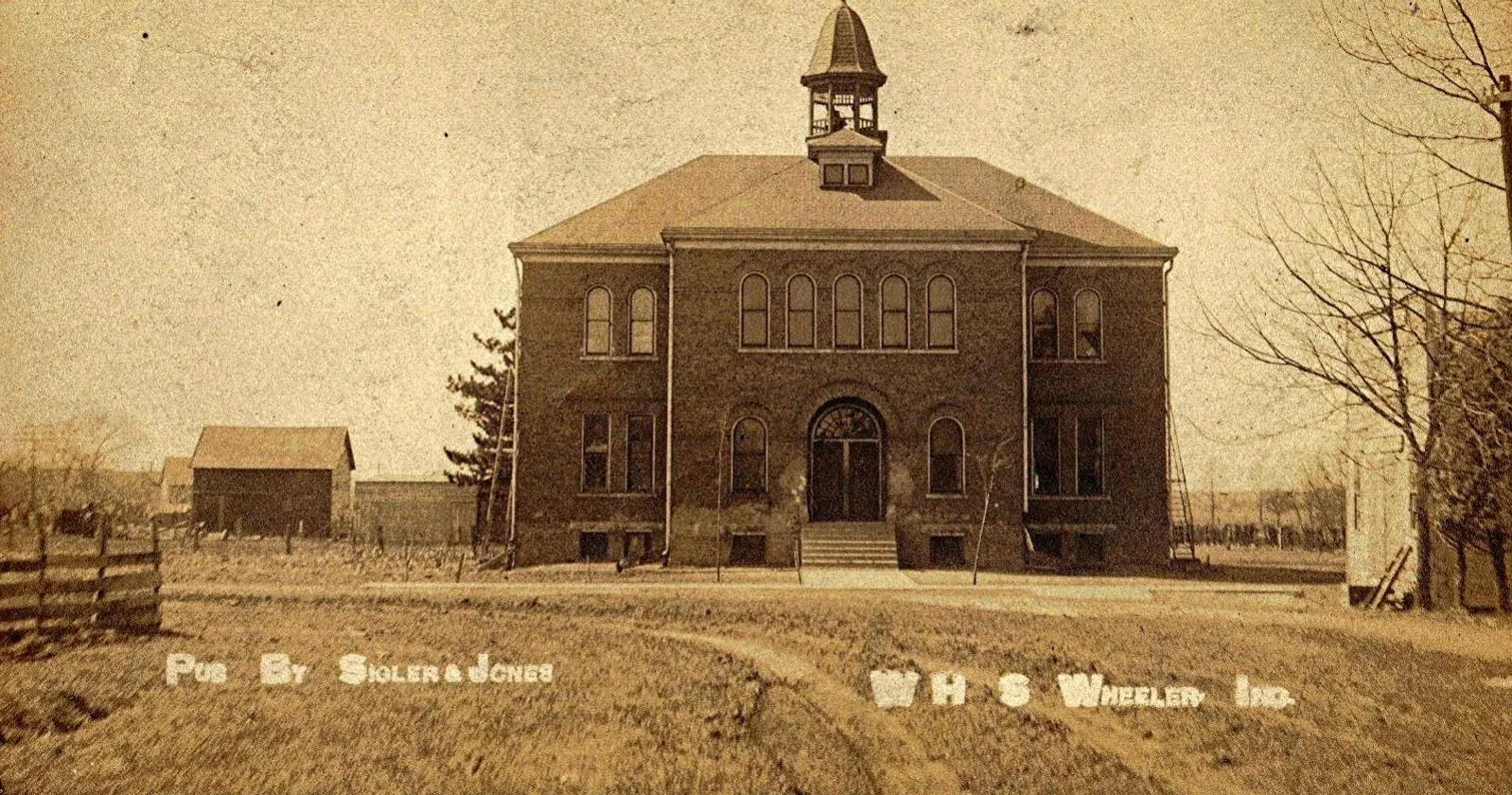
In June 2026 the board adopted a wireless device policy that follows a new state law. At Wheeler High School, phones must be off and out of reach from the first bell to the last bell. Elementary and middle school students already had to keep devices off in a backpack, locker or cubby.
On June 22, 2026, the board adopted a new policy on student phones and other personal devices, as a new Indiana law (SB 78) requires. It bans their use from the first bell to the last. The draft offered two choices: leave devices at home, or lock them away at school. On June 8, board members leaned toward storing them in lockers (or cubbies at elementary schools). The board said the policy may be amended later.
On June 17, 2026, the board approved a revised wireless device policy. Students may generally use phones and similar devices only outside the school day. The old rule banned them only during class time. Exceptions remain for medical monitoring and special education needs.
South Vermillion Community School Corporation
On June 11, 2026, the board voted 6-0 to adopt a policy update (Vol. 38 No. 2) that follows Indiana's new law on student phones. Under the policy, students must keep personal devices stored during instructional time. Board members asked whether the rule also covers lunch, and that was not settled at the meeting.
Metropolitan School District of Boone Township (Hebron Schools)
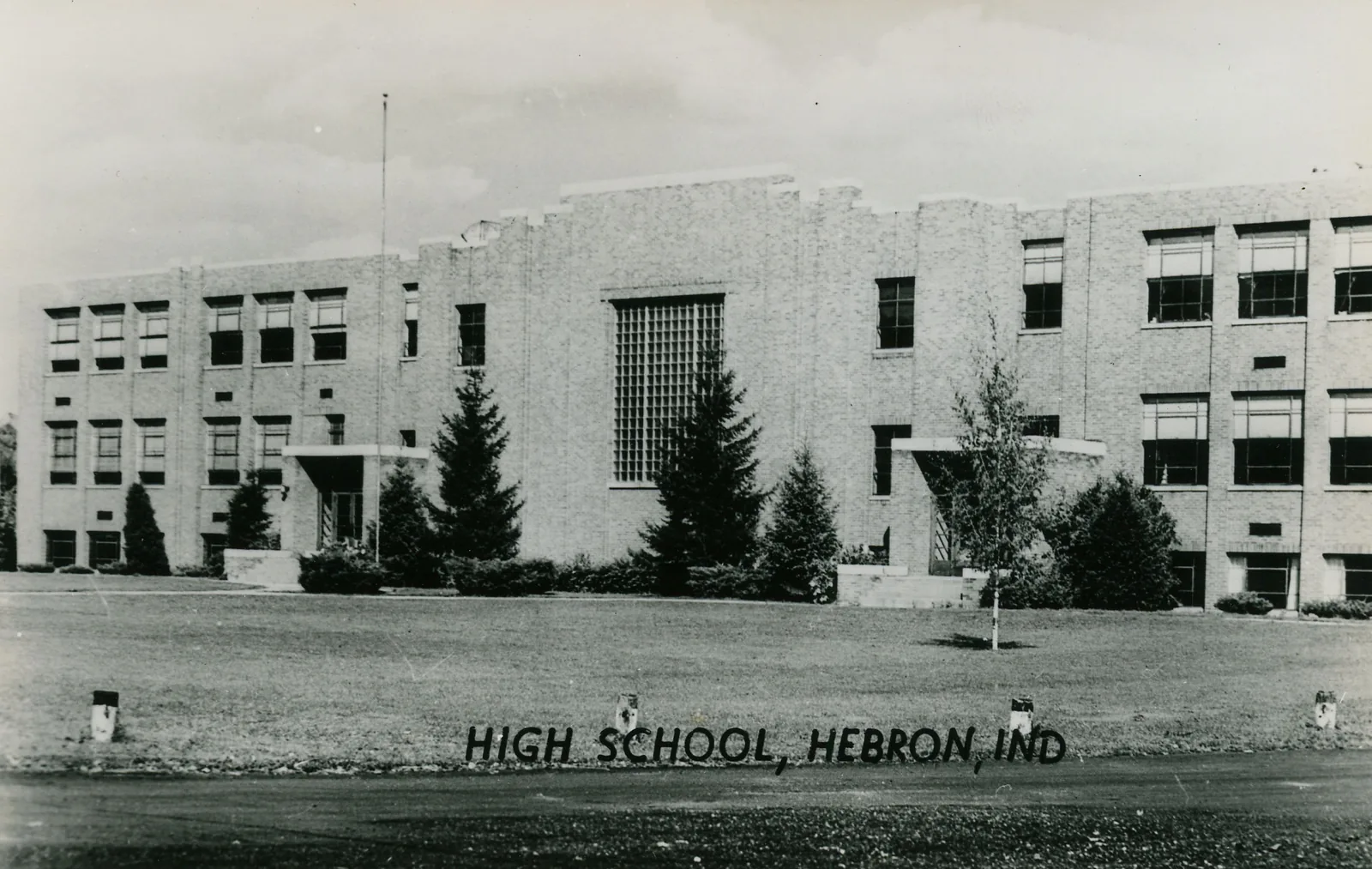
On June 9, 2026, the board held the first reading of a wireless device policy that follows a new Indiana law. Students may bring phones, tablets and smartwatches to school, but the devices must be powered off and in their lockers for the whole school day. High school students, who could use phones at lunch last year, will no longer be able to.
New Albany-Floyd County Consolidated School Corporation
The board gave final approval to cell phone policy 5136, required by a new Indiana law. Students in kindergarten through 12th grade must keep personal devices powered off and out of reach for the whole school day. High schoolers lose their old lunch and passing-period allowance. Exceptions cover teacher-approved class use, emergencies and health needs, and IEP or 504 plans. Discipline escalates from a warning up to expulsion.
The board adopted Policy 5136 on June 1, 2026 to follow a new Indiana law. Starting in 2026-27, students must turn phones off when they arrive and keep them in their lockers all day, even at lunch and between classes. Before, phones were only banned in class. Phones found out can be taken until a parent picks them up.
Closer to home
Explore the national edition and nearby communities.