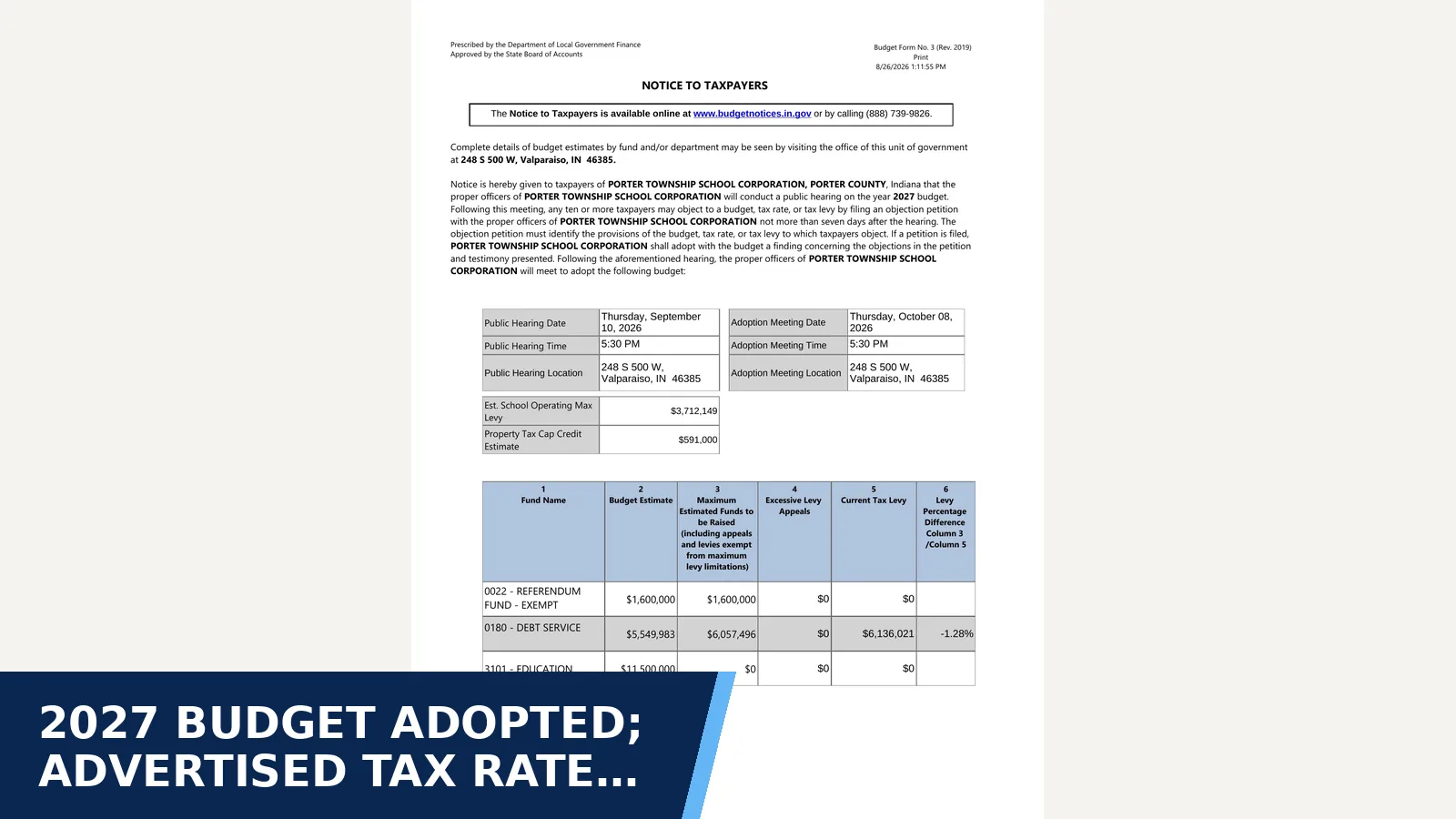
Voters will decide on November 3, 2026 whether Porter Township schools can raise property taxes for up to eight years at no more than $0.3576 per $100 of assessed value and no more than $3.5 million a year.
We bring transparency to school decisions nationwide by tracking school board meetings, district documents, and public data. We use AI tools, rigorously evaluated for accuracy, to search for risks.
The policy desk
What’s moving in phones
The debate over phones, screens and the school day.
No recent stories in this edition. Explore the latest reporting below.
The policy desk
What’s moving in AI
How artificial intelligence is changing classrooms and school rules.
No recent stories in this edition. Explore the latest reporting below.
The policy desk
What’s moving in student voice
Students speaking up, organizing and helping shape their schools.
No recent stories in this edition. Explore the latest reporting below.
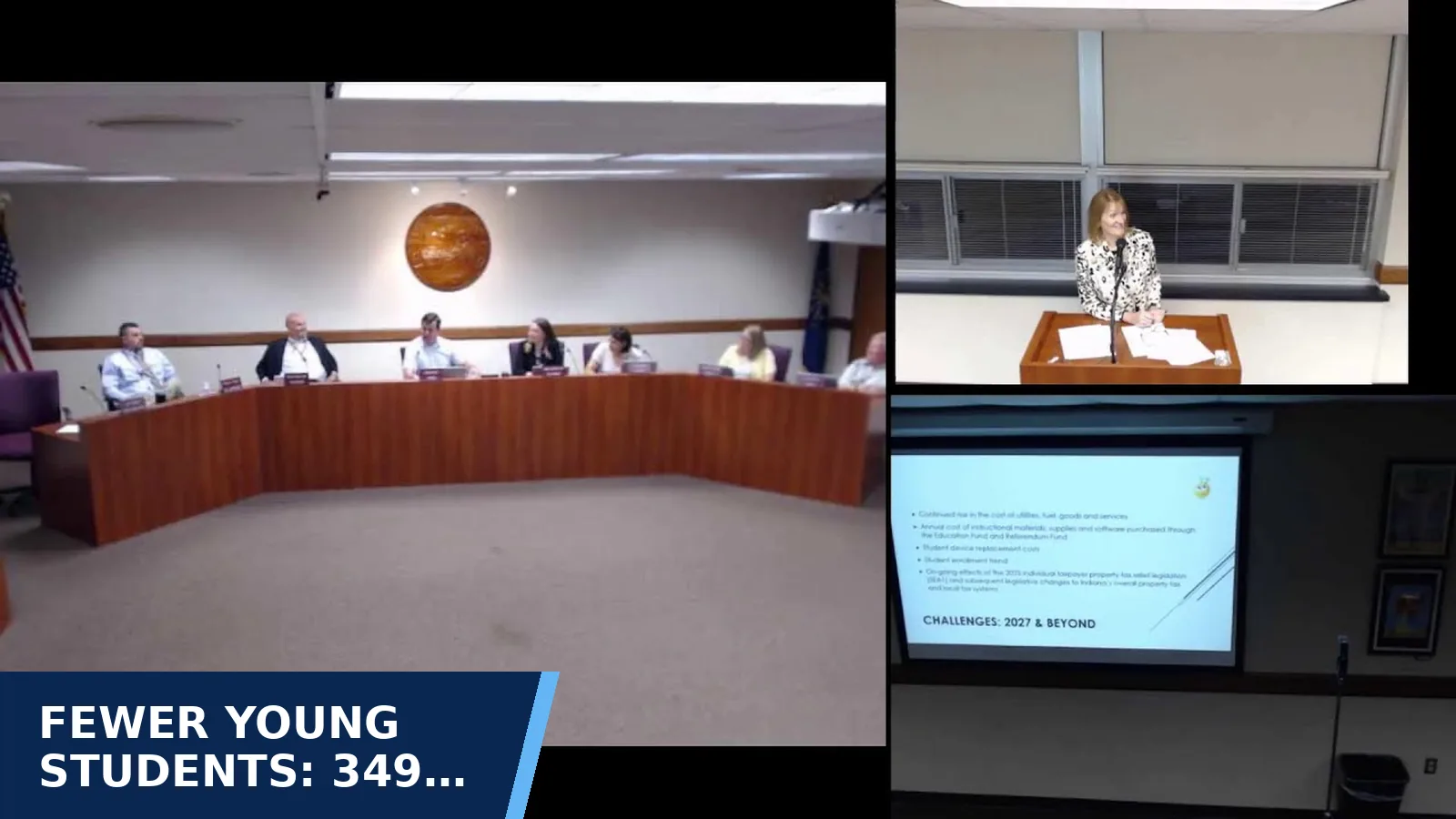
At the October 12, 2026 budget hearing, the finance officer said only 349 kindergartners were counted this fall, compared with about 500 seniors last year. The state is funding 5,774 students, and leaders expect the number to keep falling, while the online school grows. In January the count had risen to 5,829.
On October 8, 2026 the board voted 4-0 to adopt the 2027 budget and tax rates. The advertised budget is $24.1 million and the advertised total tax rate is $1.4354 per $100, compared with $1.0358 approved for 2026. About $0.20 of the advertised rate is the proposed referendum, which only applies if voters approve it. Net assessed value in the district fell 4.2% to $891.3 million.
On Sept. 22, 2026, during the public hearing on an additional appropriation, the board voted 4-0 for the additional appropriation resolution and the final bond resolution. On Oct. 20 it approved accepting a good-faith deposit with First Financial Bank and using bond proceeds to reimburse listed expenditures.
The proposed 2027 budget is about $165.7 million, with a $59.1 million property tax levy. Staff said the tax rate will likely rise while the money the district actually collects falls by more than $5 million, because assessed value is dropping for the first time in years and property-tax-cap losses are growing. Health insurance costs are up more than 30%, and enrollment is projected down 1.5%. Adoption was on the October 19 agenda.
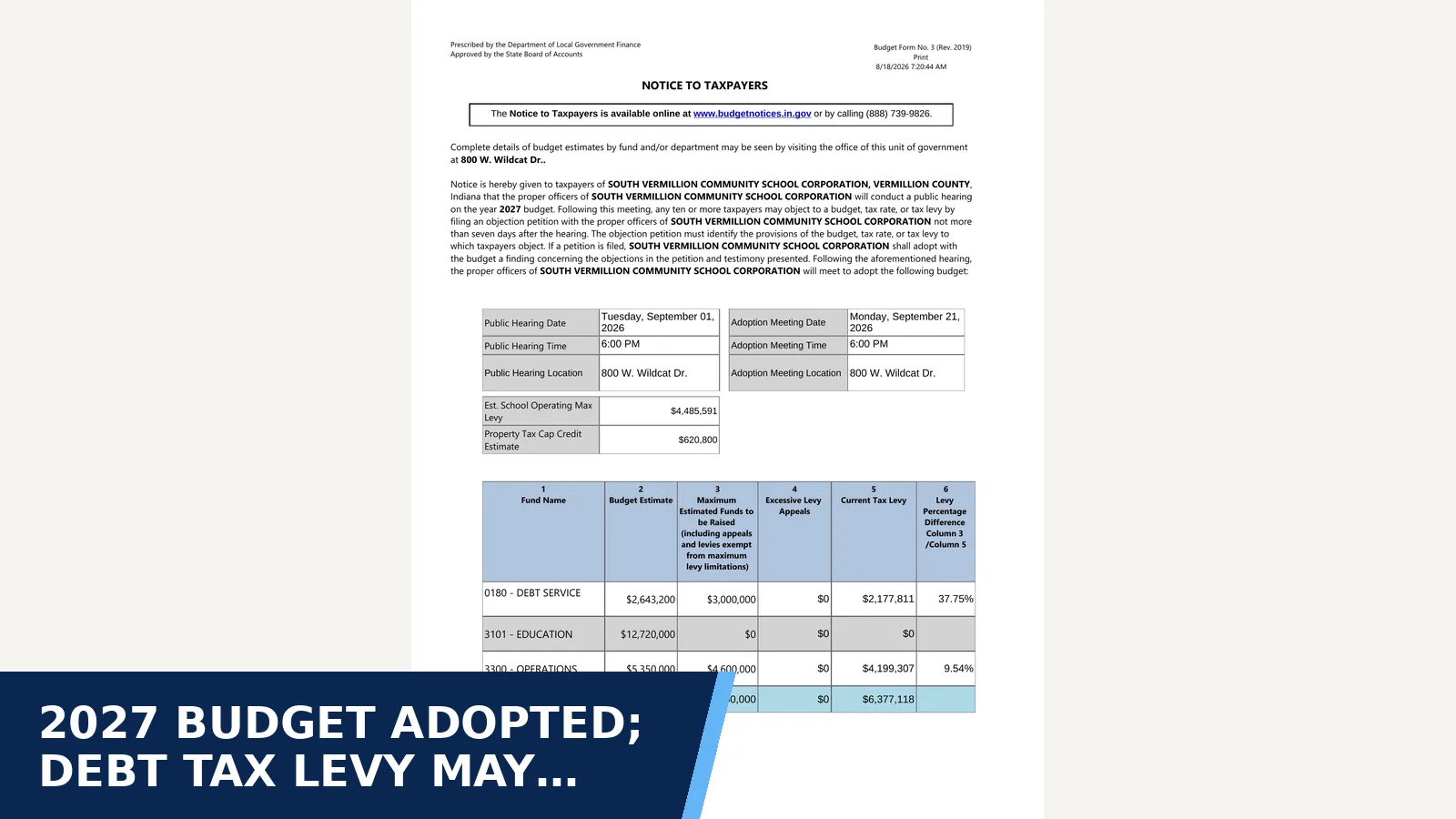
On September 21, 2026, the board adopted a $20,713,200 budget for 2027: Education $12.72 million, Operations $5.35 million and Debt Service $2,643,200. The advertised maximum debt levy is $3,000,000, up 37.75% from $2,177,811, and the operations levy is up 9.54%. The minutes say actual tax rates are expected to come in lower once the state sets them.
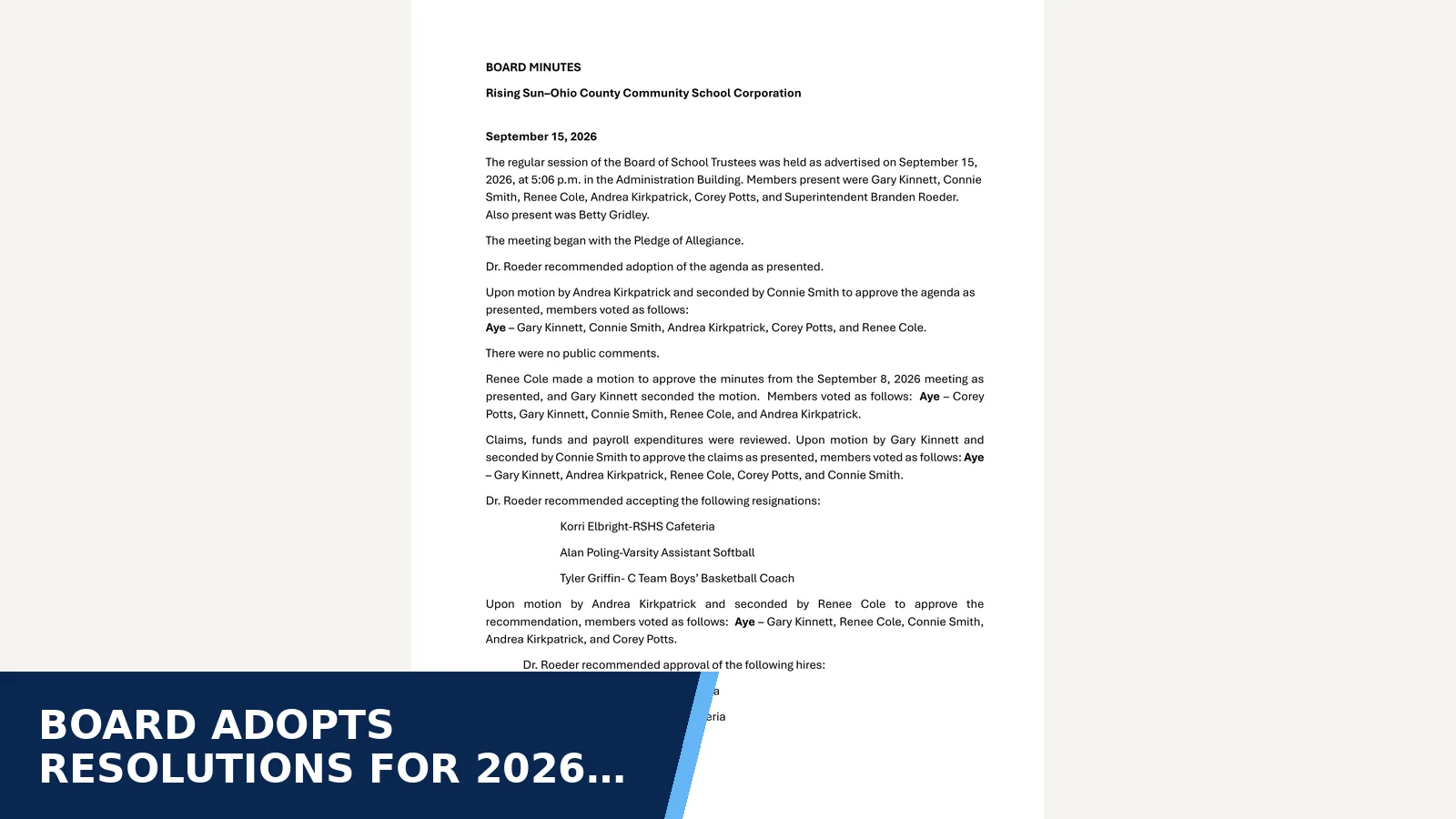
On September 15, 2026, after public hearings with no public comment, the board adopted a preliminary determination, a bond resolution and an appropriation resolution for 2026 general obligation bonds. A September 8 special meeting had held the first hearing.
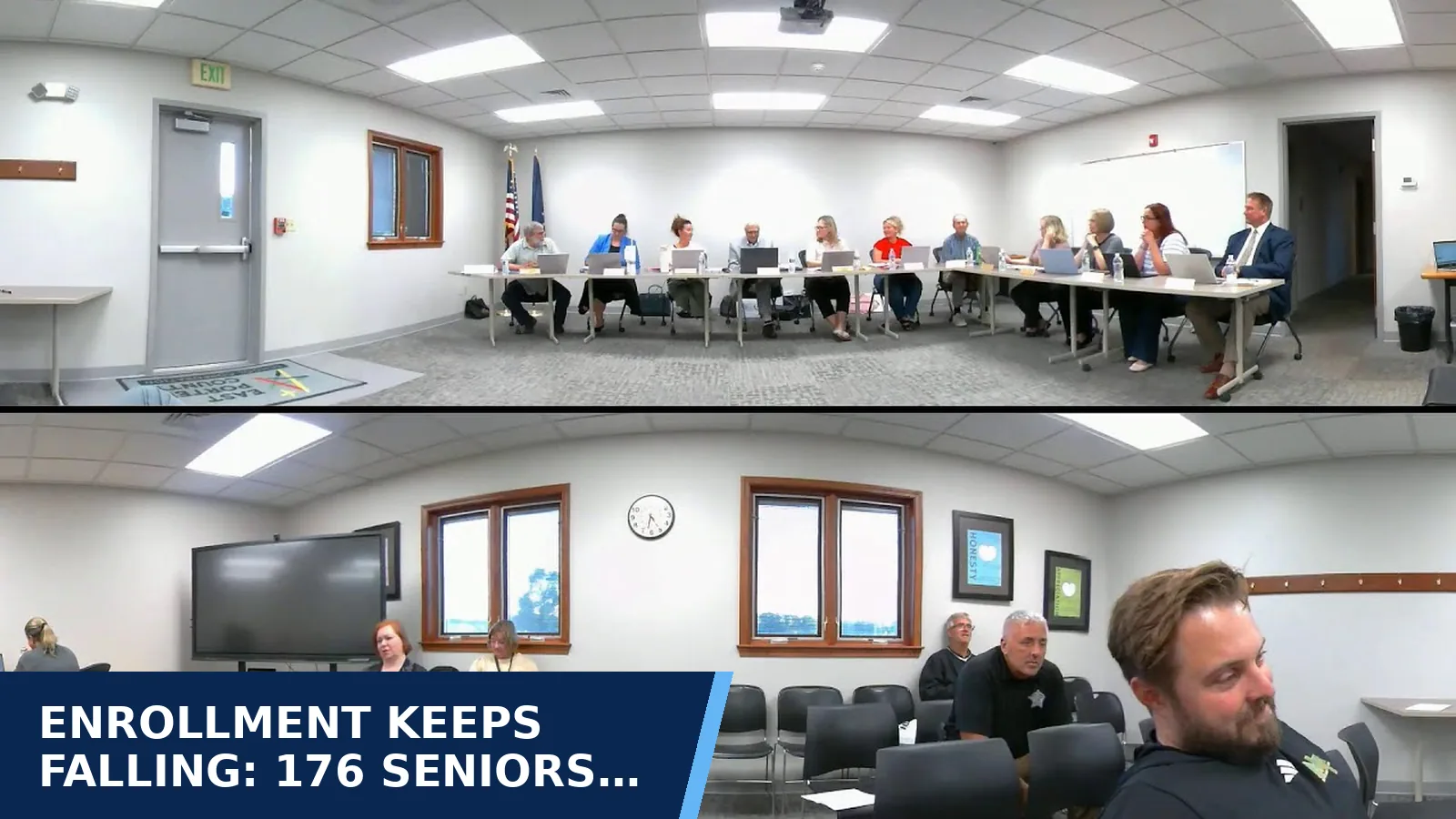
District staff said enrollment has fallen for several years. They expect about 2,125 students counted for 2026-27, down from 2,186 a year earlier and 2,307 in October 2024. The biggest gap is at the ends: 176 seniors graduated while about 105 kindergartners started.
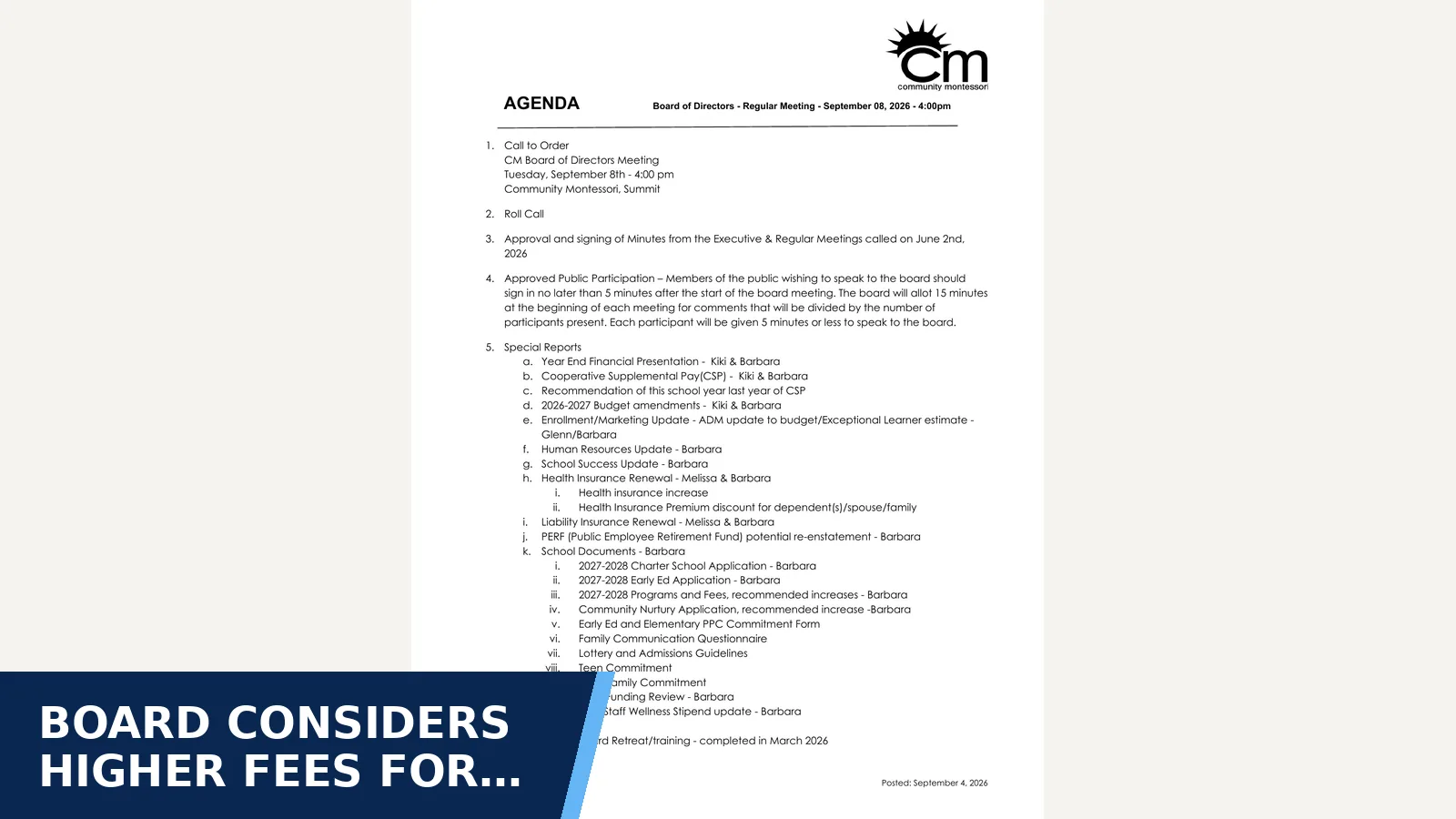
The September 8, 2026 agenda lists recommended fee increases for 2027-28 programs and for the Community Nurtury infant and toddler program. It also lists 2026-27 budget amendments, the last year of cooperative supplemental pay and the 2027-28 charter school application and lottery guidelines.
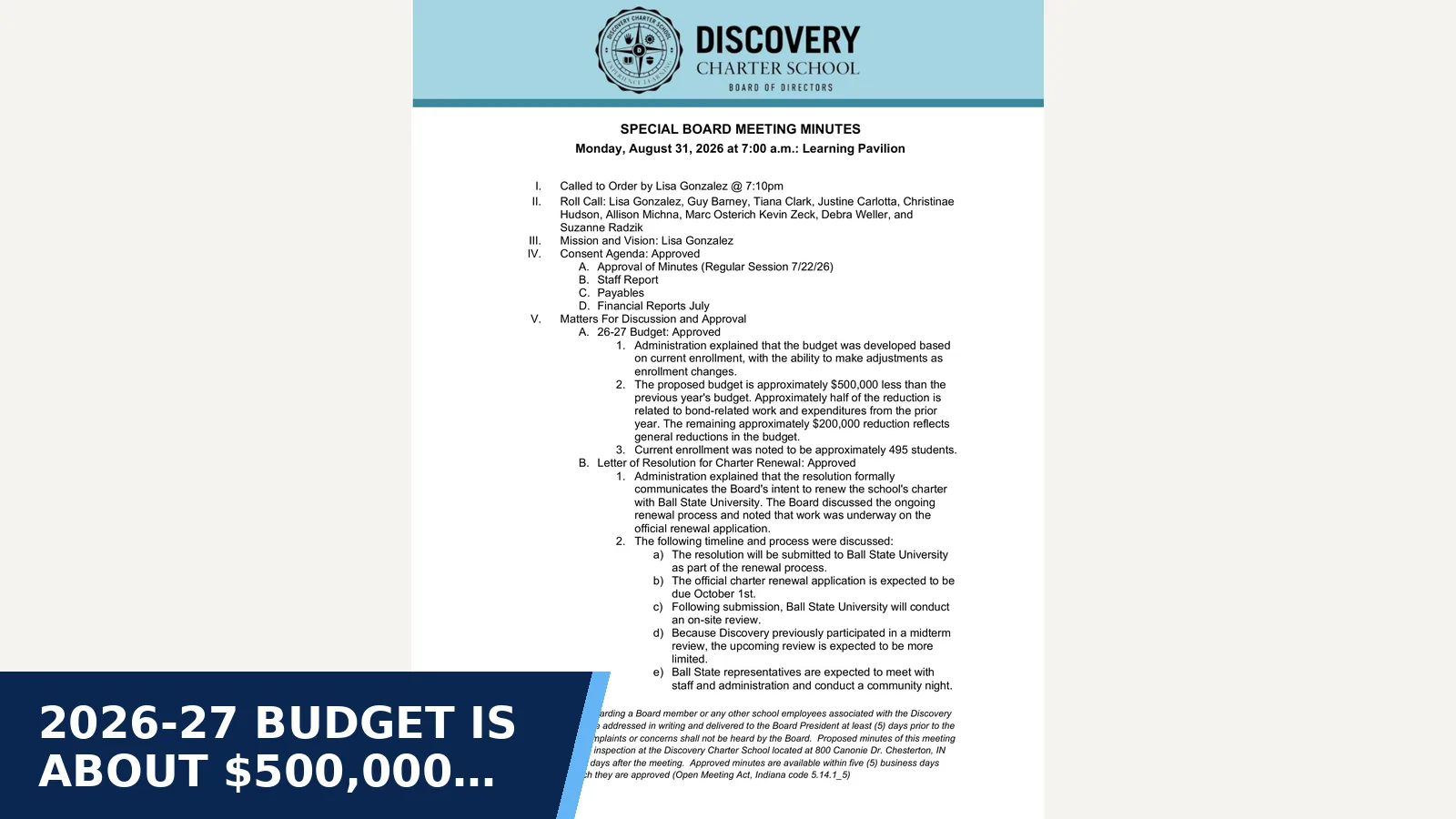
On August 31, 2026, the board approved a 2026-27 budget about $500,000 smaller than the year before. About half of the cut is because last year's bond payoff costs are gone. About $200,000 is general cuts. The budget does not include staff salary increases.
On August 27, 2026, the district presented a proposed 2027 budget of $106,125,723 for its tax-supported funds. That is up about 1.6% from about $104.5 million for 2026. The advertised tax rate is $0.9920. Officials said the rate rises partly because a new state property-tax law (SEA 1) lowers property values. The city council, which must approve the district's budget, approved it in October.
On August 24, 2026, the board adopted resolutions for a new general obligation bond of up to $15.7 million, to be sold in 2027. The money would pay for HVAC (heating and air) work, site improvements, equipment and technology. The bond could raise the debt tax rate by up to about 22 cents per $100 of property value. The district expects the net rise to be about 17.6 cents because older debts are being paid off. The same night, the board also approved about $55 million in 2026 building-corporation bonds for the construction program.
On August 3, 2026 the board voted 5-0 to move ahead with borrowing up to $17.5 million for energy-saving building projects, such as solar panels at all three campuses, set to start in January 2027. Its advisor said the tax levy is not expected to go up because older debt is being paid off. In September, staff suggested borrowing about $13.5 million now and keeping the rest for later.
The board put an operating referendum on the November 3, 2026 ballot. It would let the district charge up to 35 cents per $100 of assessed value for eight years (2027-2034), raising at most $3,374,291 a year. The current referendum, at about 21 cents, ends in 2027. The district's ballot estimate for a median $400,000 home is $681 a year.
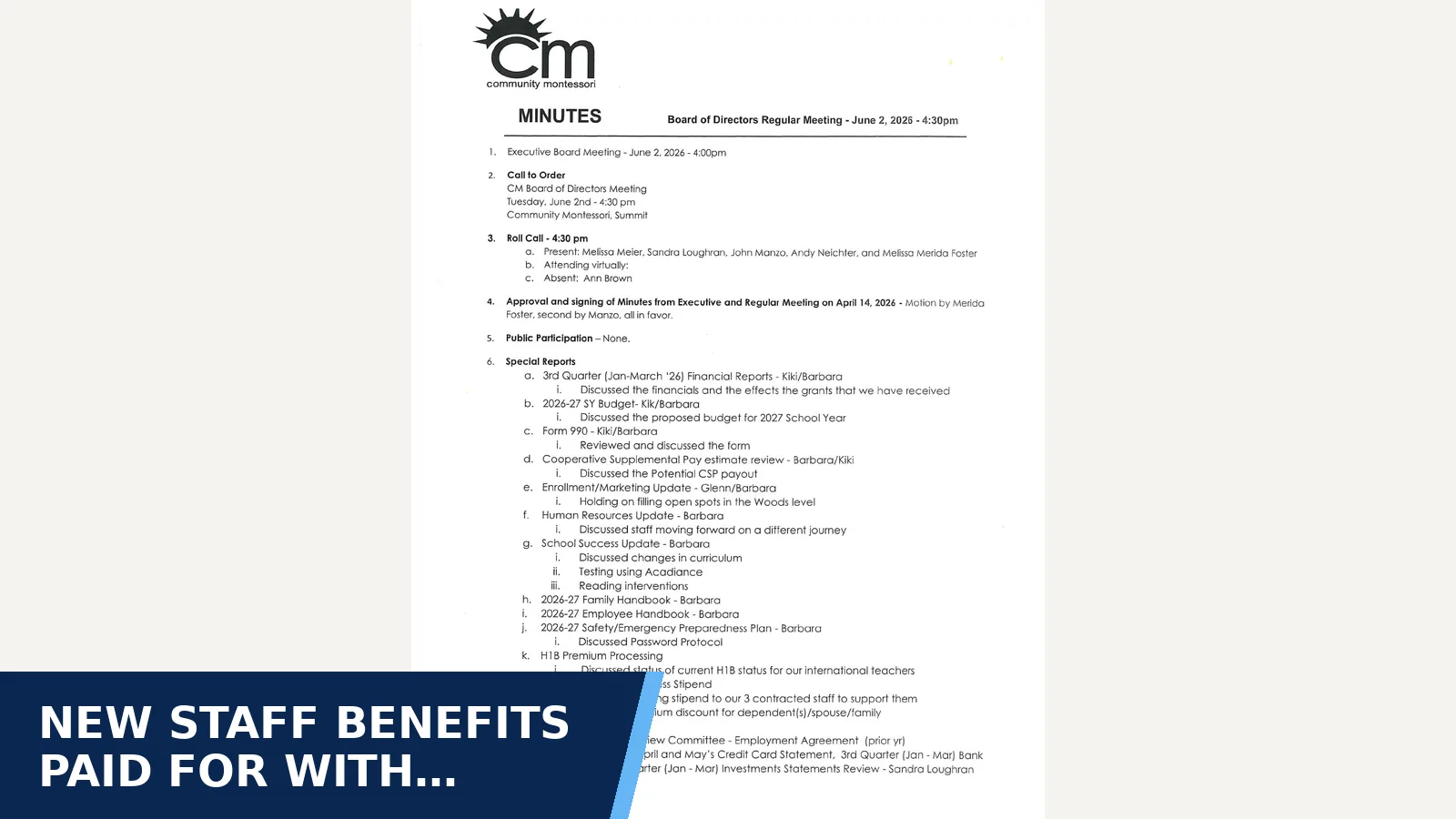
On June 2, 2026, the board approved a health-premium discount for employees' dependents and a wellness stipend for three contracted staff. The minutes put the stipend program at about $15,000 a year and estimate up to $40,000 a year in new Medicaid billing to pay for it. The board also approved an estimated 40% cooperative supplemental pay payout. In September it considered rejoining Indiana's public employee retirement fund (PERF).