A district committee recommended McGraw Hill’s new K–12 literacy program, and administrators plan to bring a purchase proposal to the board in January or February; the board received information only on Nov. 2 and did not approve a purchase.
We bring transparency to school decisions nationwide by tracking school board meetings, district documents, and public data. We use AI tools, rigorously evaluated for accuracy, to search for risks.
The policy desk
What’s moving in phones
The debate over phones, screens and the school day.
Des Moines Public Schools has broken ground on a six-classroom addition at Studebaker Elementary. Construction will add classroom space at the school; the meeting did not specify a completion date or project cost.
At its Oct. 6 meeting, the board discussed a current reduction target of $13.8 million, up from the roughly $7–8 million figure discussed in September; this is a planning target, not an approved cut package. The board deferred revised directions for the Boundary and Attendance Committee until Oct. 13, with discussion focused on potential elementary-facility retirements and new boundaries; no school closure was decided.
Marshalltown ended FY26 after spending about $7 million more than it brought in, reducing its general-fund balance from $9.9 million to $2.56 million. Its solvency ratio fell from 12.35% to 2.25%, below the district’s 8–10% policy minimum; administrators said they had already made $2 million in cuts and were still analyzing further budget adjustments.
The board approved seeking $1,935,576.96 in supplemental spending authority from Iowa’s School Budget Review Committee to cover the district’s FY26 negative special-education balance. The deficit was about $140,000 lower than the previous year, and the presentation attributed the continued gap in part to state funding that has not kept pace with inflation.
The board approved amendments allowing the school calendar to include up to five days or 30 hours of instruction delivered primarily over the internet. It also specified that online platforms should supplement, not replace, in-person instruction; no online days were scheduled in these minutes.
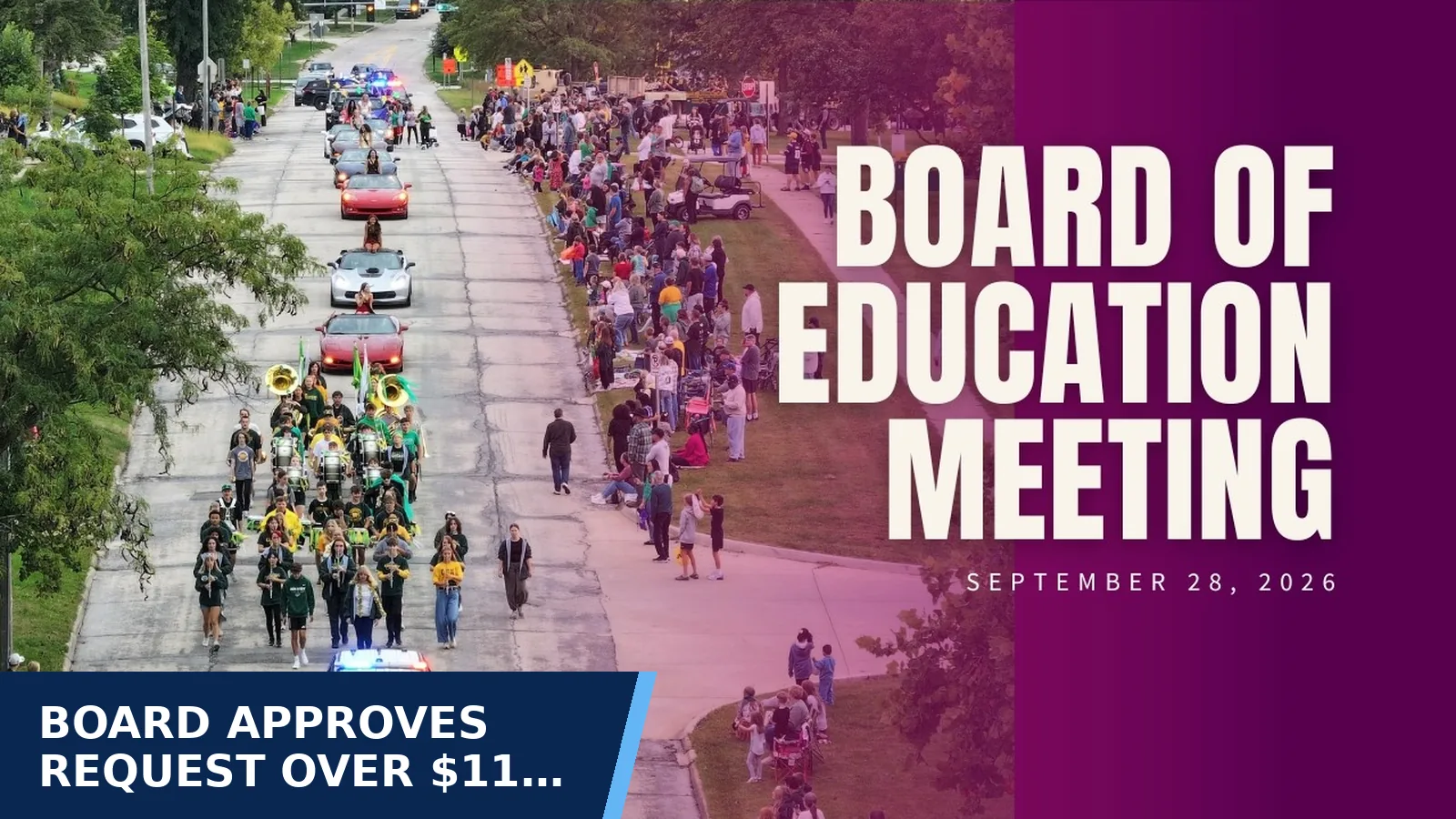
The board approved a request to the School Budget Review Committee concerning the district’s 2025–26 special-education negative balance, which board members said was about $11 million. The district cited a funding gap: federal special-education reimbursement was 10.2% last fiscal year, versus the 40% originally promised.
A fatal accident during Borlaug Elementary’s School of the Wild field trip at MacBride Nature Recreation Center killed fifth-grade student Ahmed Osman and teacher Hannah Jorgensen. The board recognized the deaths but did not describe the circumstances, an investigation, or any safety changes in this meeting.
The district’s general fund recorded a $4.4 million shortfall in FY2025 and a further $1.162 million shortfall in FY2026, leaving its fund balance at about $4.3 million. The reported solvency ratio was 2.68%, below the 5% floor discussed with new financial-metrics policies at their first reading.
The board approved ending the district’s YMCA partnership for its statewide voluntary preschool classroom for this school year. A certified teacher resigned just before classes began, and the YMCA could not find a replacement; the district said the partnership could resume next year if staffing is available.
The board approved a $385,000 playground equipment upgrade with unitary safety surfacing for the elementary school. The selected project is Boland Recreation’s Option 2, chosen after elementary staff reviewed two equipment options.
Marshalltown CSD is moving employee criminal-history records from a Google Drive location to encrypted storage kept in a locked cabinet and closet accessible only to HR staff. The district said an internal audit found that technology personnel could also access the Drive where the records were stored.
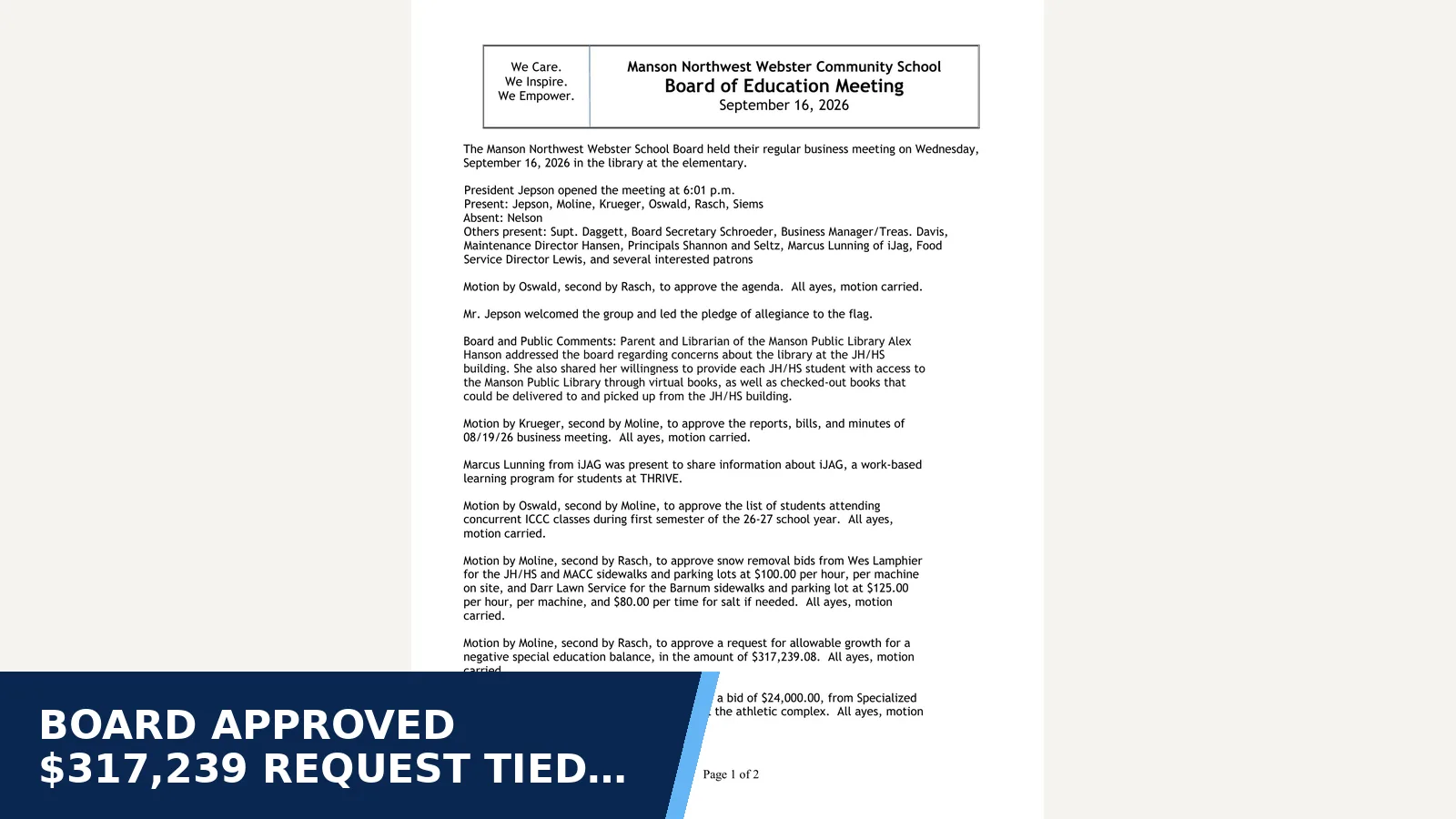
The board approved a request for $317,239.08 in allowable growth for a negative special-education balance. The minutes identify the amount and purpose but do not provide a breakdown of the deficit or explain the funding timeline.
The Des Moines Public Schools board approved Matt Smith’s superintendent contract and appointed him as the district’s next superintendent in a 7–0 vote on Sept. 15, 2026.
Bryant Elementary has begun implementing the i-Ready Math curriculum for the new school year; teachers have completed the introductory lesson and started lesson one.
The district reports that voters approved renewal and an increase of its Physical Plant and Equipment Levy, putting the levy in place for the next 10 years.
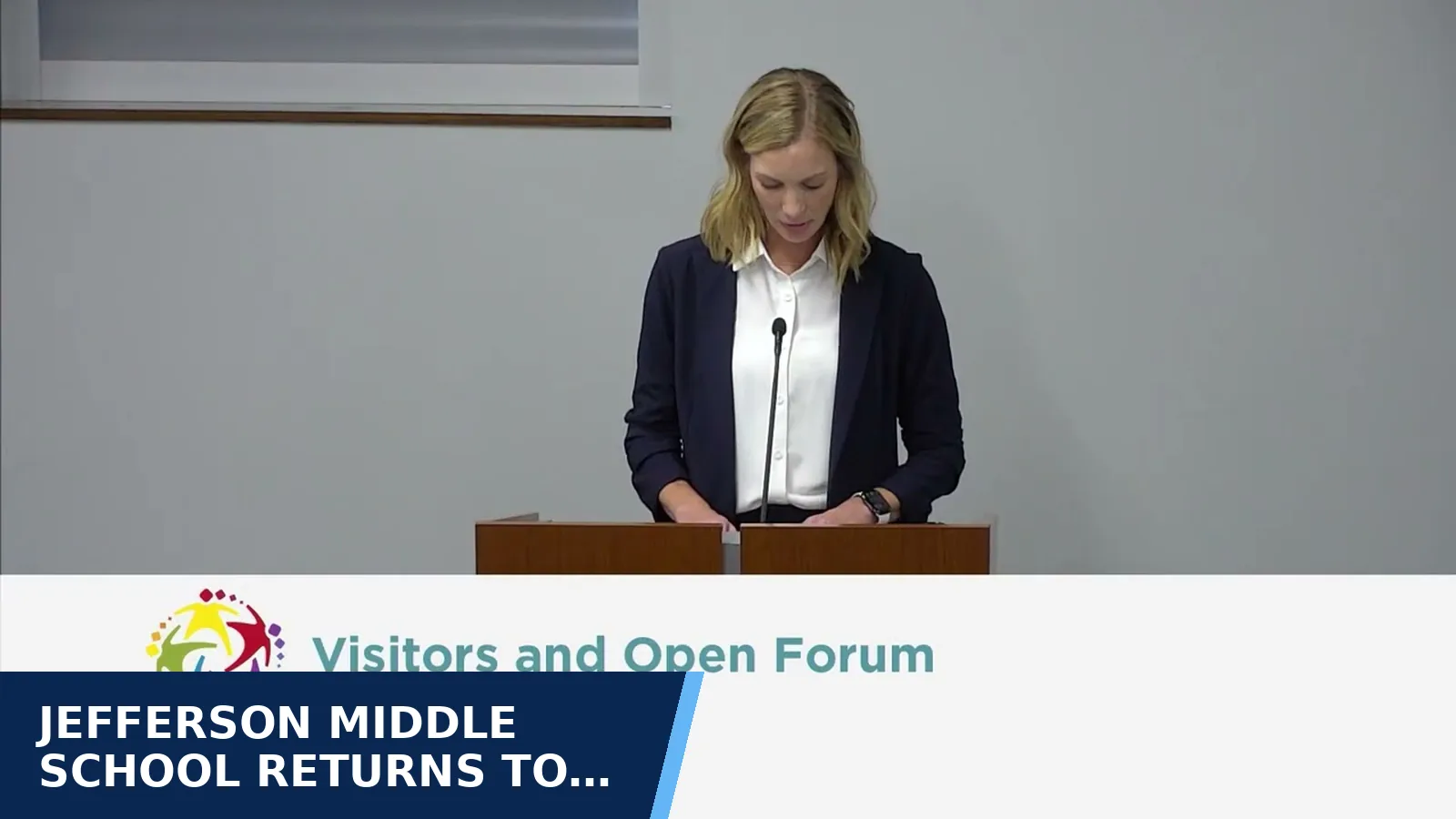
After an August 20 fire, Jefferson Middle School temporarily relocated offsite for just over a week while the building was treated, deep-cleaned and tested; students have now returned.
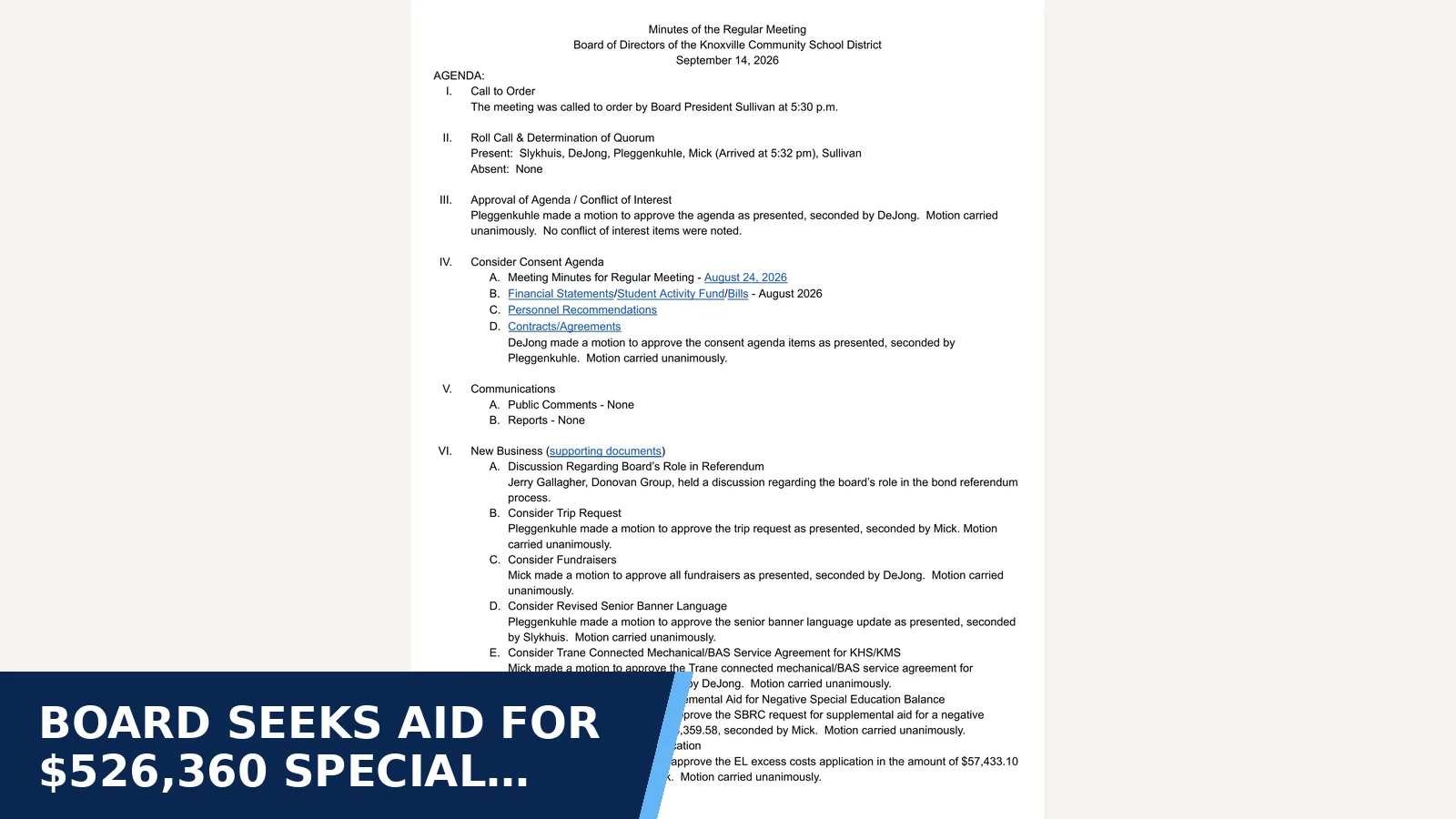
The board approved a request for supplemental aid to address a negative special education balance of $526,359.58. The minutes record approval of the request, not an award of the funds.
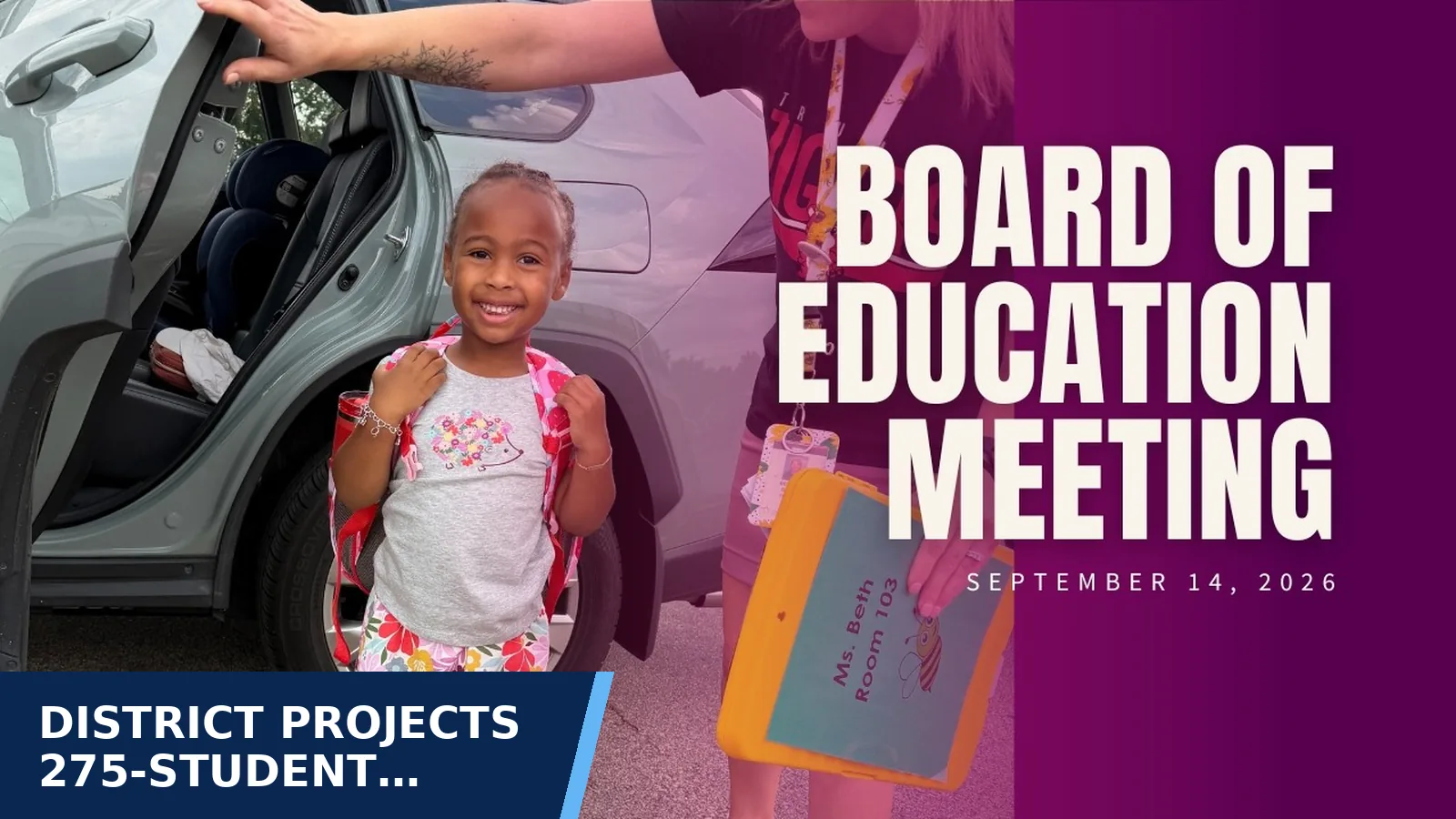
The district reported a preliminary projection that enrollment will fall by 275 students from last year's count, representing about $2.8 million in revenue implications.
Larson Construction lowered the guaranteed maximum price for the new Hoover Elementary School and Meadow Creek Elementary School projects by nearly $6.5 million.
At the July 28, 2026 board meeting, new Superintendent Dr. Ramey was introduced to the board and public, succeeding Dr. Morrell, and gave opening remarks about continuing the district's work.
The board approved (waiving second reading) updates to policy 5.12.2 and related regulations governing classroom removal of disruptive students, distinguishing procedures for K-5 (30-minute return) versus 6-12 (next-day-earliest return), defining violent disruption/assault criteria requiring removal, and codifying a teacher appeal-to-board process, in compliance with Senate File 2428.
The board received and accepted the FY25 (year ended June 30, 2025) independent audit from Eide Bailly. While the district received a clean/unmodified opinion overall, the audit identified three material weaknesses (preparation of financial statements, material audit adjustments including a prior-period restatement, and segregation of duties), two significant deficiencies (incomplete employee I-9 forms and inadequate monitoring of purchasing card expenditures, including personal purchases made on a district credit card), a federal single-audit finding tied to the 21st Century Community Learning Centers program related to the same credit card misuse, and state compliance findings including expenditures exceeding the certified budget in instruction and support services, and one student activity account with a deficit balance.