Winthrop proposes requiring school attendance starting at age 6
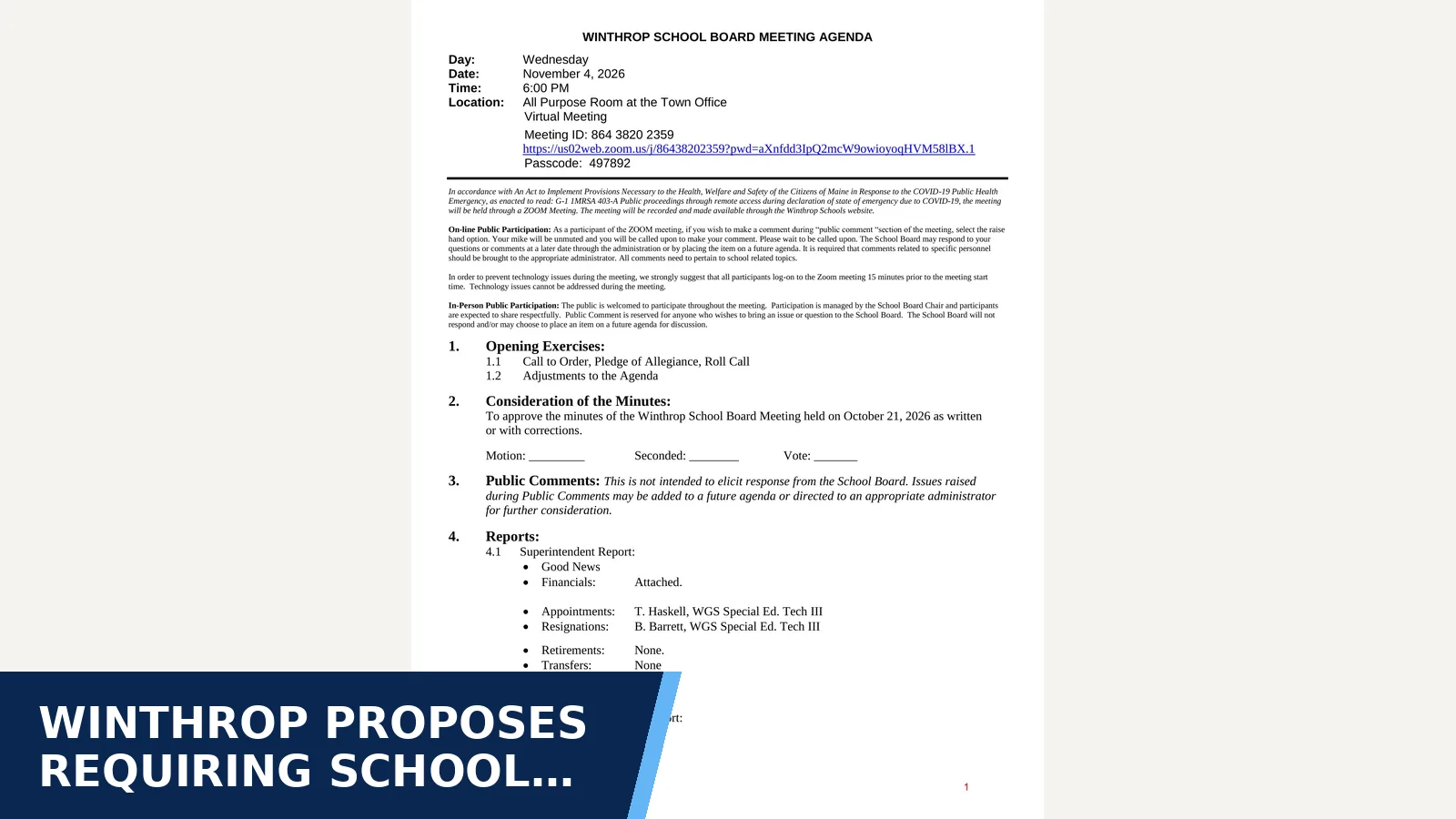
Winthrop’s proposed compulsory-attendance policy would require full-time school attendance from age 6 until 17, instead of starting at age 7.
Read the full storyWinthrop’s proposed compulsory-attendance policy would require full-time school attendance from age 6 until 17, instead of starting at age 7.
Read the full storyWe bring transparency to school decisions nationwide by tracking school board meetings, district documents, and public data. We use AI tools, rigorously evaluated for accuracy, to search for risks.

The policy desk
The debate over phones, screens and the school day.

The policy desk
How artificial intelligence is changing classrooms and school rules.

The policy desk
Students speaking up, organizing and helping shape their schools.
The news desk
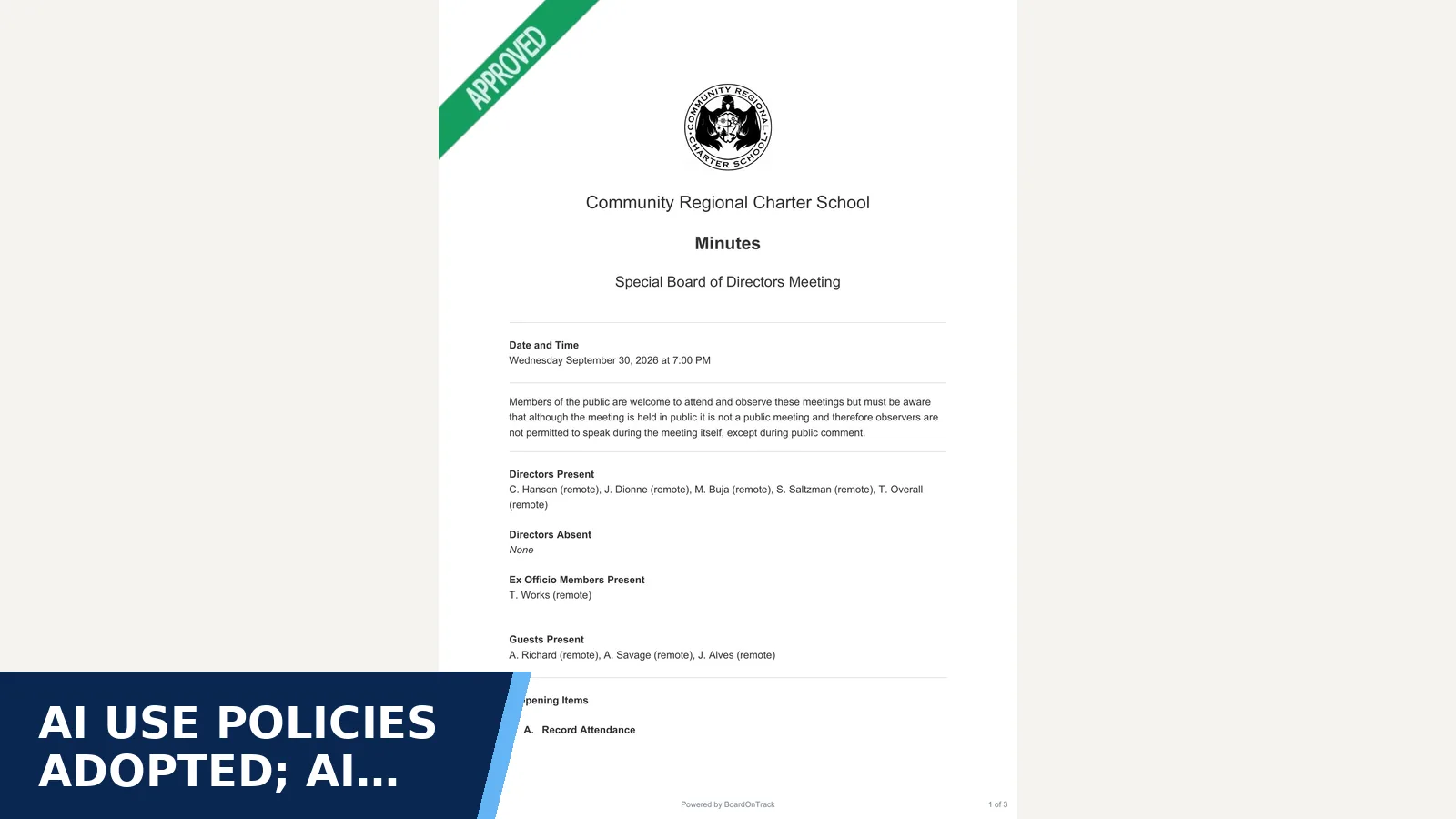
Community Regional Charter School
The board adopted policies on artificial intelligence (AI) use and, after a closed session on personnel, agreed to hire a consultant on 'complex issues around artificial intelligence software and its use' at the school.
The superintendent asked the board to allow more educational technicians in regular classrooms because a few students have not adjusted to school routines and are becoming dysregulated, sometimes lashing out physically. Two students already have long-term substitutes covering them, and a third is likely.
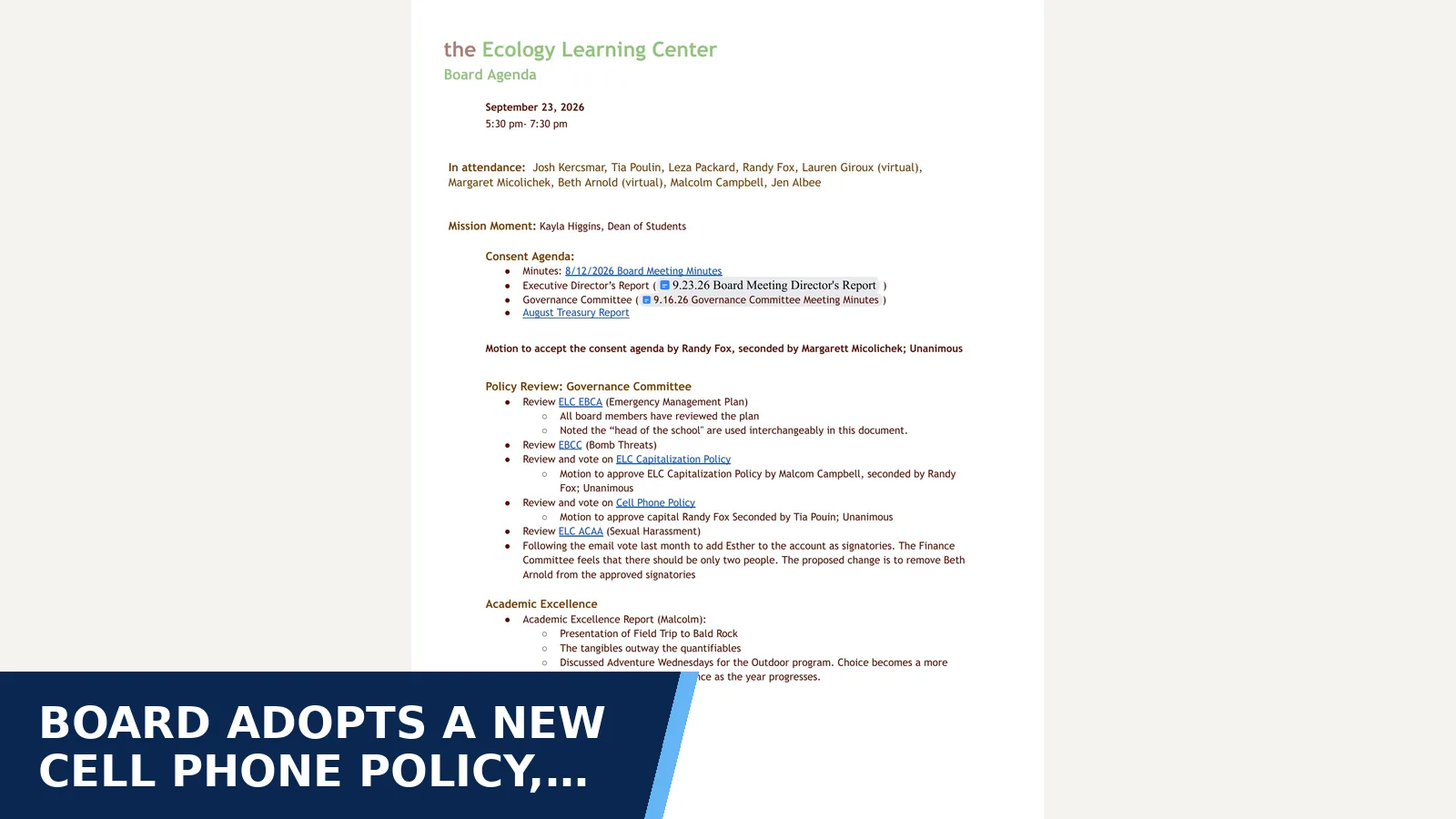
On September 23, 2026 the board voted unanimously to approve a cell phone policy, along with a capitalization policy. The policy is not on the school's website. The only posted handbook is the 2021-22 edition, which bars phone use from 8:30 a.m. to 2:30 p.m. unless a teacher allows it.
On September 21 the board adopted a goal for 2026-27. By June 30, 2027, the education committee and staff will draft a K-12 procedure that sets age-appropriate screen-time and device limits. A first draft is expected at the December board meeting.
Maine Academy of Natural Sciences
The Maine Charter School Commission's review team recommended renewing the school's charter for five years (July 1, 2027 to June 30, 2032) with no conditions. The full Commission was set to vote on October 13, 2026. A public hearing was held September 23.
MSAD 75 (Maine School Administrative District 75)
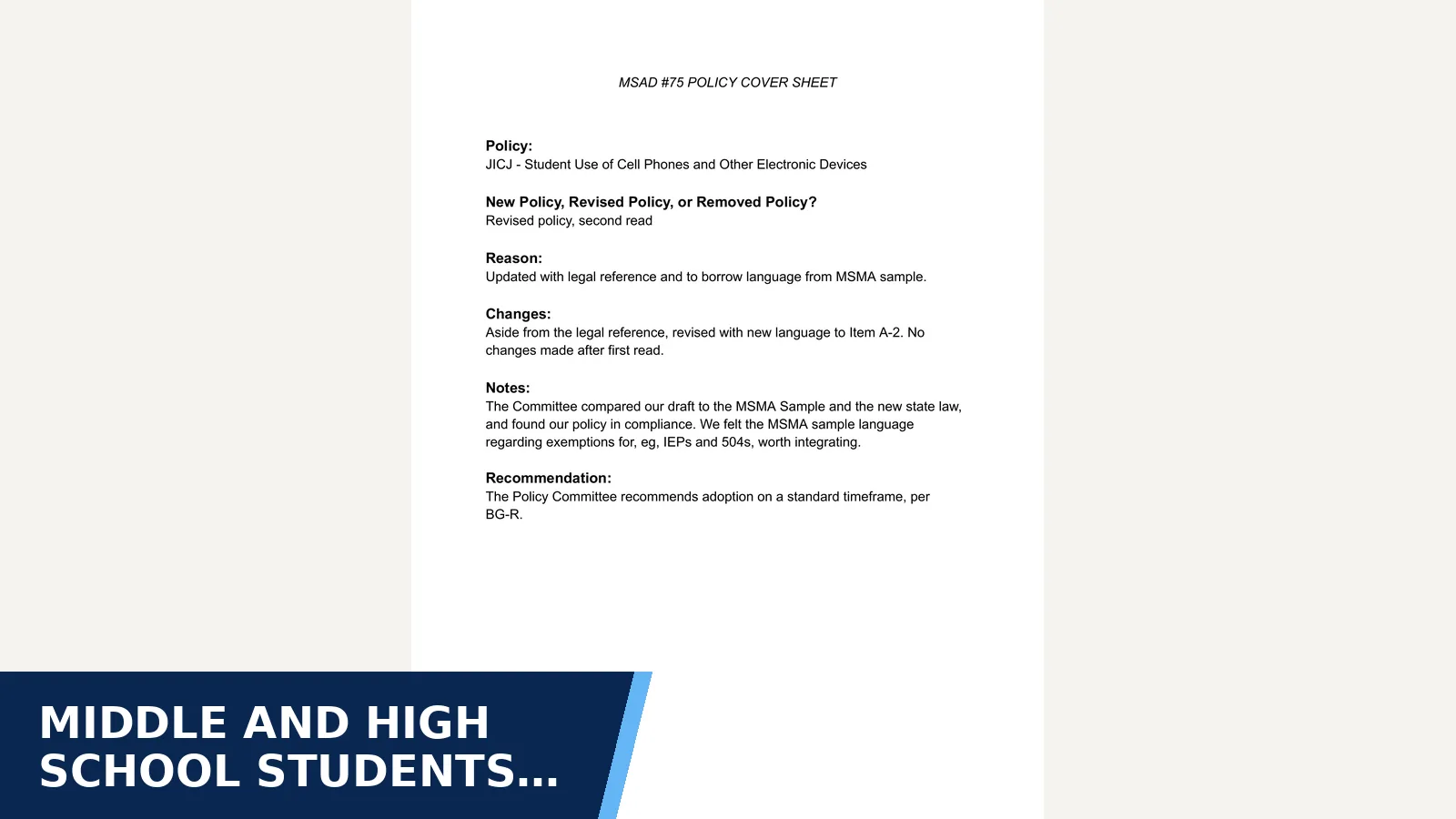
Under the revised cell phone policy (JICJ) that came to the board for second reading and adoption on September 10, 2026, students may not use personal devices at school except for approved educational, health or safety reasons, health plans, IEPs, 504 plans, language support or emergencies. At Mt. Ararat Middle and High School, phones and smartwatches must be kept in the student's locked security pouch.
MSAD 72 (Maine School Administrative District 72)
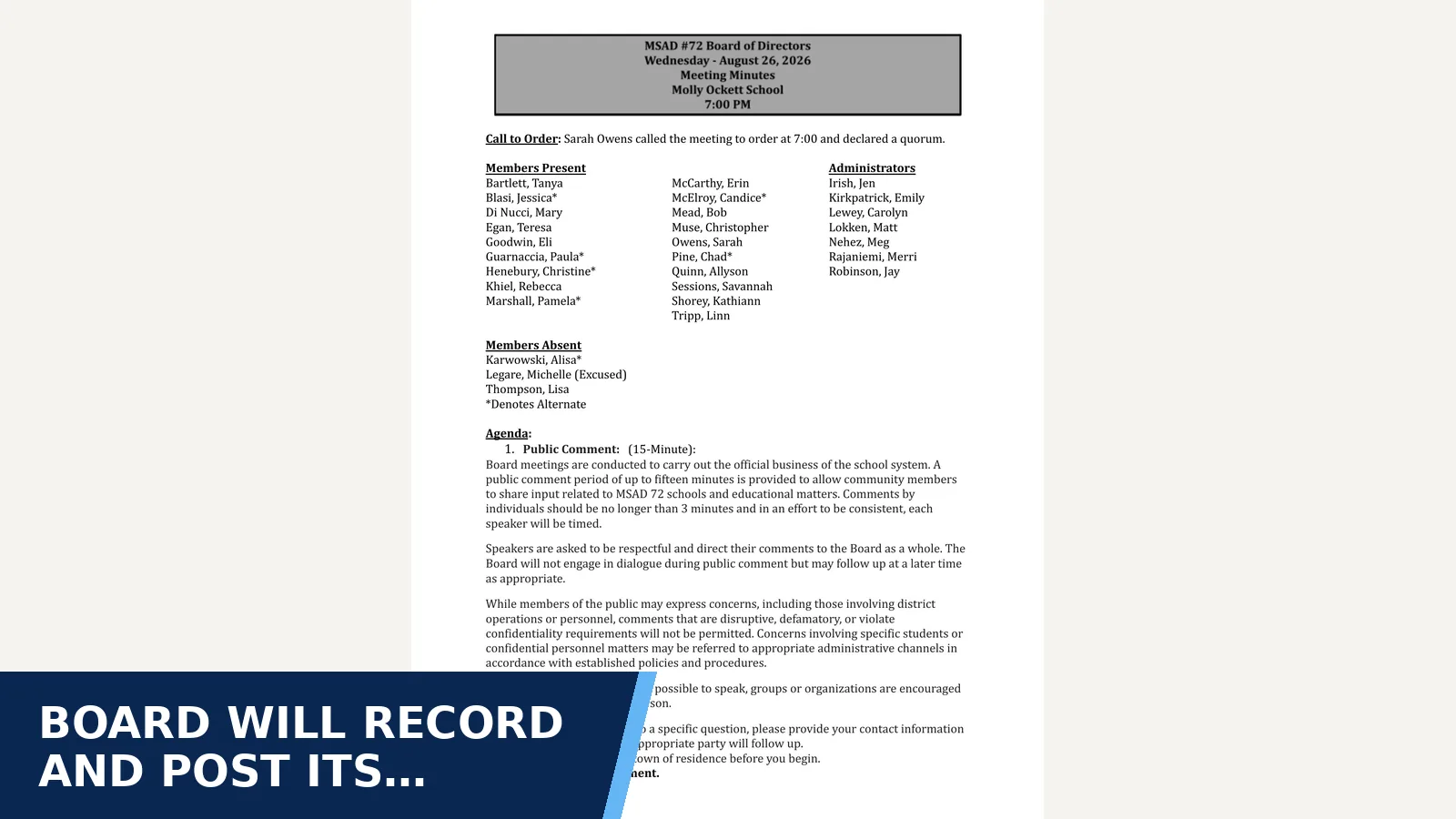
On Aug. 26, 2026, after parents asked for recordings so families who cannot attend can follow along, the board voted to record its meetings and post them on the district website. An amendment to delay and keep minutes as the only record failed. Recordings are posted unedited on the district YouTube channel, and minutes remain the official record.
RSU 56 (Dixfield, Canton, Carthage, Peru)
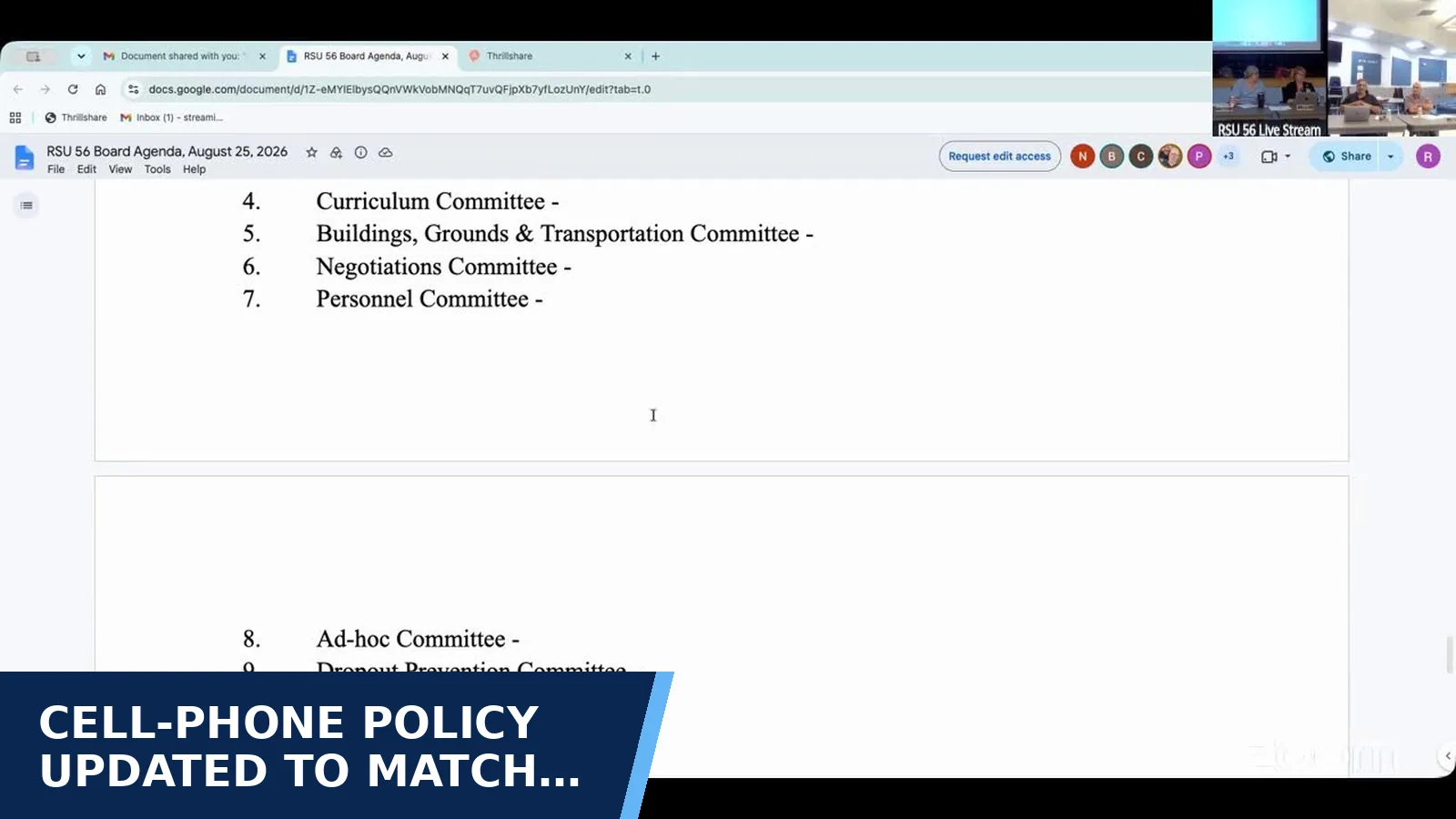
On August 25, 2026 the board updated its policy on student cell phones and other devices to follow Maine's new law. The district says its rule is already stricter than the state requires.
MSAD 75 (Maine School Administrative District 75)
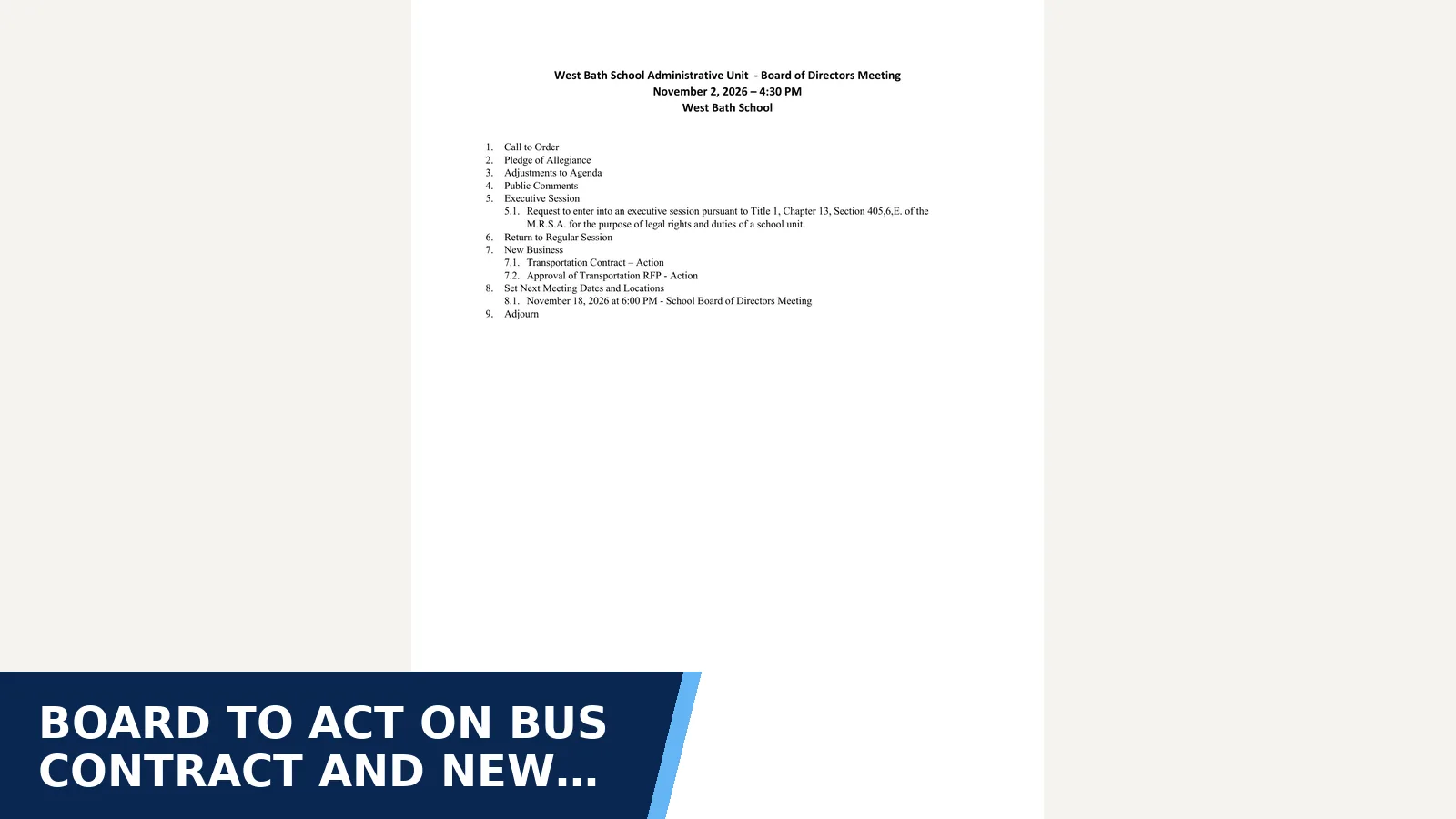
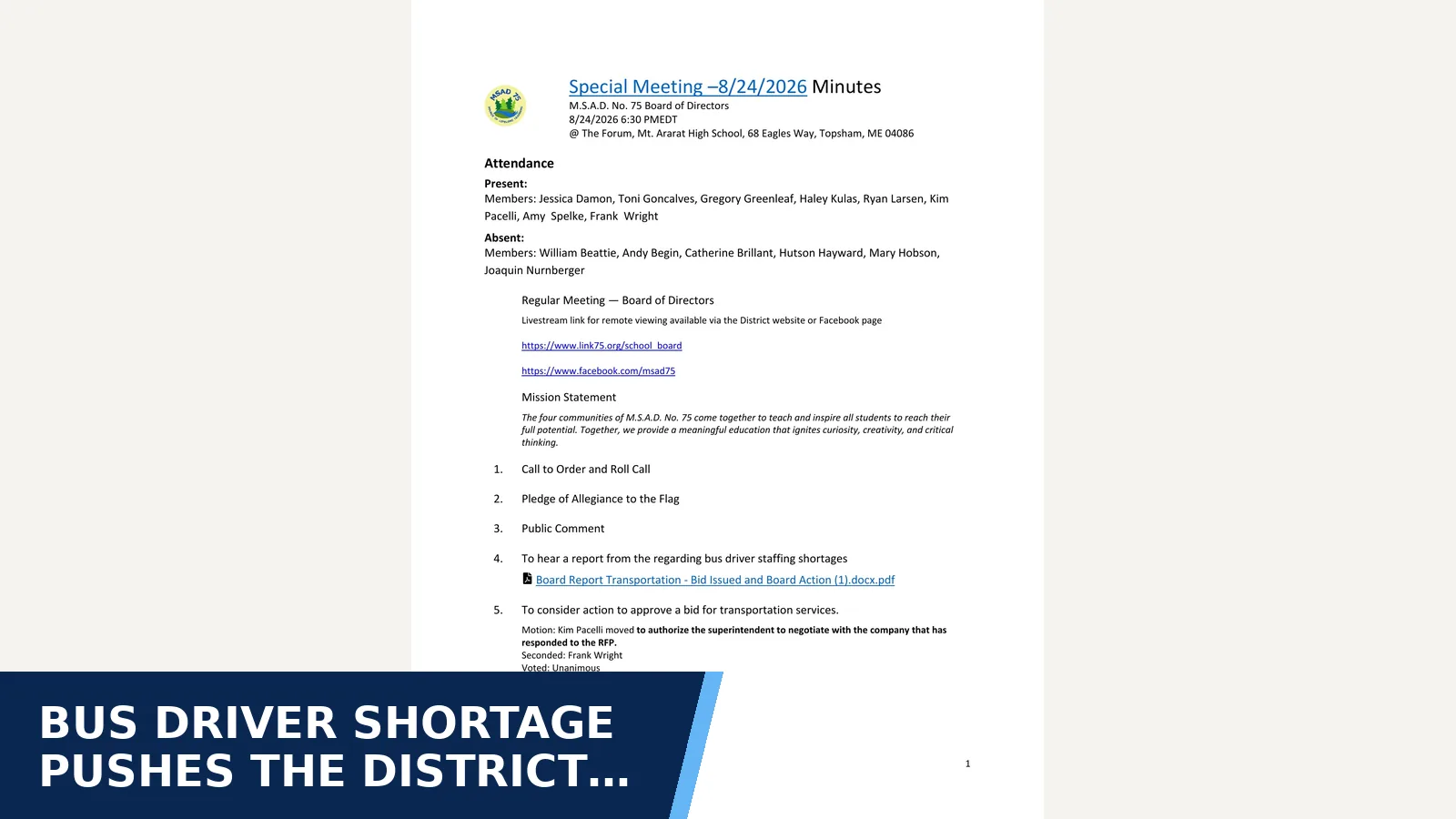
At a special meeting on August 24, 2026 the board heard a report on the school bus driver shortage and voted unanimously to let the superintendent negotiate with the company that answered the district's request for proposals for transportation services.
West Bath School Administrative Unit
In August 2026 the superintendent expected 115 students, up from 106 the year before. At least 19 4-year-olds live in town, and by October about 21 children could start kindergarten in 2027.
West Bath School Administrative Unit
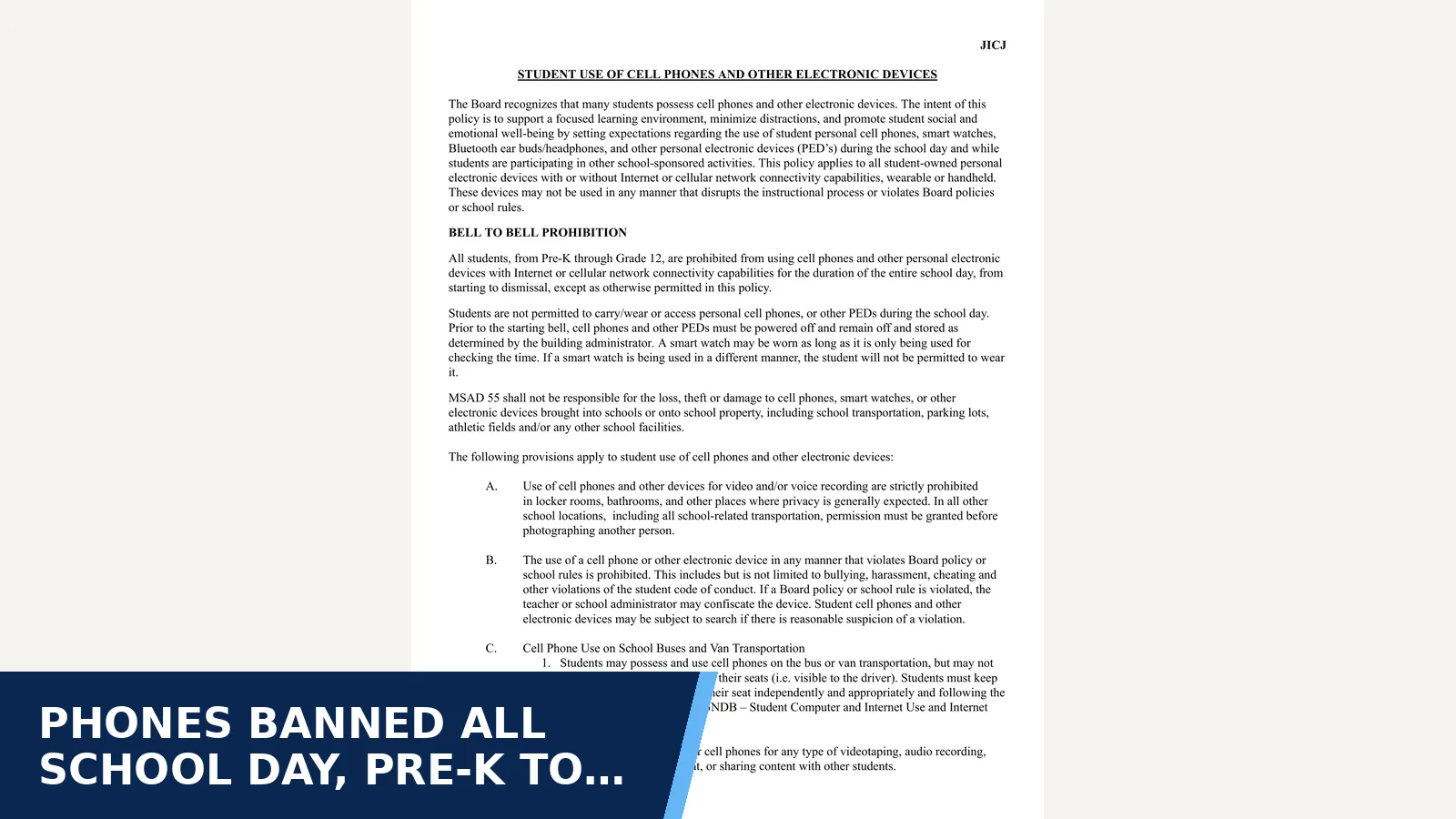
The board approved the 2026-27 handbook on August 19, 2026. It says students may not use cell phones, smartwatches or any internet-connected device at any time during the school day, and the rule also applies on the school bus. This follows the board's updated cell phone policy (JICJ), re-approved June 17, 2026 for Maine's new bell-to-bell law.
West Bath School Administrative Unit
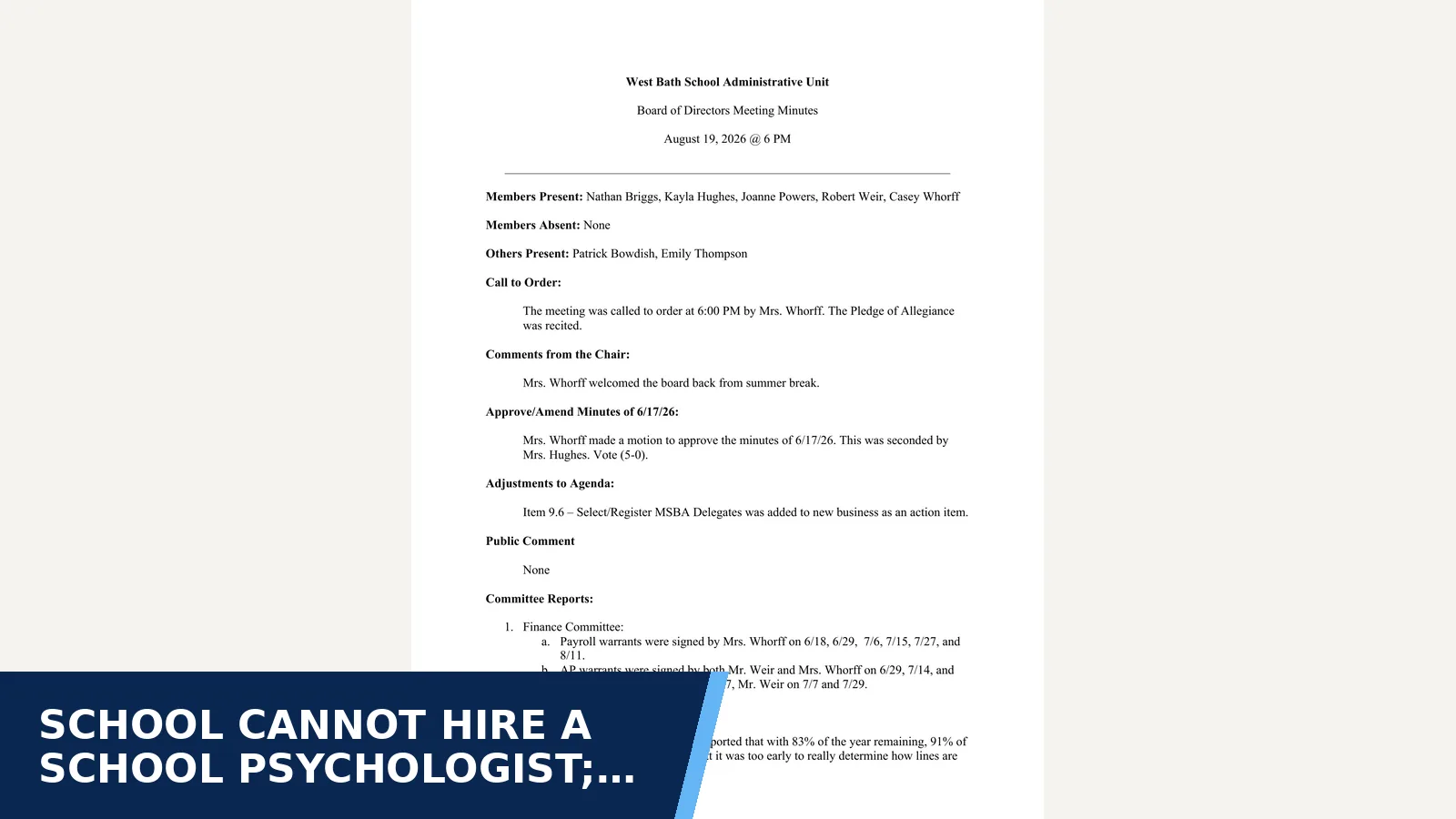
In August 2026 the superintendent reported that the school could not hire a school psychologist, even after posting part-time and full-time jobs, and signed a contractor instead. The new special education director job got no applications and is still open.
Community Regional Charter School
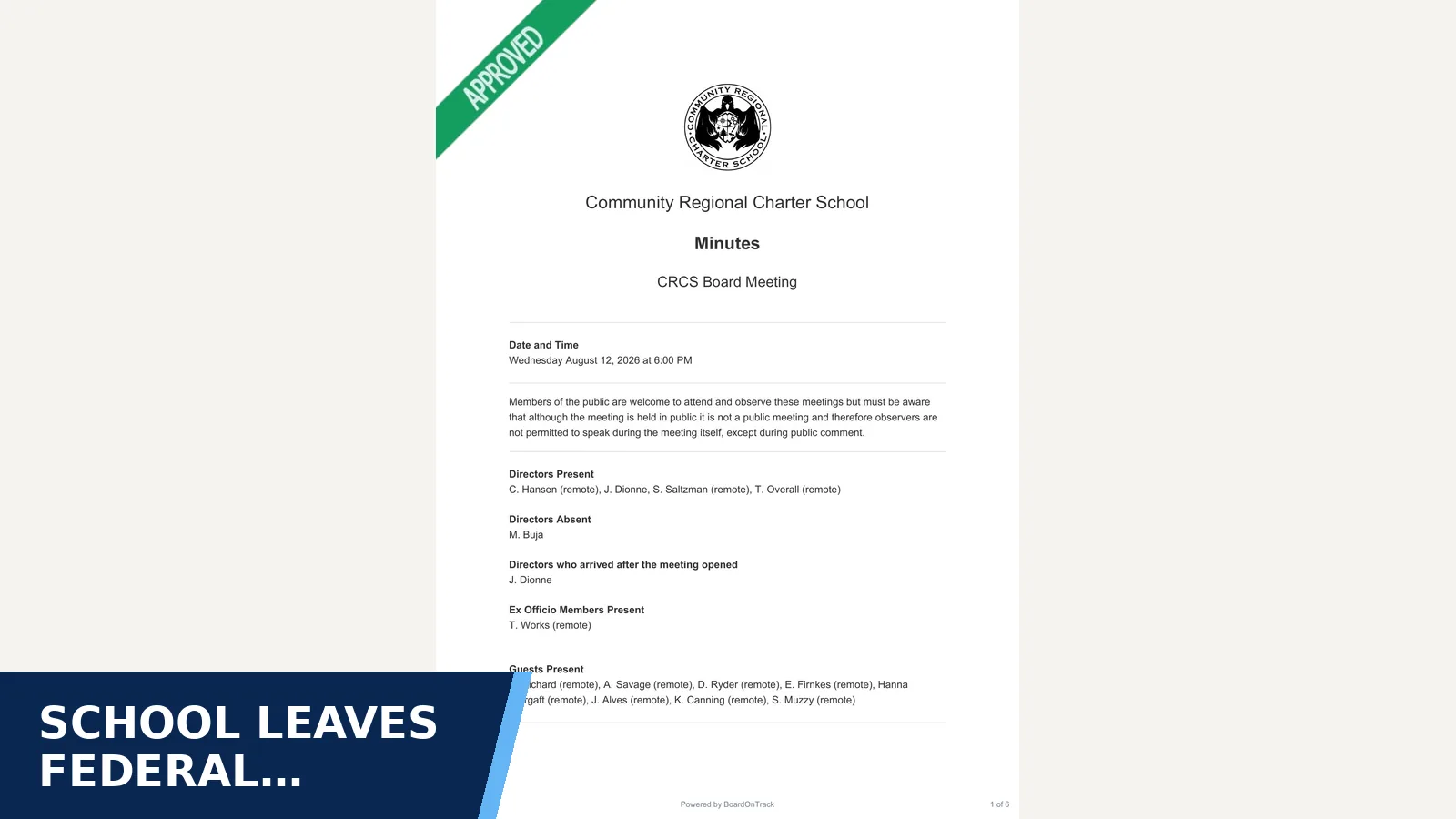
The board voted to opt out of the Child and Adult Care Food Program (CACFP) for 2026-27.
On August 5, 2026, the board adopted a revised cell phone policy. Students may not use phones or other connected devices from the first bell to dismissal. Devices must be off and put away, and smart watches may be used only to tell time.
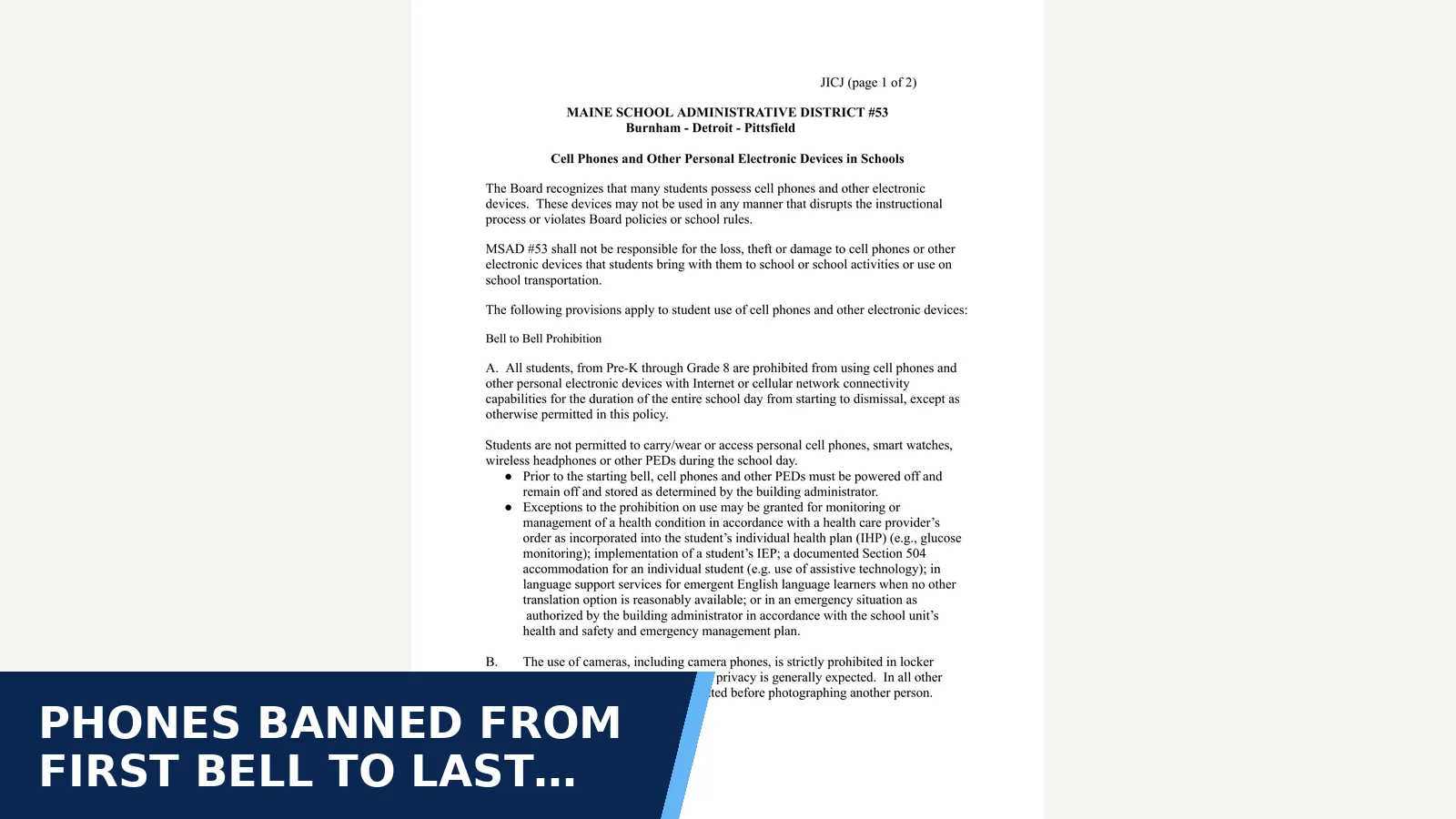
A new rule, adopted August 3, 2026, bans phones, smartwatches, wireless headphones and other connected devices for PreK-8 students all school day. Devices must be turned off and put away. Before, students could have phones as long as they did not disrupt class.
RSU 59/MSAD 59 (Madison Public Schools)
On July 21, 2026, the board adopted policy JICJ on cell phones and other personal electronic devices. A new Maine law required districts to have a bell-to-bell phone policy by August 1, 2026. The board had tabled an earlier draft in April because the law was changing.
RSU 82/MSAD 12 (Jackman-Moose River)
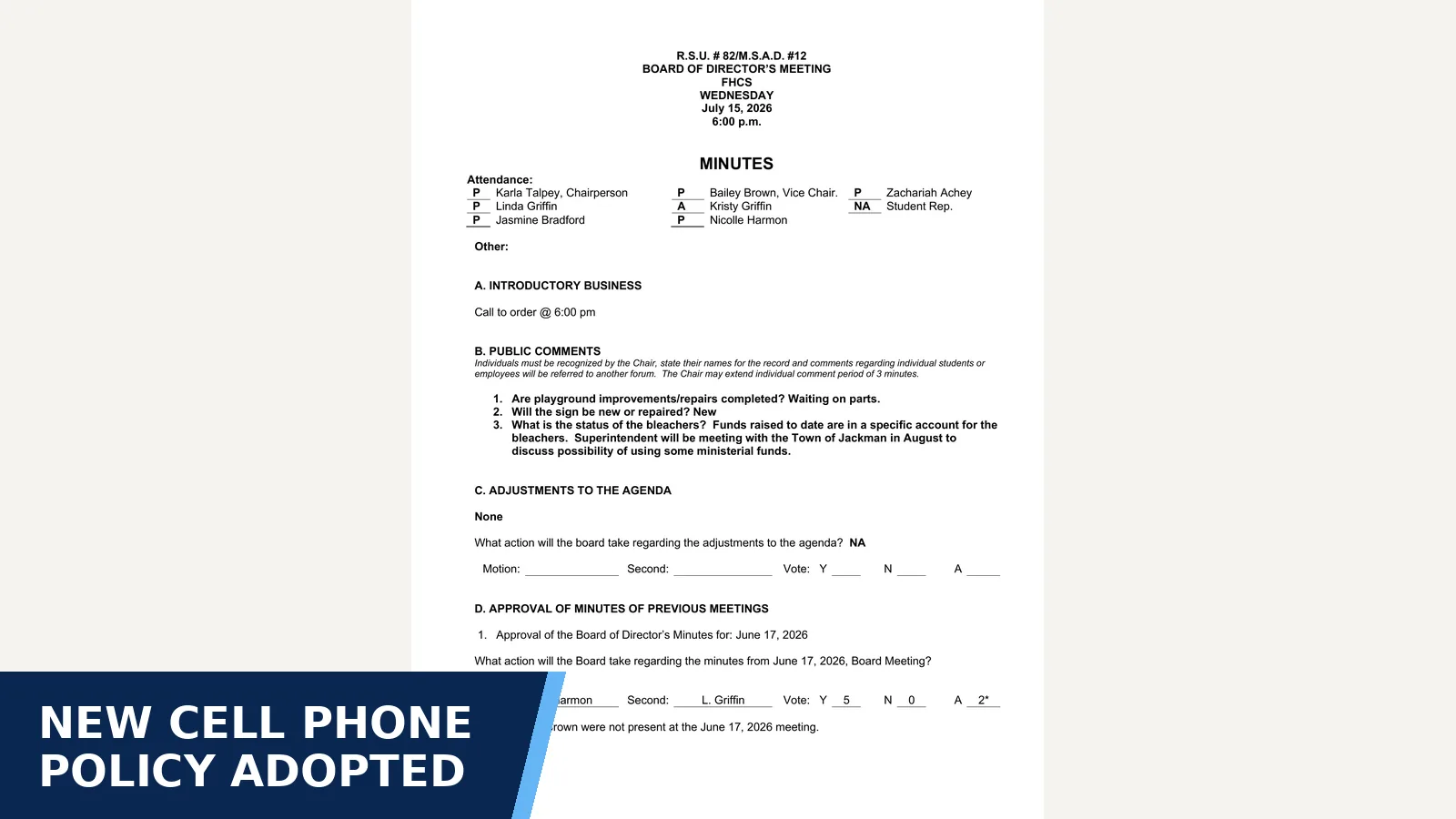
The board adopted policy JICJ on cell phones and other personal electronic devices on July 15, 2026, by a 5-1 vote. Board discussion centered on dropping a verbal-warning step and on how devices will be stored during the school day, especially for middle and high school students.
RSU 83/MSAD 13 (Upper Kennebec Valley)
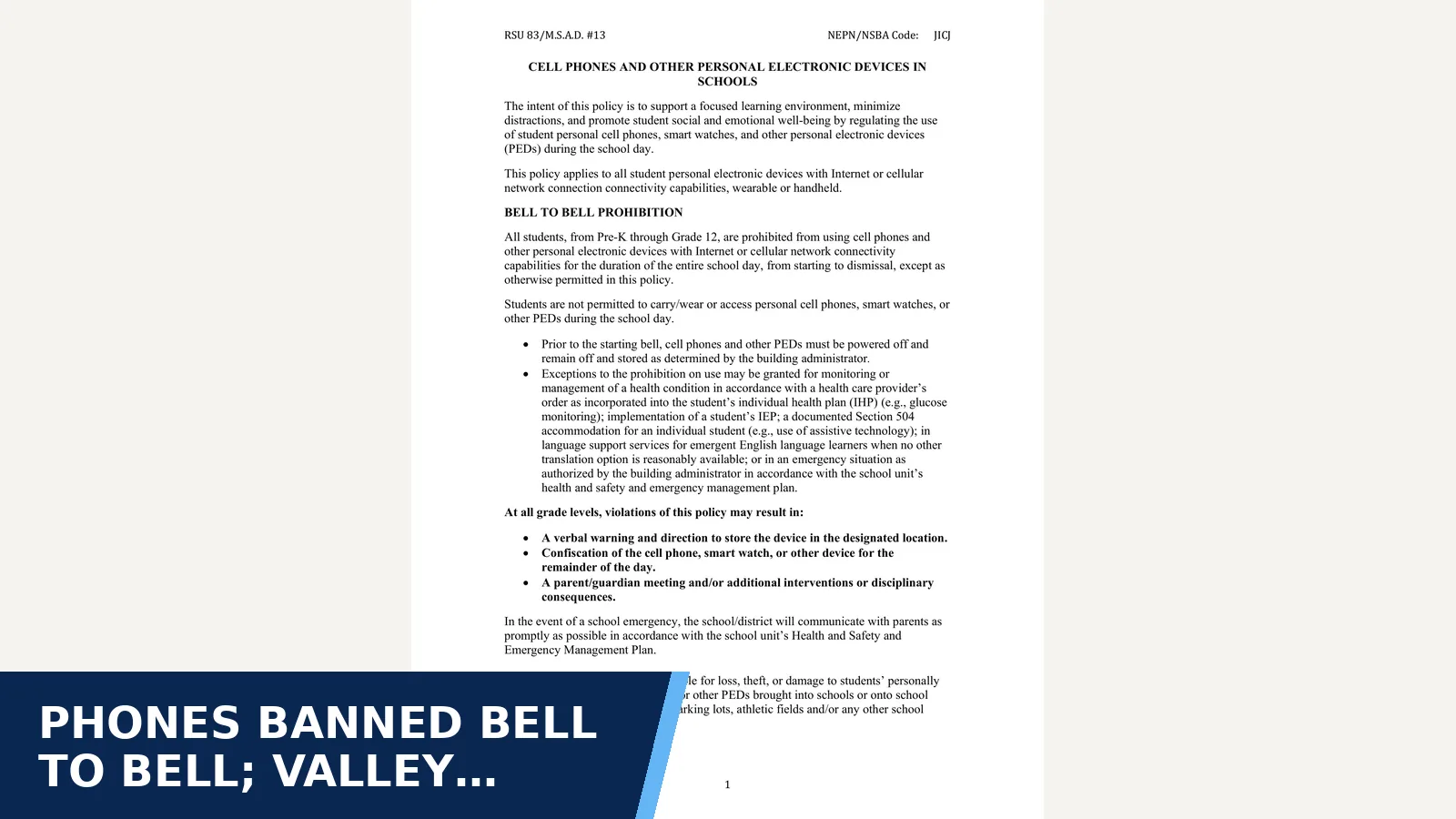
The board adopted policy JICJ on July 14, 2026. Students in pre-K through grade 12 may not use or carry cell phones, smart watches or other connected devices from the first bell to dismissal. Before, phones only had to be off during class. At Valley, each student gets a phone locker by the main entrance.
Regional School Unit 71 (RSU 71)
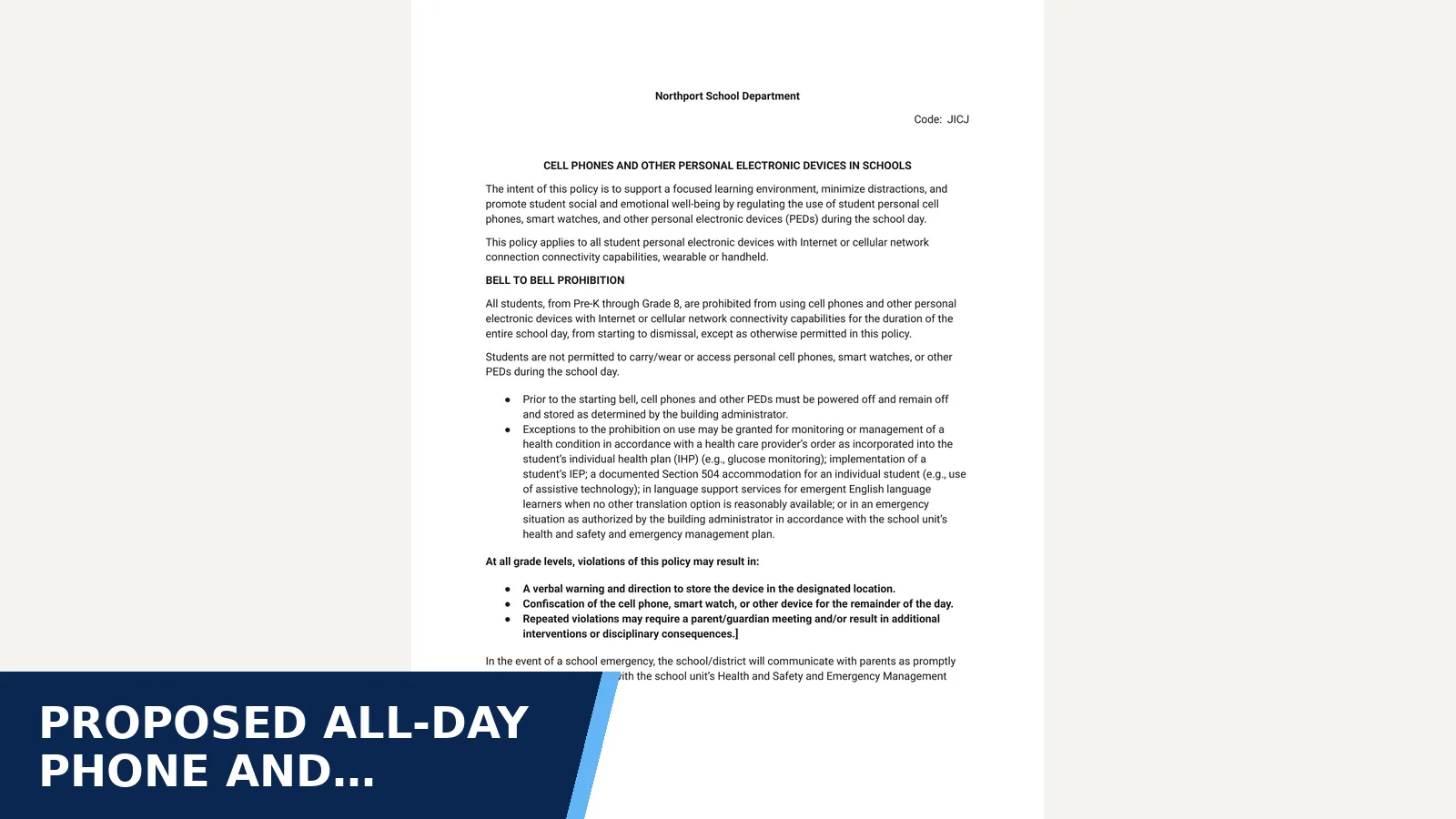
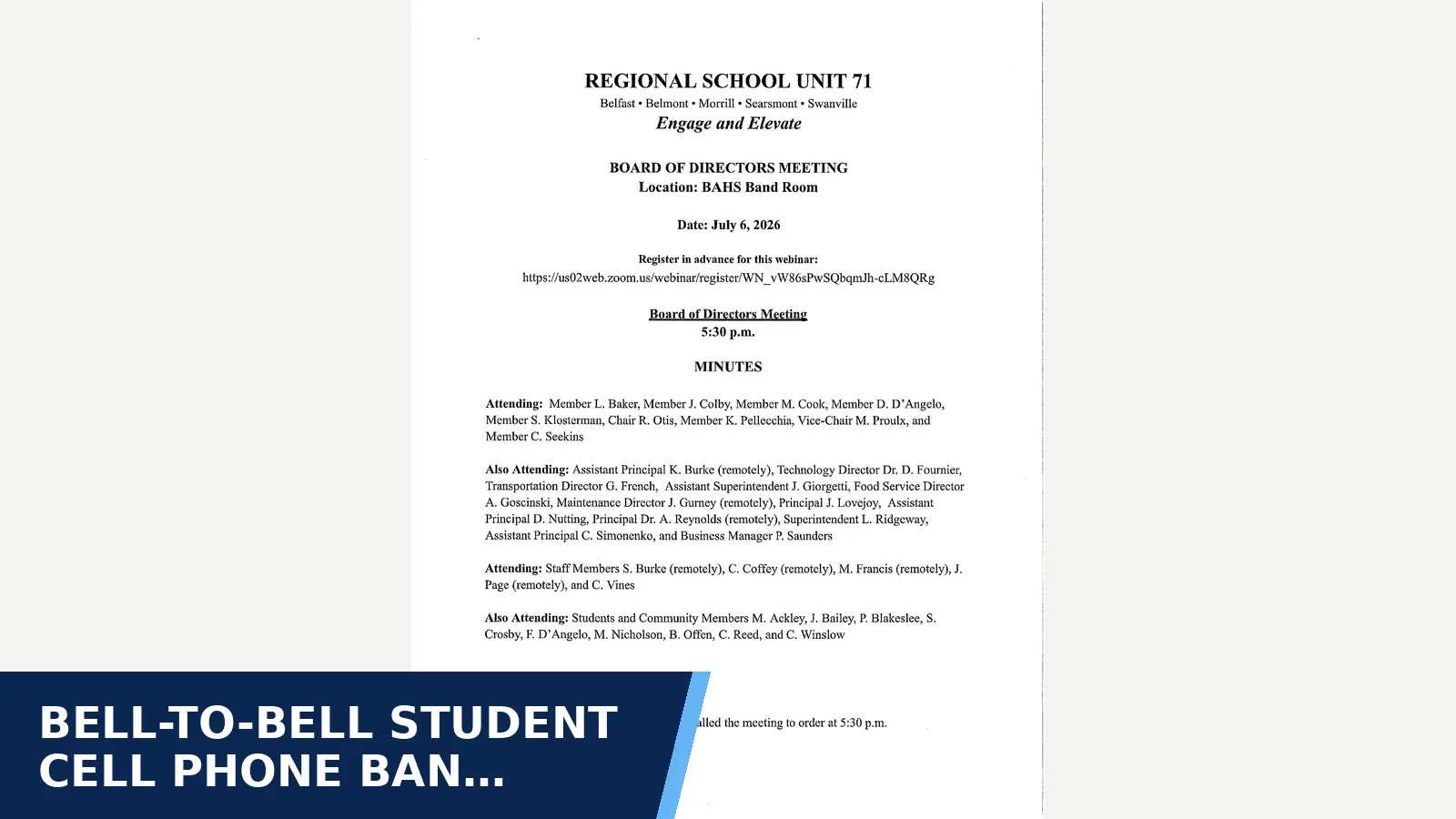
On July 6 the board gave final approval to policy JICJ, which bans students in Pre-K through grade 12 from using, carrying or wearing phones, smartwatches and other connected devices during the whole school day. Exceptions cover health plans, IEPs, 504 plans and language support. The rules (JICJ-R) were updated in fall 2026. The change follows a 2026 state law (LD 2212).
The Board record shows approval of Policy JICJ on student use of cell phones and other electronic devices.
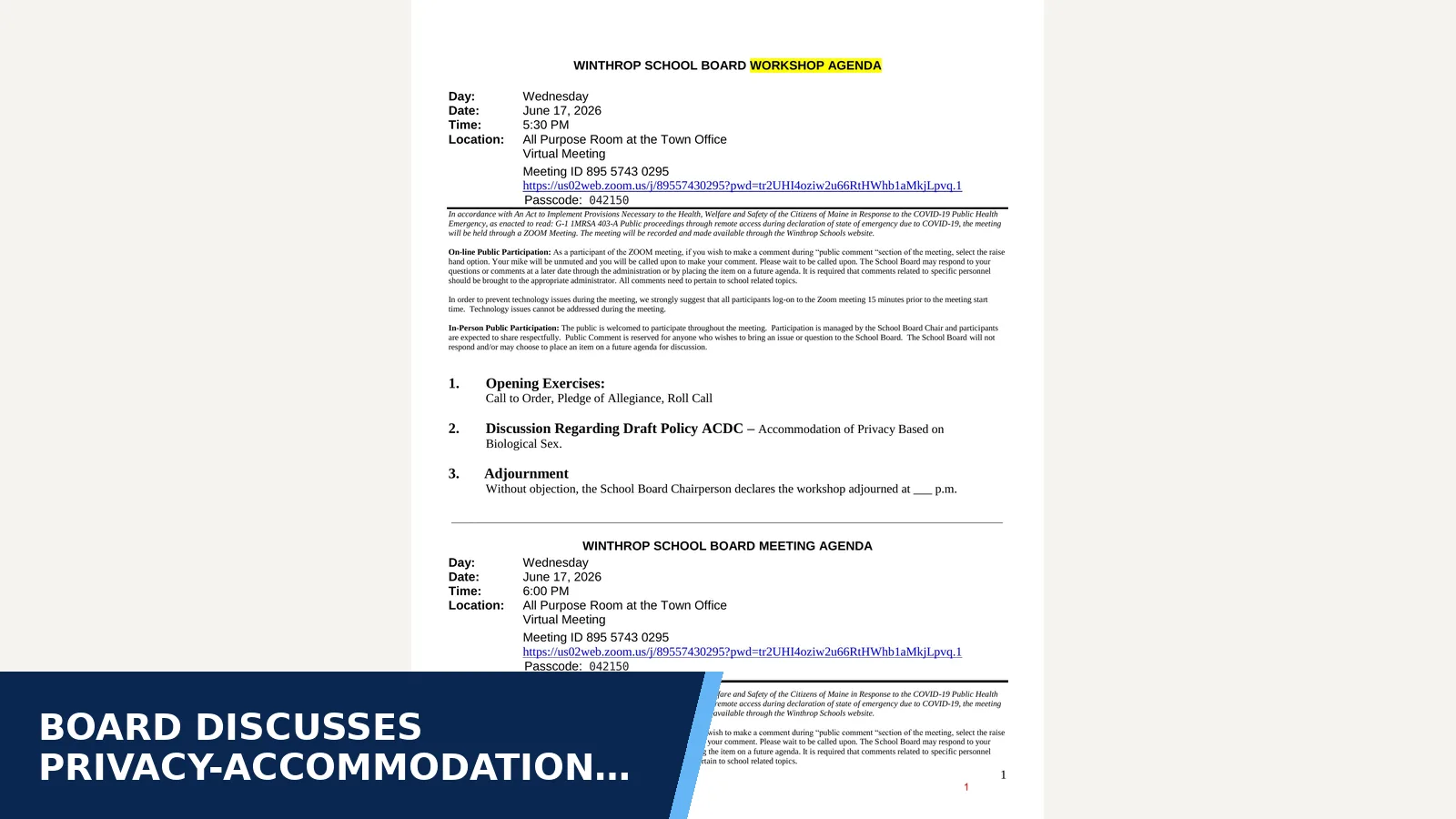
Board materials show continued work on draft Policy ACDC, covering accommodation of privacy based on biological sex.
RSU 59/MSAD 59 (Madison Public Schools)
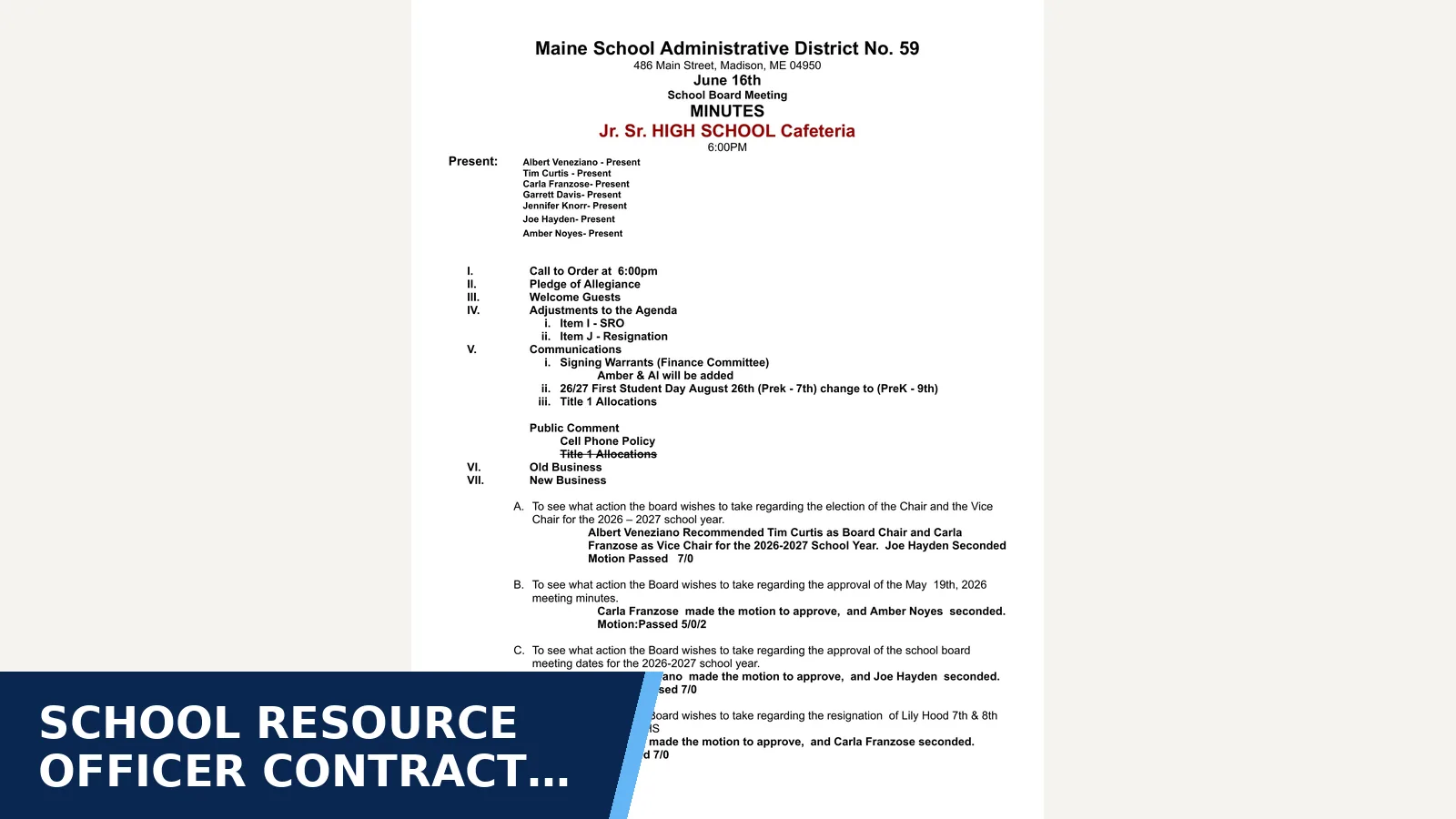
On June 16, 2026, the board approved a school resource officer contract with the Somerset County Sheriff's Office. The vote was 5-0 with two members abstaining.
Closer to home
Explore the national edition and nearby communities.