Joint boards extend David Baker as superintendent for another year
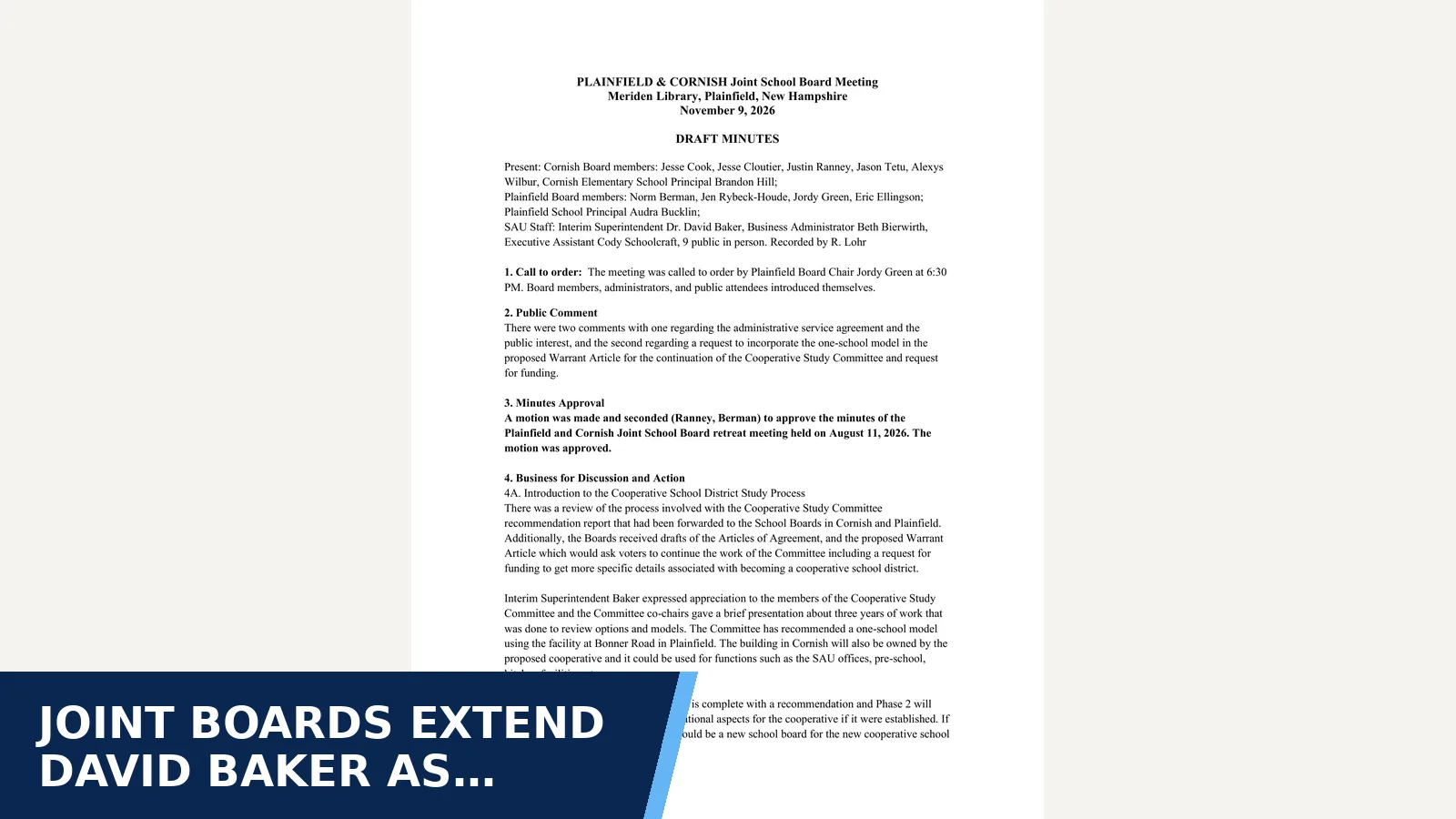
The Cornish and Plainfield boards approved removing the “interim” designation from David Baker’s title and extending his superintendent contract for one year.
Read the full storyThe Cornish and Plainfield boards approved removing the “interim” designation from David Baker’s title and extending his superintendent contract for one year.
Read the full storyWe bring transparency to school decisions nationwide by tracking school board meetings, district documents, and public data. We use AI tools, rigorously evaluated for accuracy, to search for risks.

The policy desk
The debate over phones, screens and the school day.

The policy desk
How artificial intelligence is changing classrooms and school rules.

The policy desk
Students speaking up, organizing and helping shape their schools.
The news desk
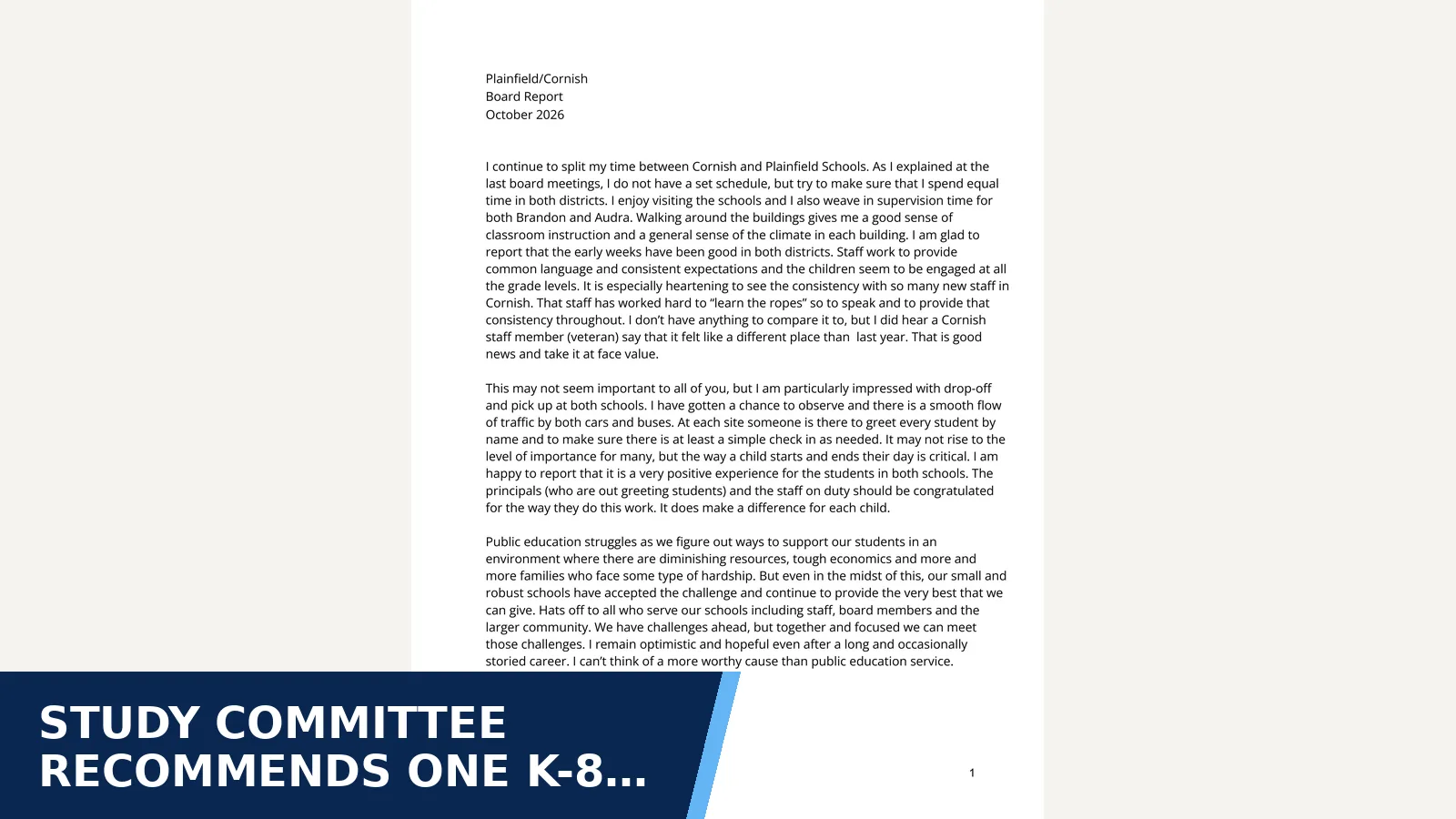
The Cornish-Plainfield cooperative study committee voted unanimously on Sept. 15, 2026 to recommend a 'One School Model,' with all K-8 classes at 92 Bonner Road, the Plainfield school site. Voters would first be asked in March 2027 to keep the committee working and give it some money. Budget and bond requests could come in March 2028.
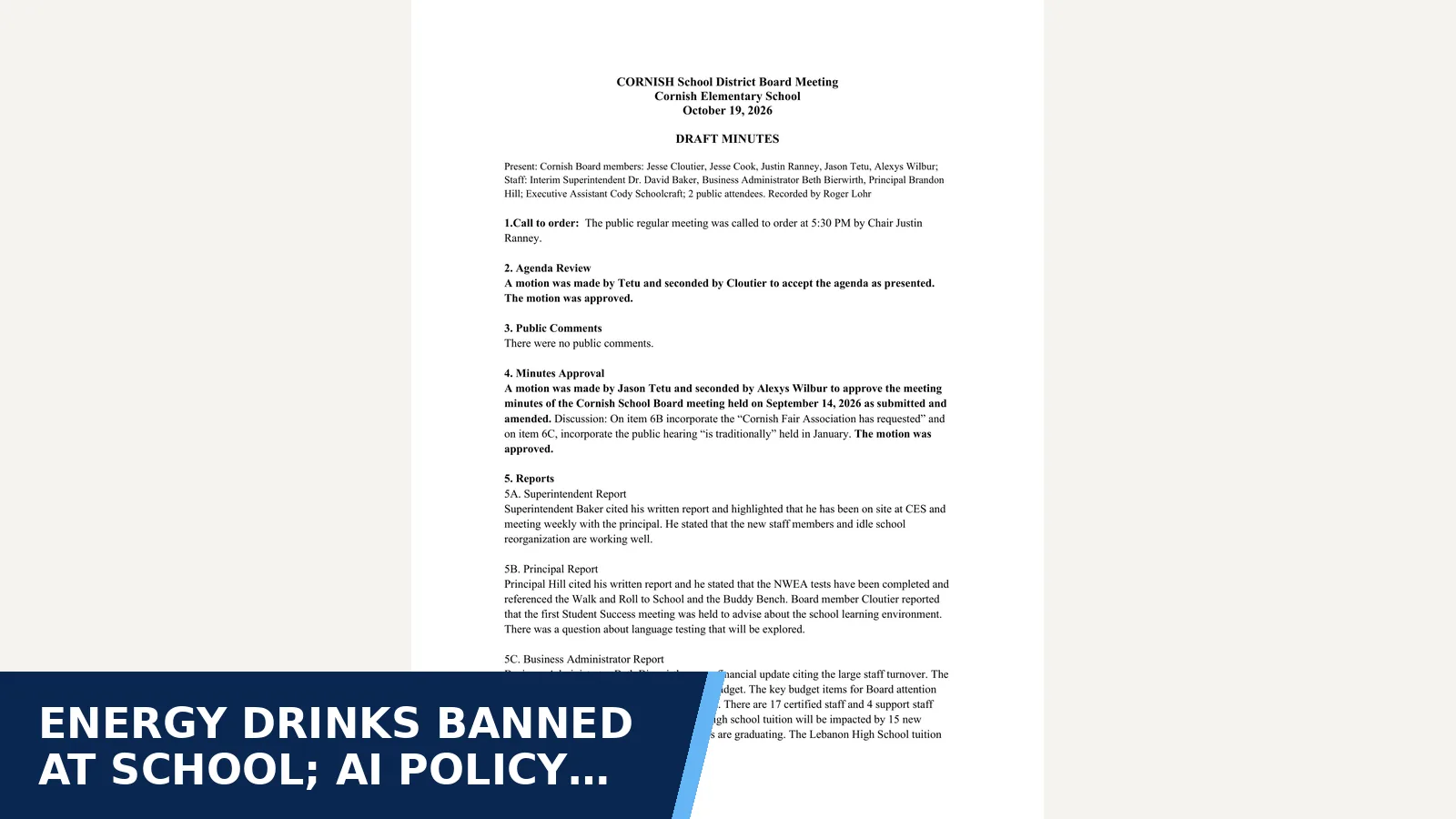
On Oct. 19, 2026 the board authorized Cornish Elementary to ban energy drinks. It also reviewed sample policies on artificial intelligence, and a draft AI policy will come back to the board. The school has no AI policy yet.
On October 15, 2026 the board hired Banwell for architecture ($79,580) and Verdantas for civil engineering ($37,000) to design an expansion of Croydon Village School. Voters authorized an expansion paid by grants or reserve funds in March, and the district was earmarked $1.17 million in federal money.
The board accepted Superintendent Robert Gadomski’s and Principal Julie Couch’s resignations, effective June 30, 2027. The district planned to post the superintendent job in November, aiming to hire in January for a July 1 start; the principal search was planned for late December through January.
The board adopted a new policy on generative artificial intelligence and added an annual review requirement. The policy committee described it as setting guidelines for responsible staff use; it said student use was not permitted under existing district rules.
Derry Cooperative School District
The board unanimously adopted a new policy on generative artificial intelligence. Board members noted that it addresses deepfakes and said the fast-changing technology makes periodic policy review important.
Claremont says it cannot currently provide all required special-education services because it lacks enough qualified staff. The superintendent said families were notified and that the district will review each student’s missed services and provide compensatory support when needed.
A $1.334 million Congressionally Directed Spending allocation is designated for Phase 1 of the Net Zero project at Ashland Elementary, with construction planned to begin next year. The work aims to reduce energy loss by improving the building envelope, including replacing exterior windows that currently cause thermal challenges.
Colebrook’s September 15 minutes report that the State Board accepted a finding that the bullying investigation was not thorough and fair; the superintendent said State Board-recommended districtwide training was scheduled for the next day. The family also requested $40,000 in attorney fees and warned it may take the matter to Superior Court if denied.
The Gilford and Gilmanton boards voted 10-0 to move forward with the Meadows project as outlined in its plan. At the hearing, supporters cited the current shack’s limited space and lack of electricity and running water; the minutes do not state the plan’s scope or cost.
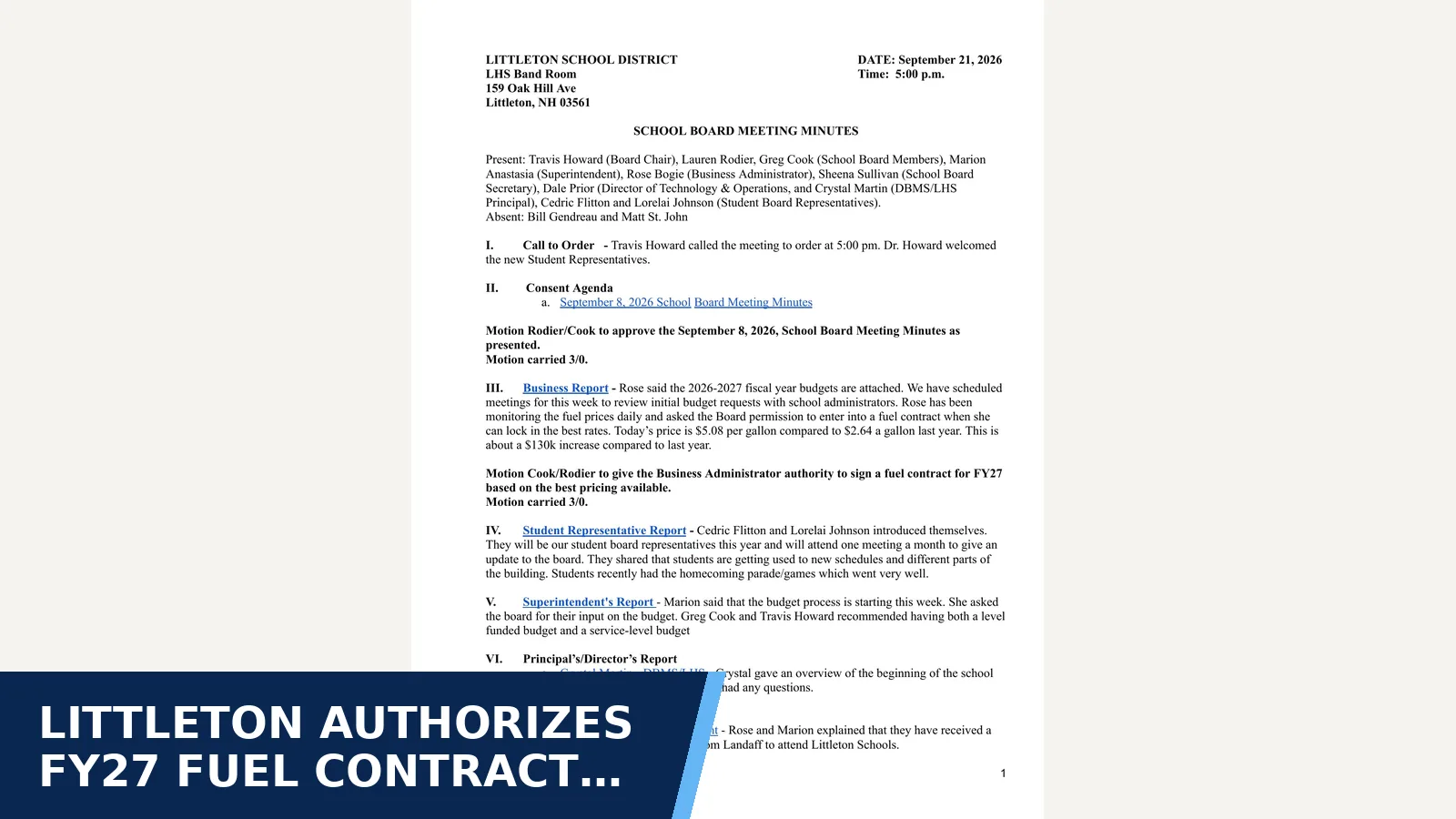
The board authorized the business administrator to sign a FY27 fuel contract at the best available price. The district said fuel was $5.08 per gallon, up from $2.64 last year, adding about $130,000 to costs compared with the prior year.
Littleton reported that FY 2026–27 revenue will be $415,767 below budget assumptions: final adequacy aid is $4,099,570, or $215,767 below the estimate, and the district will not return the anticipated $200,000 fund balance to reduce taxes. The minutes attribute the aid decline to lower average daily membership and free/reduced-price counts.
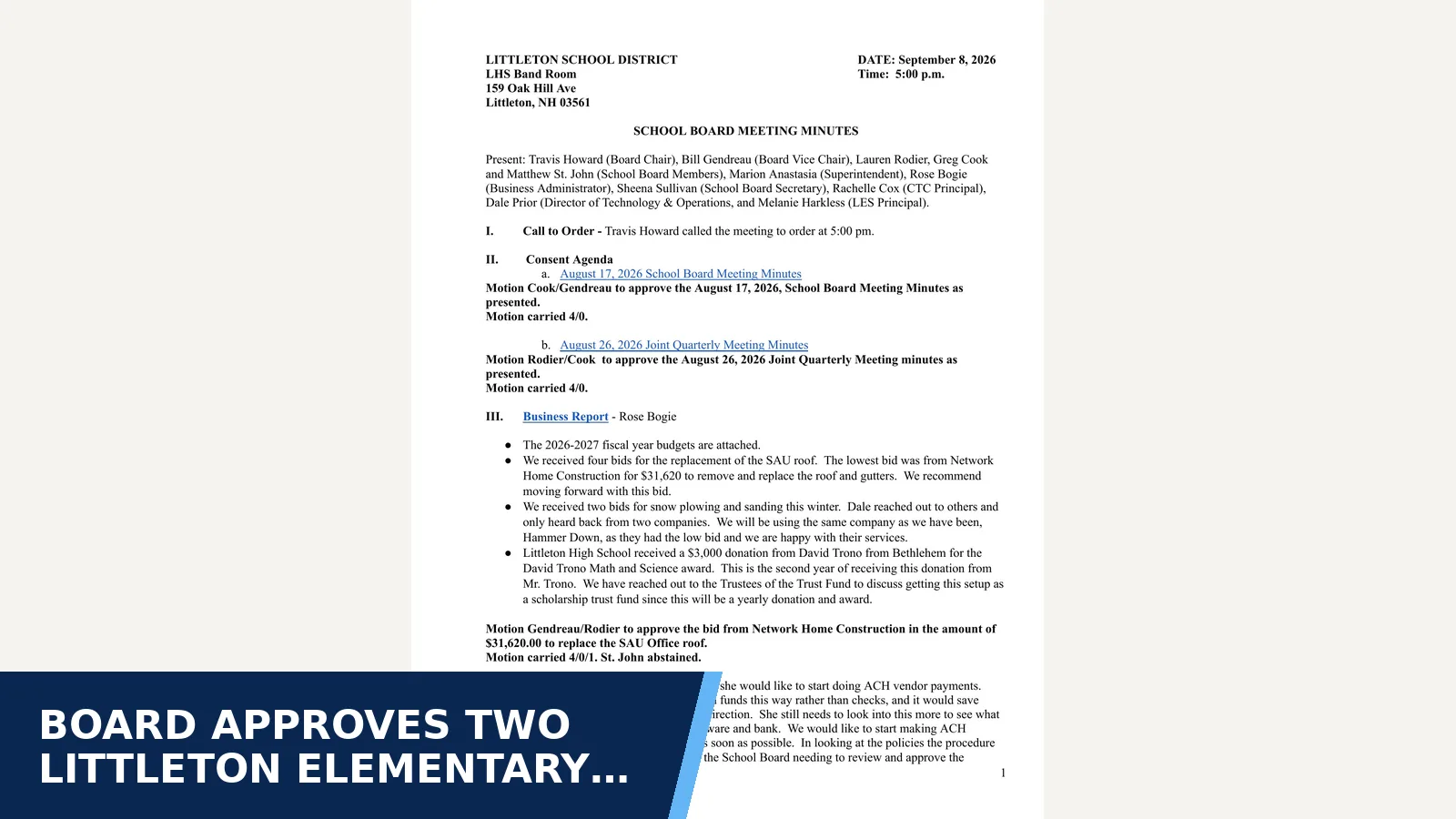
The board approved one-year Certificates of Eligibility for Sheryl Louis and Kasey Grisham as Littleton Elementary School assistant principals for 2026–27. The certificates are limited to that school year, confer no tenure rights, and are subject to background-check and other district and state requirements.
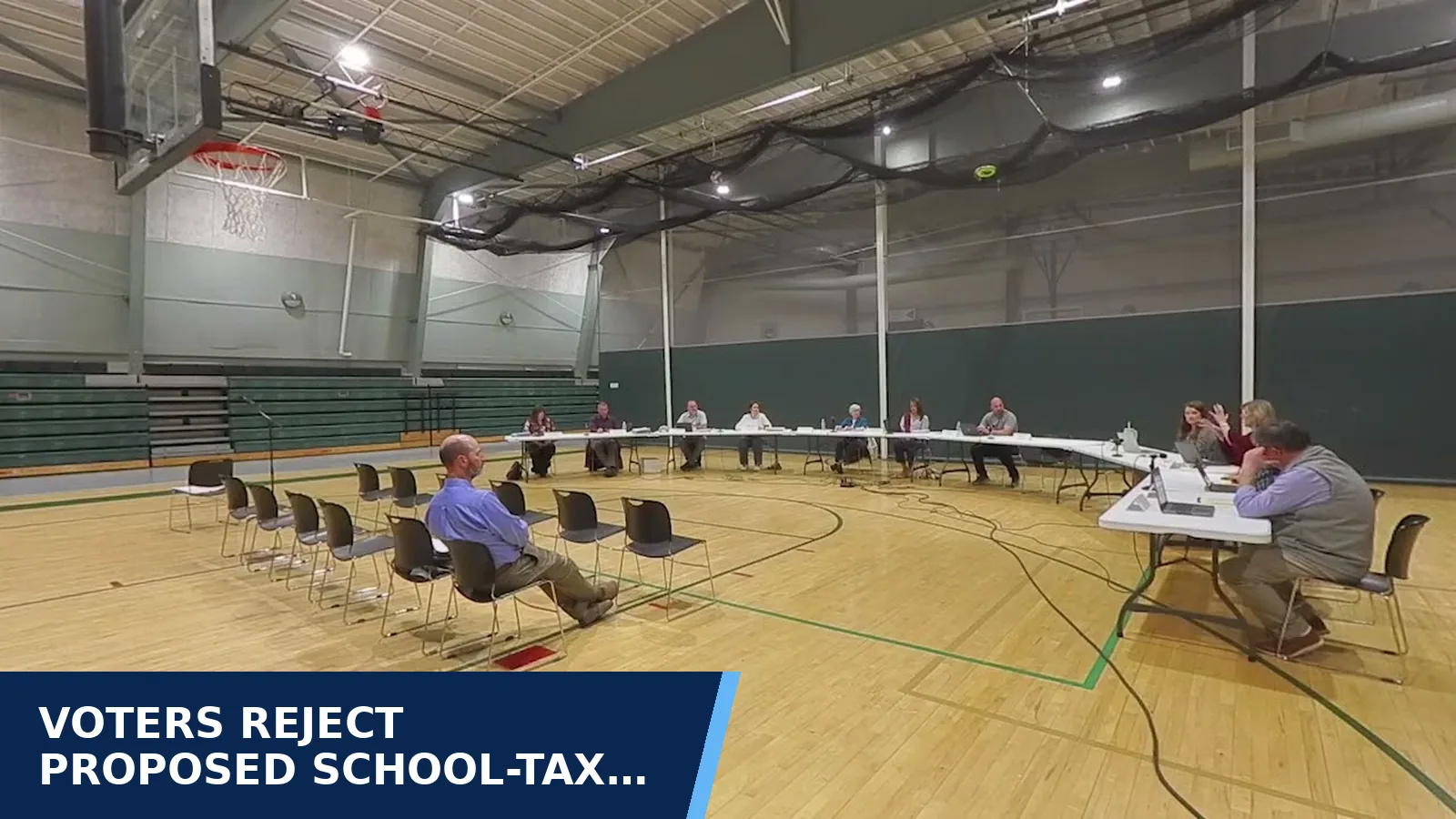
Voters will decide on November 3, 2026 whether to adopt a cap on school taxes under state law HB 1300. On August 27 the school board voted not to support it.
Derry Cooperative School District
The board voted 7-0 to retain $1.25 million after reviewing unaudited FY 2026 year-end financials.
Derry Cooperative School District
The board adopted a 2026-27 goal directing the board and superintendent to develop a position and communications plan for a possible November 2026 school tax-cap vote and a possible vote to reorganize the district as a town department.
The board approved updated Policy JICK (Pupil Safety and Violence Prevention) to align with revised New Hampshire bullying law requirements effective July 1, including a new 48-hour parent notification requirement after a bullying report and expanded definitions of bullying that increase documentation and investigation burdens on staff.
The board discussed House Bill 1300, a proposed New Hampshire school district tax cap question that will appear on the November ballot. If approved by three-fifths of voters, the cap would take effect immediately and impact the budget currently being developed, potentially affecting staffing, negotiated agreements, programs, supplies, and athletics.
The board voted not to provide a requested letter committing the district to pay an outstanding 2023-2024 manifest educational hardship tuition balance owed to Prospect Mountain High School, pending outcome of a related NH Supreme Court case and further legal guidance.
The NH Department of Environmental Services detected several PFAS compounds in wastewater generated during a floor-stripping process at Epsom Central School, after the contractor had initially indicated the materials were PFAS-free. DES recommended the wastewater be collected and stored in containers rather than disposed of through the normal wastewater system, with disposal costs estimated at $2,500-$3,500.
At its August 18, 2026 meeting, the Colebrook School Board voted (5-2) to reconsider and then halt a previously approved building soft-wash/window-wash contract for CAES and the SAU 7 building, citing concerns about chemical safety near playgrounds so soon after school starts and recent $15,000 seal-coating work. The board directed staff to notify vendors the project will not proceed at this time and to revisit it later after further review, including sending the bidding process to the local policy committee.
The Colebrook School Board formally addressed a Vermont homeschool student's petition to play athletics at Colebrook Academy, concluding that under NH state law and NHIAA policy the student is ineligible unless enrolled at least 50% of the school day at Colebrook. The board upheld this determination after legal review, effectively denying the family's request while offering enrollment as an alternative path to eligibility.
Closer to home
Explore the national edition and nearby communities.