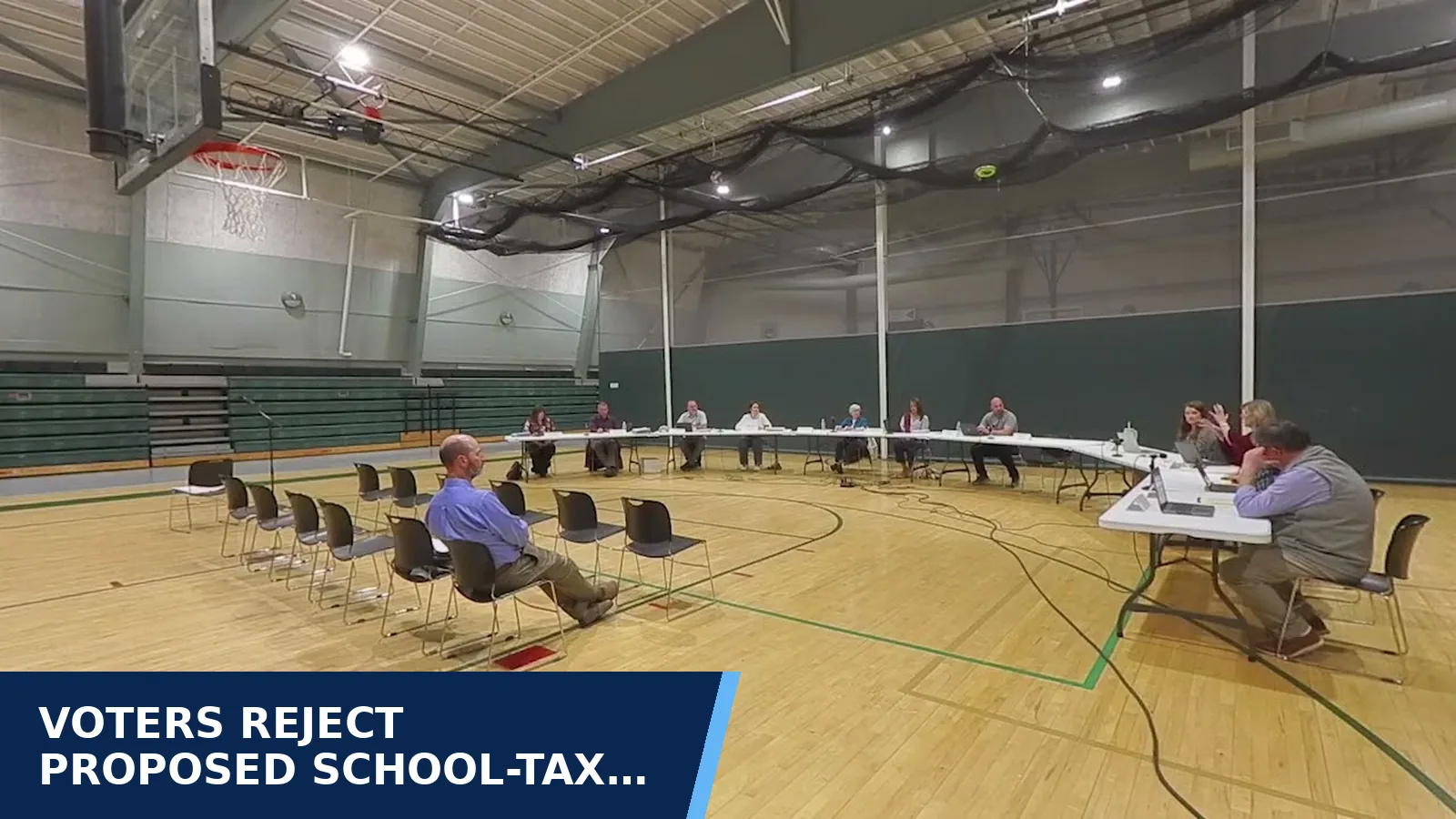
Voters reject proposed school-tax cap, leaving district without new limit
Sunapee voters rejected the proposed school-tax cap, so it will not constrain the district’s budgets.
Read the full storySunapee voters rejected the proposed school-tax cap, so it will not constrain the district’s budgets.
Read the full storyWe bring transparency to school decisions nationwide by tracking school board meetings, district documents, and public data. We use AI tools, rigorously evaluated for accuracy, to search for risks.

The policy desk
The debate over phones, screens and the school day.

The policy desk
How artificial intelligence is changing classrooms and school rules.

The policy desk
Students speaking up, organizing and helping shape their schools.
The news desk
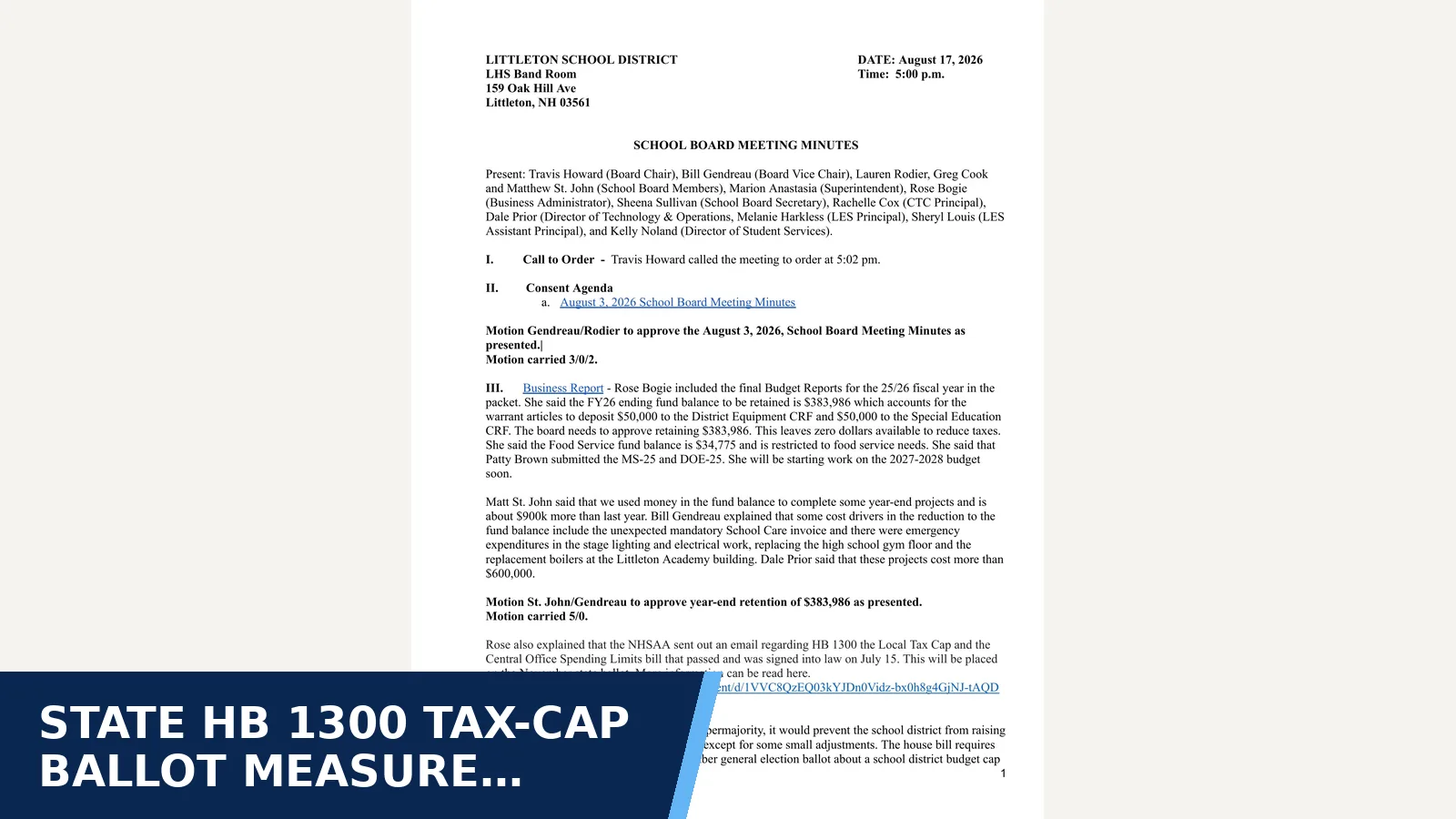
The board discussed House Bill 1300, a proposed New Hampshire school district tax cap question that will appear on the November ballot. If approved by three-fifths of voters, the cap would take effect immediately and impact the budget currently being developed, potentially affecting staffing, negotiated agreements, programs, supplies, and athletics.
The board approved retaining a $383,986 FY26 year-end fund balance, leaving zero dollars available to reduce taxes. Officials said the fund balance is about $900,000 lower than last year due to cost drivers including an unexpected mandatory School Care invoice and over $600,000 in emergency expenditures for stage lighting/electrical work, a high school gym floor replacement, and boiler replacements at the Littleton Academy building.
The board discussed HB 1300, a newly signed state law placing a local tax cap and SAU central-office spending limit question on the November 2026 ballot. If approved by a 60% supermajority, it would cap local property tax levy growth to the prior year's amount (adjusted for inflation/construction) and limit SAU central office spending to 6% of total district appropriations. The district will need to prepare two different budget scenarios until the vote outcome is known.
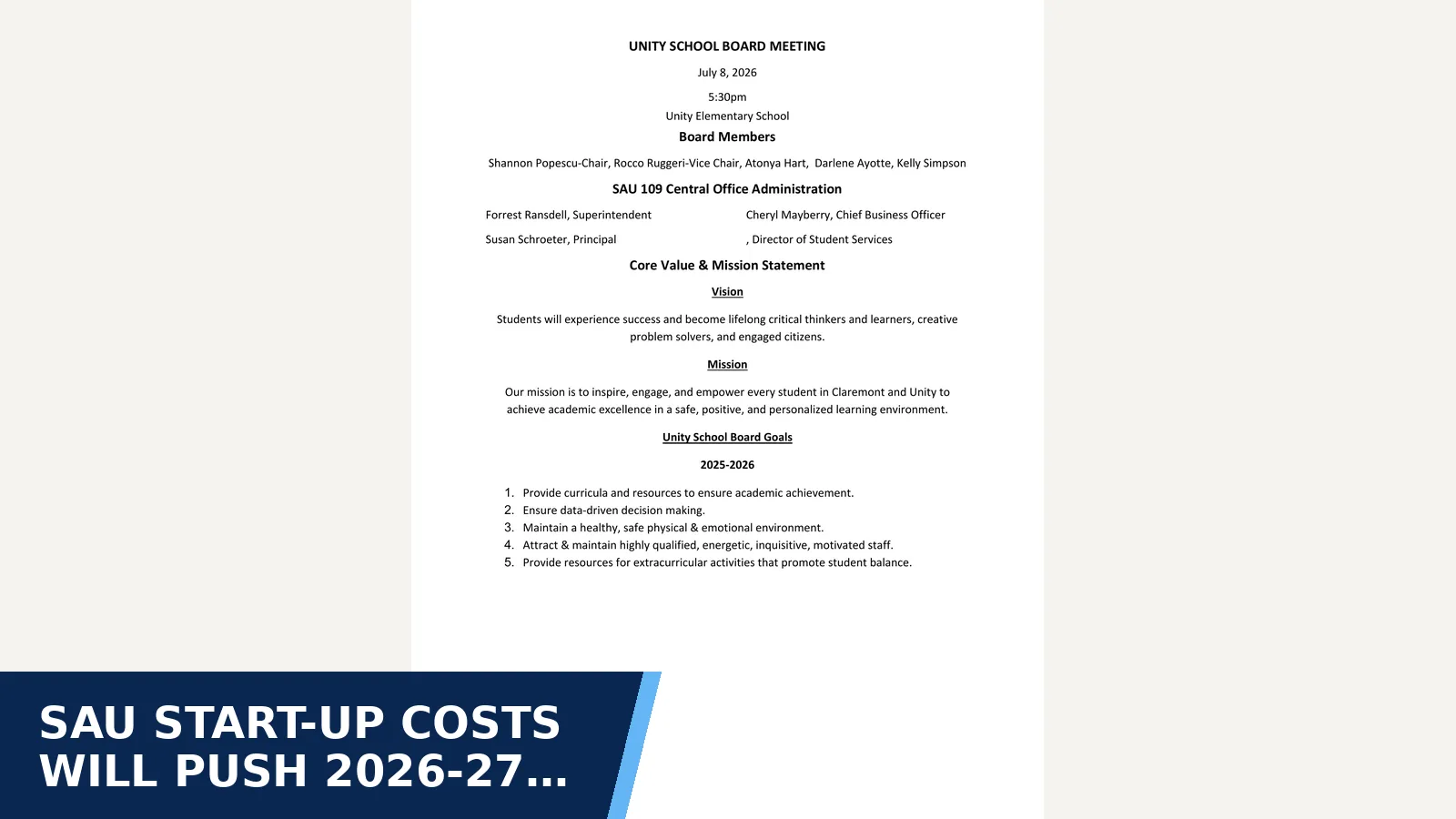
On June 23, 2026 the new superintendent reported that only about $12,000 was left in the 2025-26 budget. He said spending had been approved without the business administrator's final sign-off. Planned SAU 109 start-up costs (payroll, superintendent salary, IT) moved into 2026-27, which will push spending over the voted budget. He proposed leaving an open position unfilled for a year to cover them.
The Board unanimously authorized using $1 million in unexpended FY2026 appropriations toward capital improvements, reducing the authorized bond from $7.25 million to $6.25 million.
In March 2026 voters approved raising up to $150,000 to reduce the deficit (Article IV). On June 8, 2026 the board voted to withdraw about $120,000 from the Special Education reserve and $216,000 from the High School Tuition reserve, leaving $1 in each. The business administrator said this would cut the deficit from about $603,516 to about $108,379.
Closer to home
Explore the national edition and nearby communities.